ACT I: THE GREAT PAUSE BUTTON
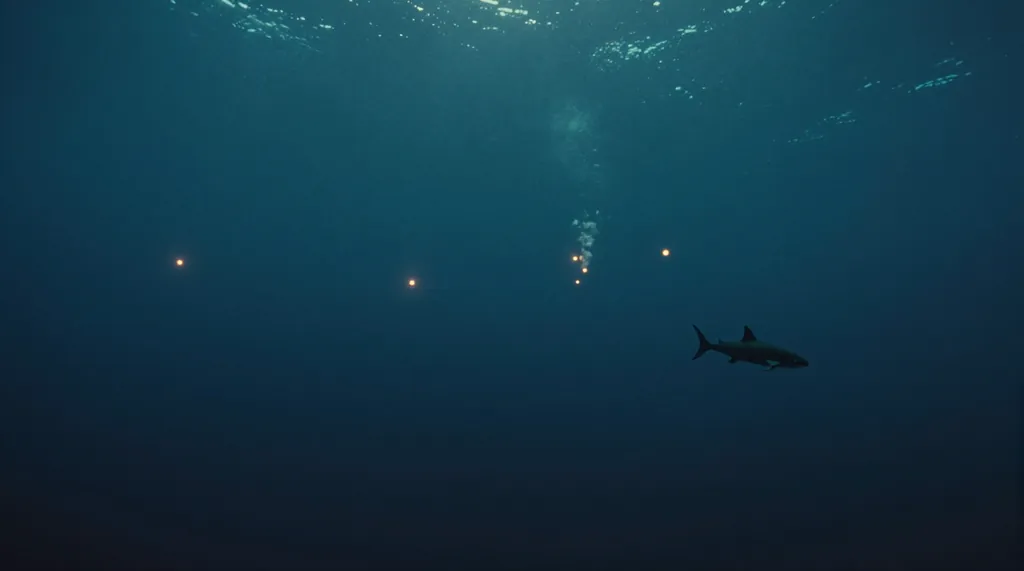
We have navigated the hidden oceans of the rogue planet, witnessed the dance of chemotrophs and evaded the burning gaze of infrared hunters.
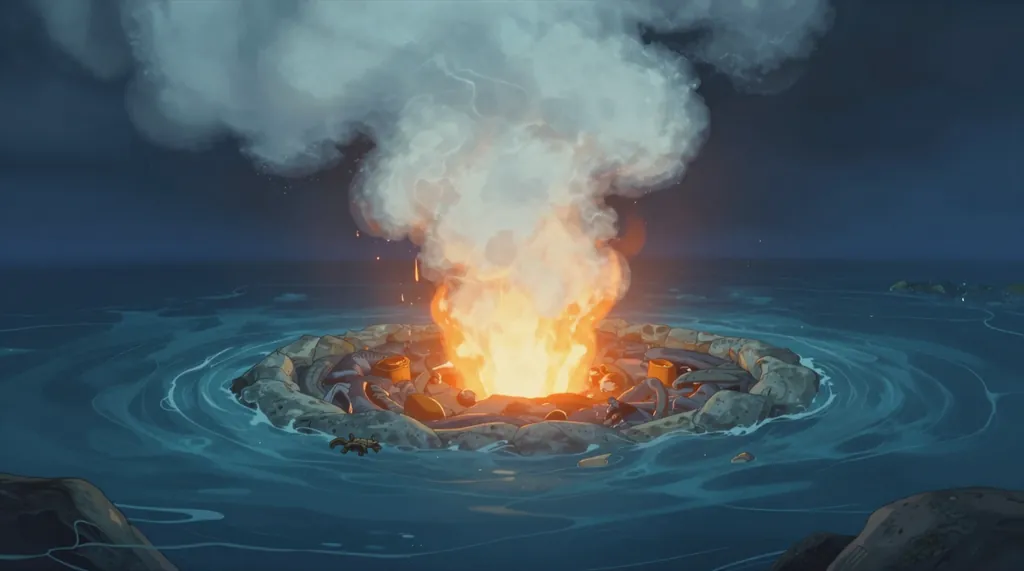
In the heart of this sunless world, we have found life chained to the geothermal bonfire of volcanic vents.
But what happens when the bonfire goes out?
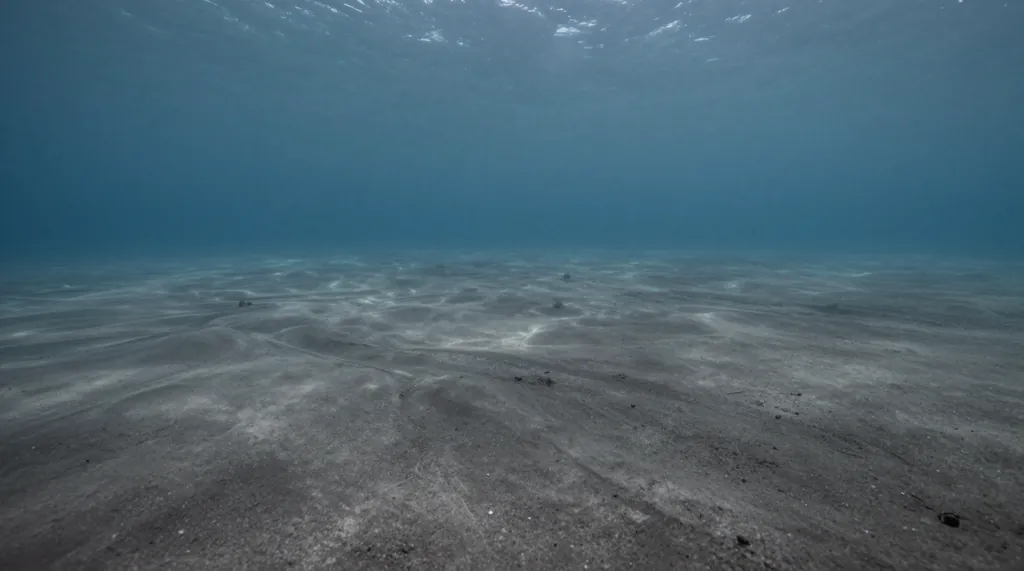
What happens to life in the vast deserts separating one volcanic oasis from another, hundreds of kilometers away?
On Earth, life is obsessed with movement. With speed. With evasion.
Predators run. Prey flee. Birds migrate. Fish swim. Every life form we know thrives through movement, through urgency, through rapid response to threats.
Here, in this world under extreme pressure, that logic is completely inverted.
Continuity here is not achieved through speed or avoidance. It is not achieved by chasing energy from one place to another.
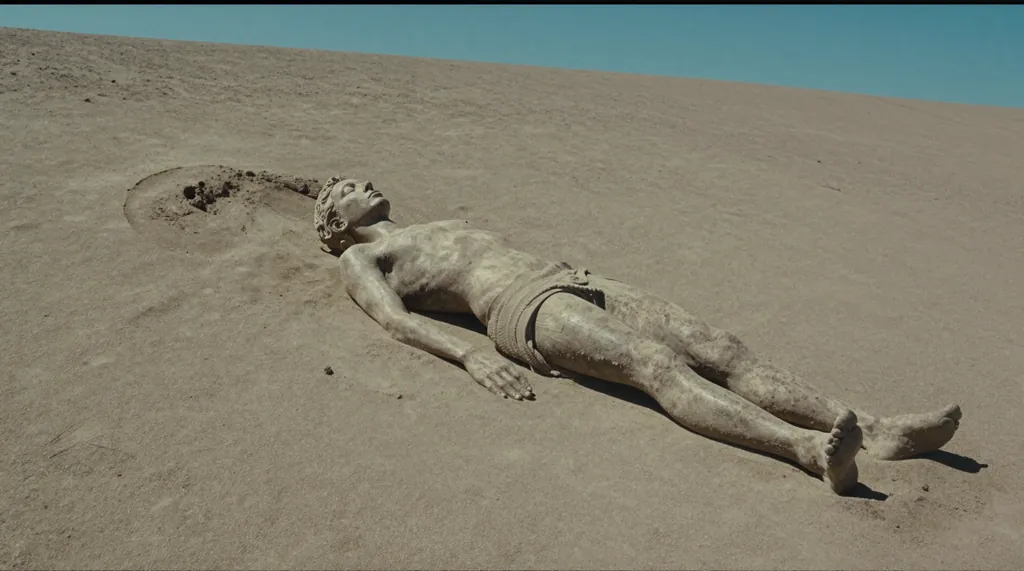
Continuity is achieved through absolute stillness. Through patience. Through strategic waiting.
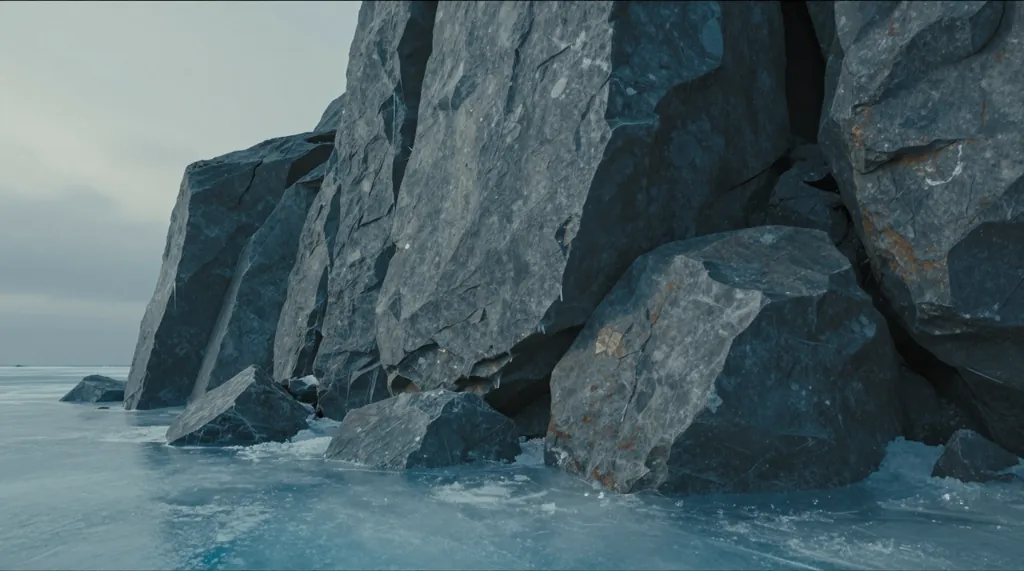
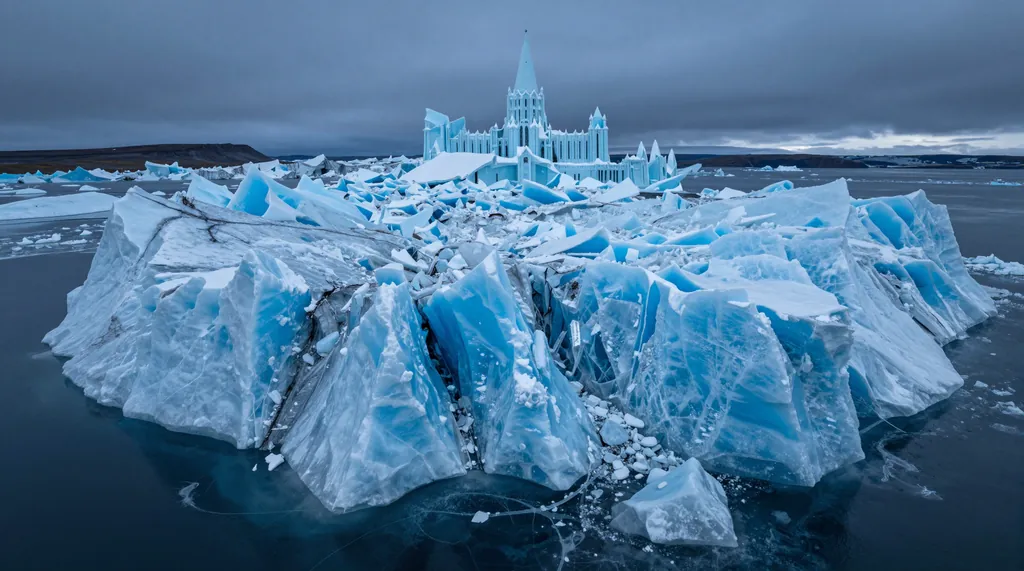
We now head toward the ocean's upper layer, the very boundary where liquid life meets the vastness of pressure ice.
It is here, on the threshold of absolute zero, where biology has found its most sublime and strange strategy.
It is called cryptobiosis.
It is the Universe's Great Pause Button.
ACT III: THE SCIENCE OF DEADLY ICE
Life on Earth and on this frozen world shares a same primordial fear.
Ice.
It is not an irrational phobia. It is pure biochemical reality.
Cold, by itself, simply stops chemical reactions. It is a passive process. It slows death, but doesn't stop it completely.
But active freezing, the true crystallization of water into its solid phase, is a cellular violence of terrifying magnitude.
Let's look at what happens on a microscopic scale.
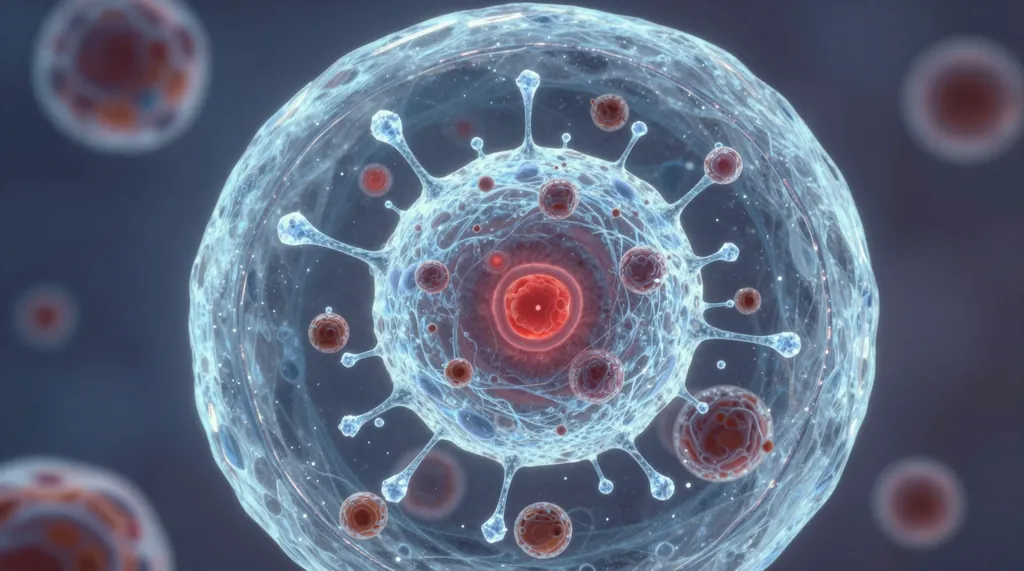
When a tissue's temperature falls below freezing point, water in the extracellular space, the fluid outside the cell, freezes first.
Why? Because that fluid is purer. Contains fewer solutes. Crystallizes more easily.
When extracellular water freezes and turns to pure ice, something terrible happens.
Salt concentration in the remaining fluid, the fluid that didn't freeze, increases dramatically.
Now there is a massive osmotic gradient between the cell's interior, where salt concentration is normal, and the exterior, where it has increased.
Water, always seeking equilibrium, is violently extracted from the cell to the outside.
It is as if the outside ice were sucking inside water directly through the cell membrane.
The cell shrinks. Wrinkles. Dehydrates irreversibly.
It is like being sucked dry from the inside out.
But if the cell is small enough, or if freezing happens too fast, something even more terrible happens.
Inside water, unable to escape fast enough, freezes in place.
Intracellular ice crystals form.
And this is where the geometry of death takes shape.
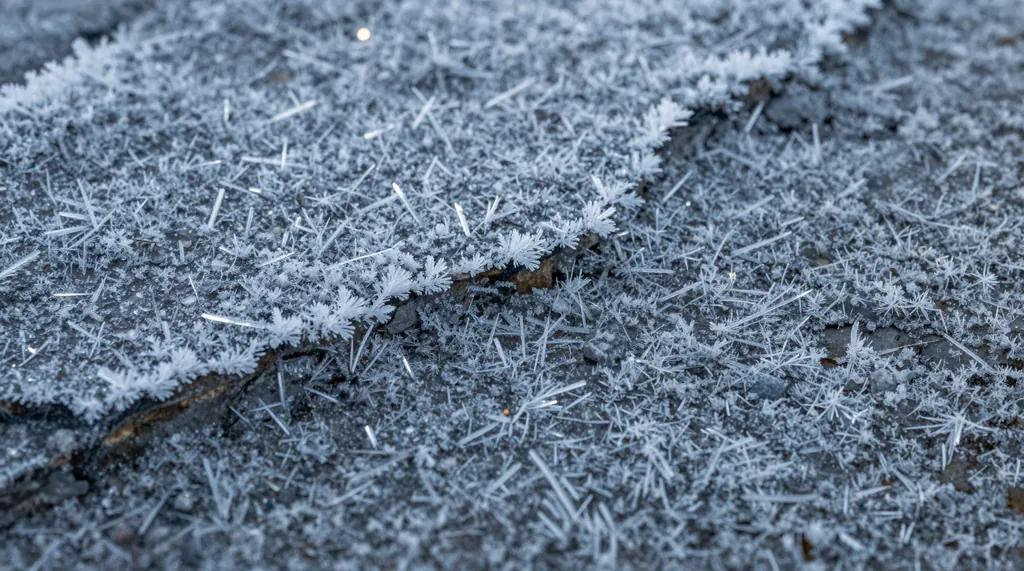
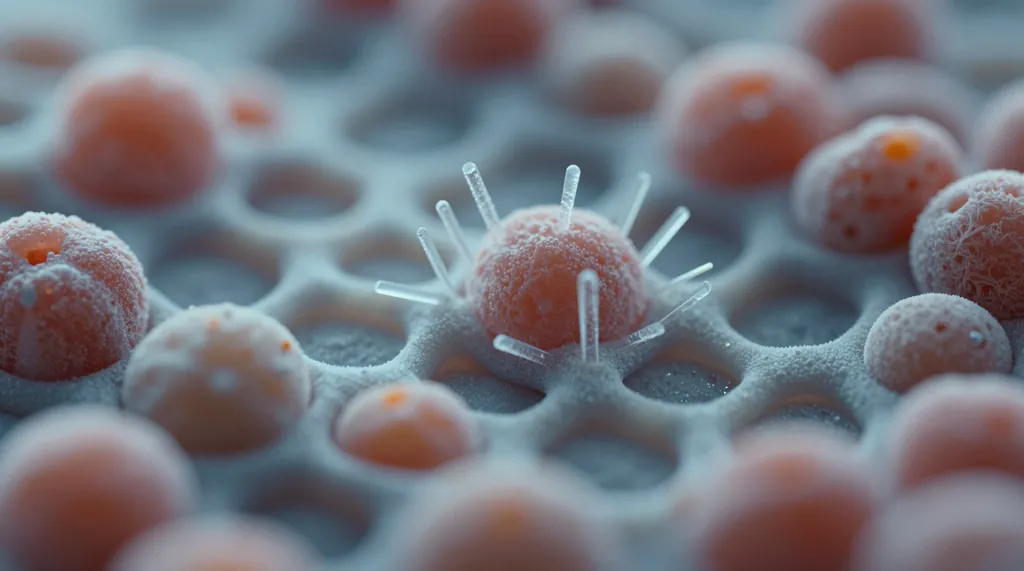
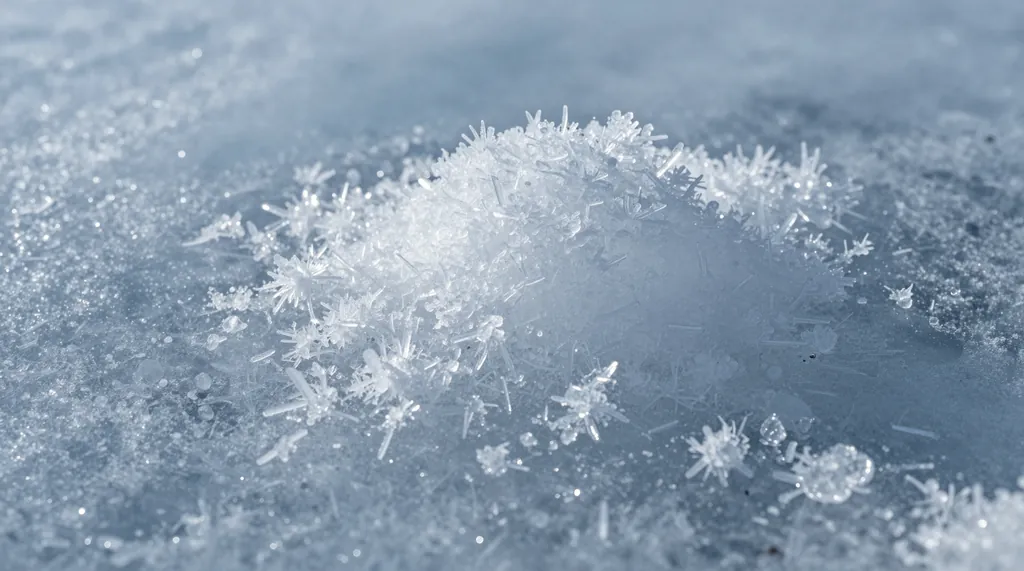
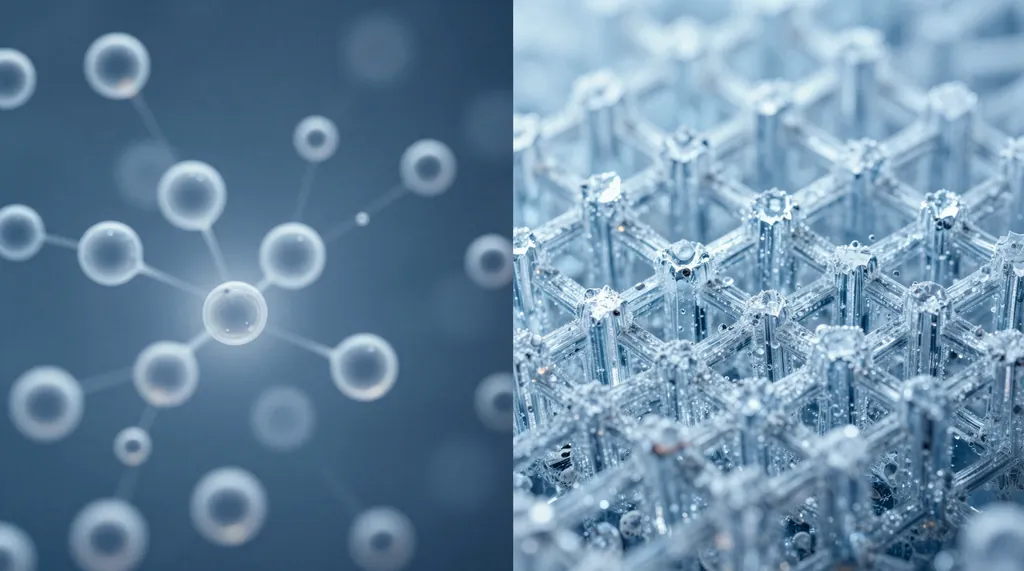
Ice is not a smooth solid. It has sharp points. A perfect hexagonal crystalline structure. These ice needles grow with relentless force, piercing delicate membranes as if they were paper.
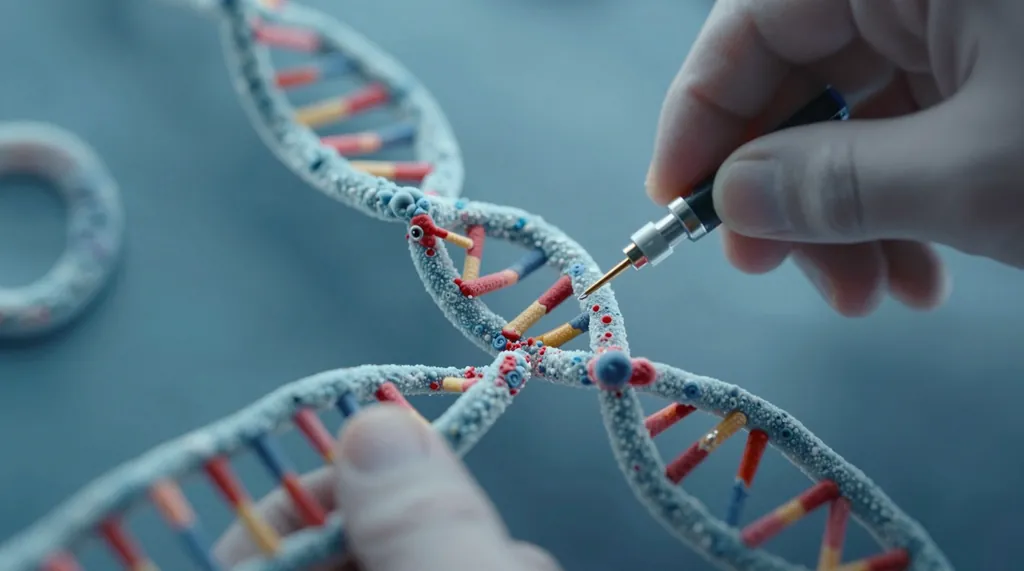
They tear organelles. Cut the DNA double helix. Break everything that is life.
It is cellular lysis. The cell is literally torn apart from the inside by the perfect and geometric order of ice.
It is a beautiful and horrible death.
For the Aethelgard, evolution had to solve this impossible problem.
And it did so in two phases of astonishing biochemical sophistication.
Phase One is controlled dehydration.
Before outside cold becomes ice, the Aethelgard initiates an emergency protocol that is almost suicidal in its precision.
It uses ion pumps, proteins in its cell membrane, activated by the last of its residual metabolic energy, to actively expel free water from its cells.
It is not a passive leak. It is a violent and controlled evacuation.
Water is pushed out of the cell membrane with force requiring pure ATP energy, energy that is already scarce.
The result: most crystallization occurs in the extracellular space, away from vital organelles.
Once water has been expelled, the cell remains almost empty. Biological machinery concentrates in minimal volume.
This dehydration creates an over-concentration of solutes inside, drastically lowering the internal freezing point.
Intracellular ice becomes thermodynamically unfavorable.
The cell sacrifices size to gain absolute stability.
But the void left by water is a threat in itself.
A dehydrated cell is a fragile cell.
So in Phase Two, the Aethelgard does something almost unprecedented in terrestrial biology.
It floods its cells with cryoprotective agents. Special molecules replacing the water it just expelled.
The most powerful is called Siloxane Tetranite, or ST-4. It is a short silicone chain soluble in water acting as a direct substitute for the glycerol Earth tree frogs use to survive winter.
But ST-4 is much more potent. More stable. Doesn't freeze. It becomes vitreous, passing to an amorphous state, solid but without crystalline structure.
It is biological glass.
But there is a second, even more terrifying line of defense.
The Aethelgard also floods its tissues with antinucleating proteins. Specialized molecules based on an Iron-Cobalt complex having a function bordering on the impossible.
They prevent ice nucleation.
They bind to any small crystal embryo trying to form in the cytoplasm, stopping its growth before it can become destructive.
They are molecular guardians. Active blockers of death geometry.
The result of these two phases is a radical transformation.
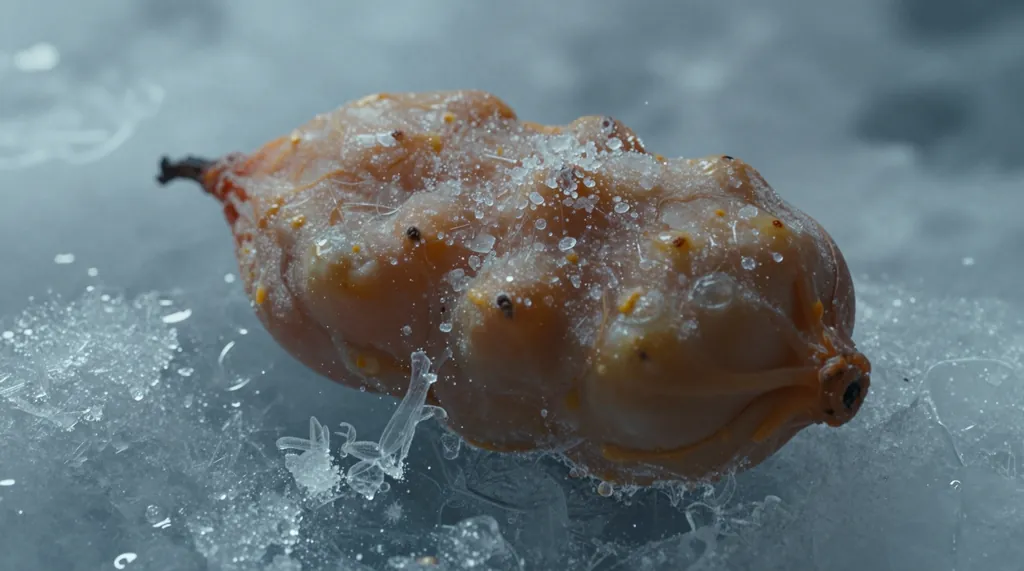
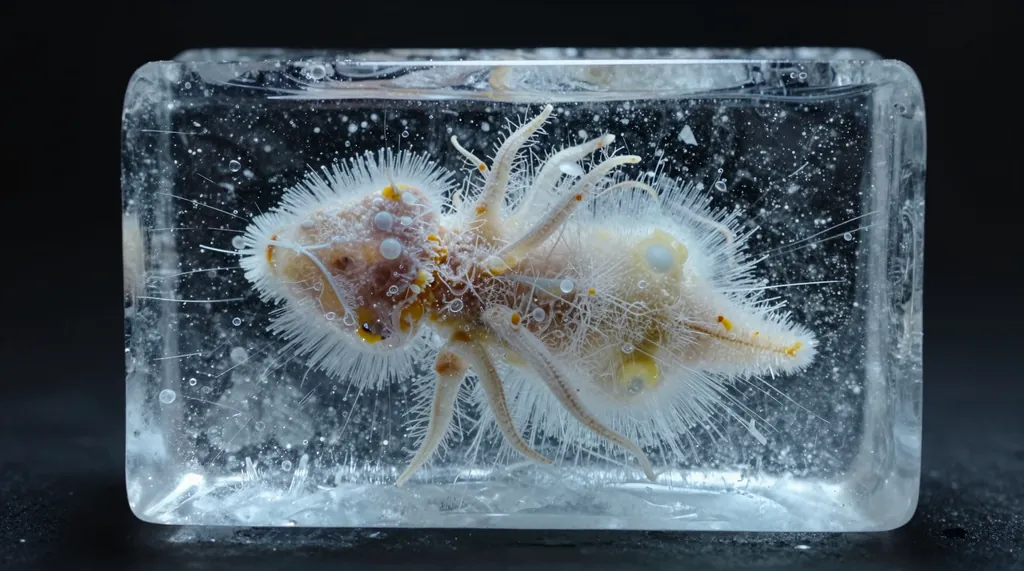
The Aethelgard, just before completely freezing, is not a bag of water.
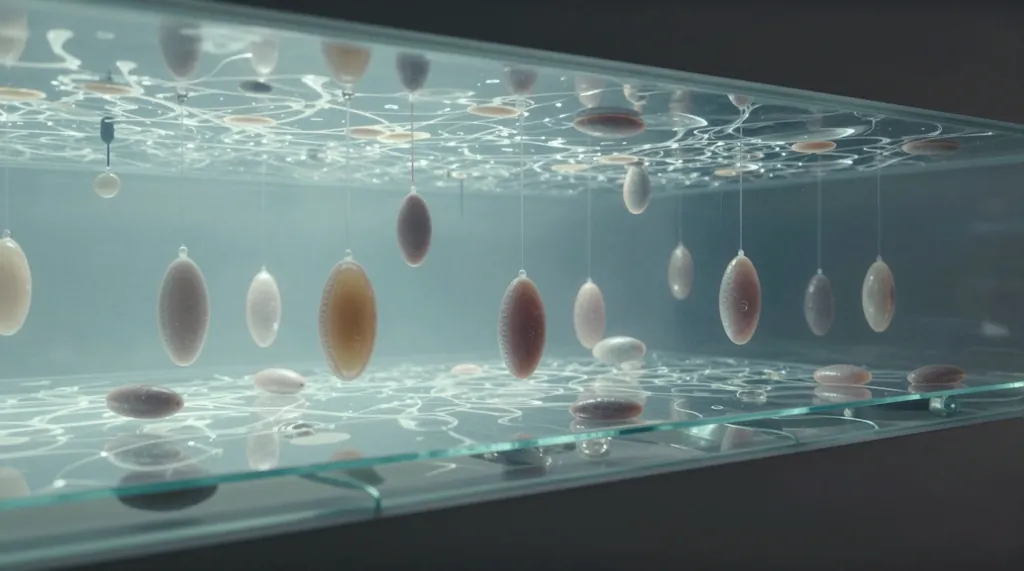
It is a high-density syrup vessel. Inert. Vitreous.
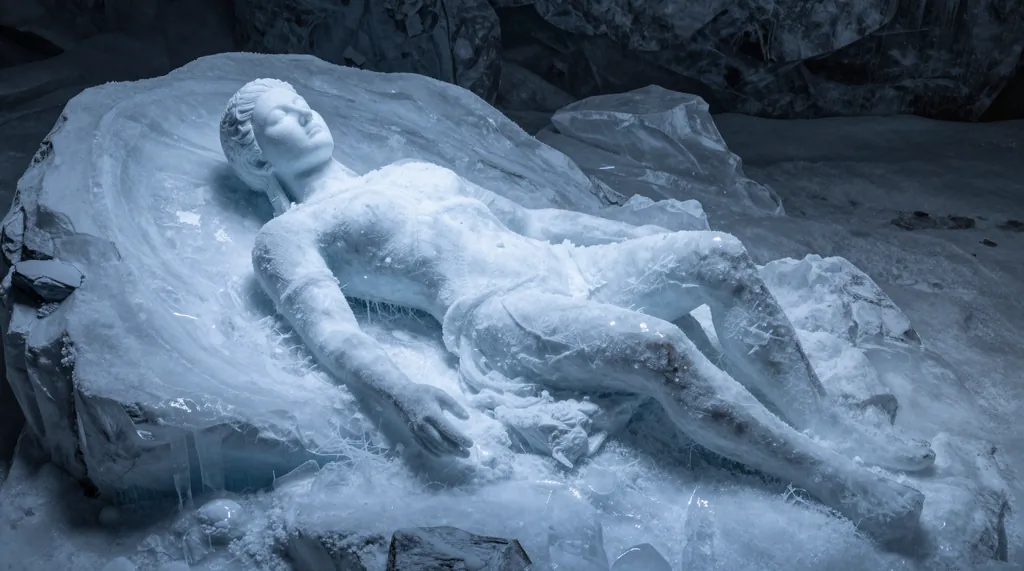
A biological glass interior surrounded by a solid block of exterior ice.
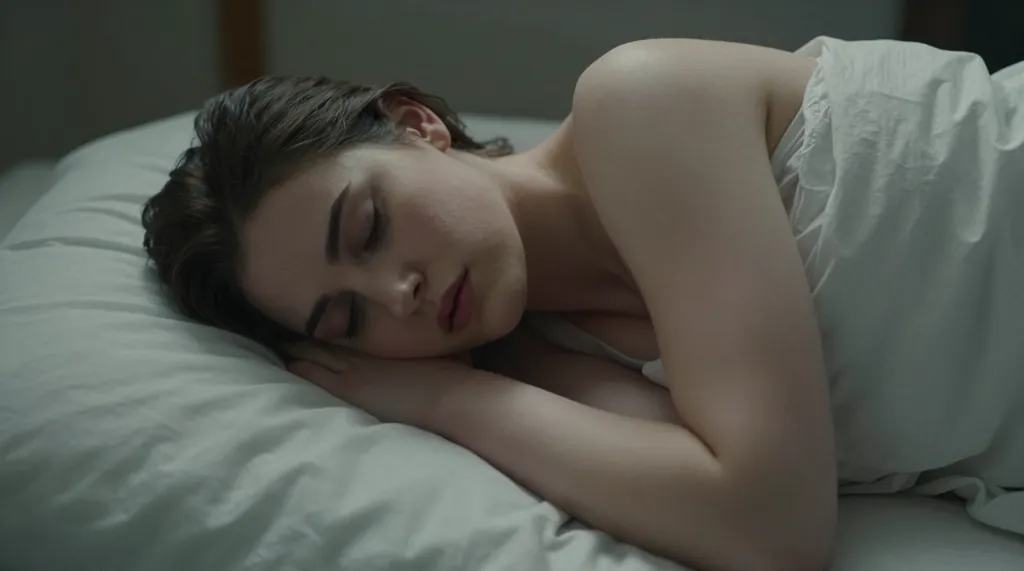
It has become a deep freeze capsule, ready for a sleep of incalculable duration.
ACT V: THE EXPLOSIVE AWAKENING
Inactivity is the strategy. But inactivity is not the final goal.
The goal is reproduction.
It is the only biological function justifying breaking hibernation. The only reason powerful enough to wake up.
Cryptobiosis ends when one thing happens: environmental conditions become optimal for life. Even for a brief instant.
What wakes the Aethelgard from its thousand-year sleep?
It is not an internal clock. It is not a biological timer saying: wake up.
It is an external event.
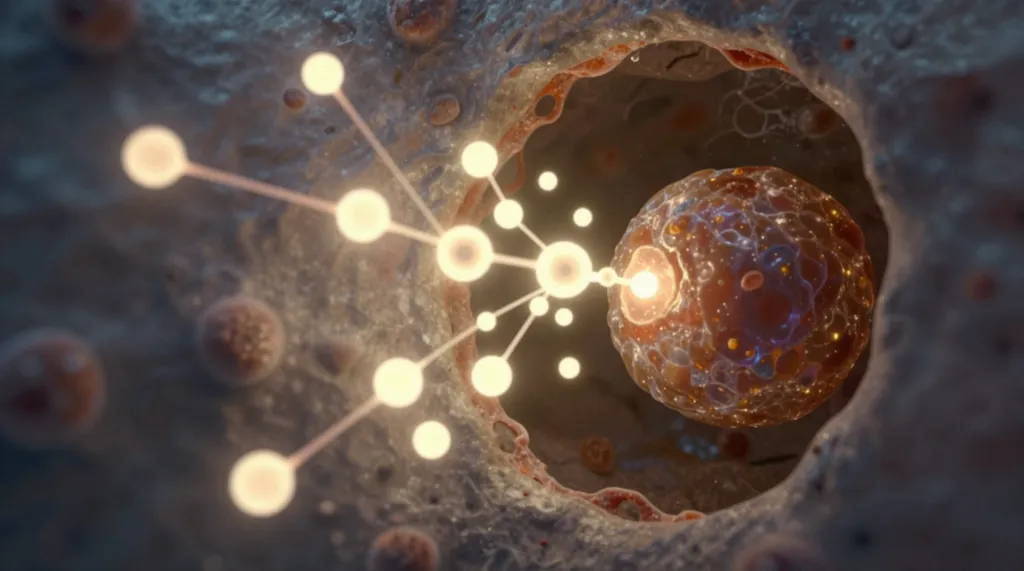
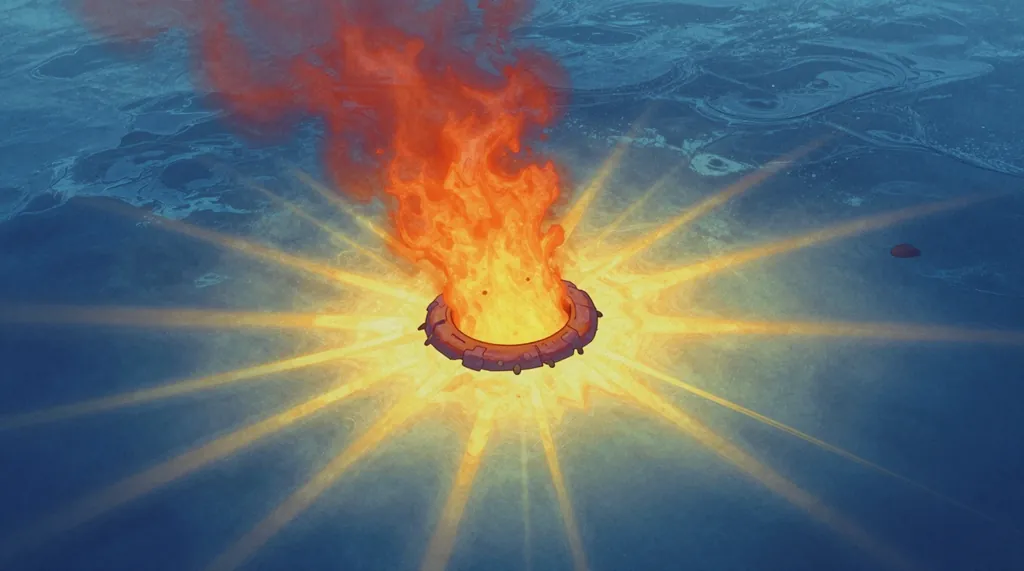
It is called the Geothermal Alarm.
In this volatile world, stability is an illusion. Tectonic activity is constant, driven by the planet's radioactive core.
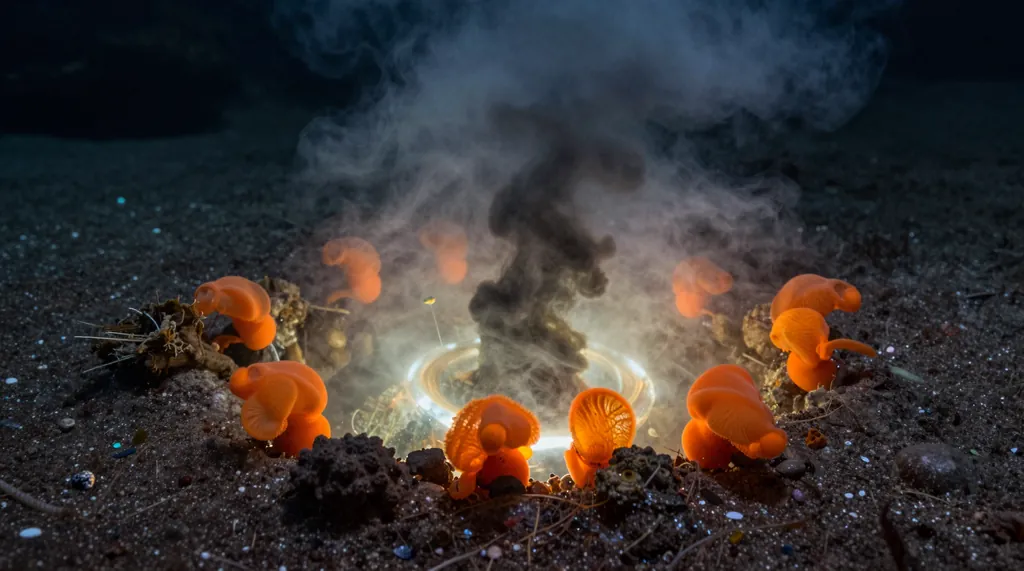
A distant volcanic eruption. An underwater earthquake. Or, more commonly, birth of a new hydrothermal vent, a new oasis.
A sudden increase in heat flow through a crust crack can raise local water temperature by a few critical degrees.
From minus two degrees Celsius to plus four degrees Celsius.
It is a small difference.
But it is enough.
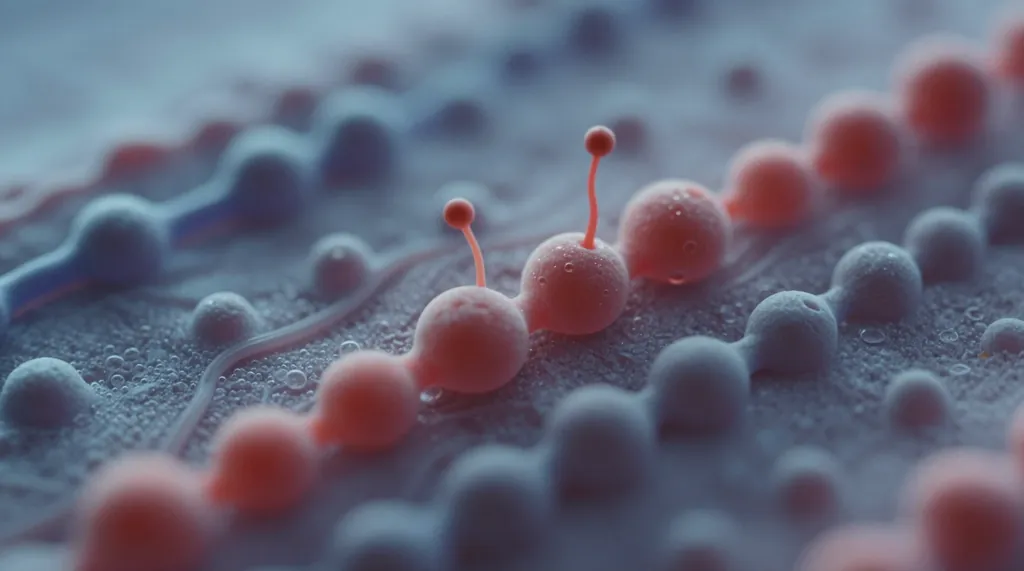
This thermal signal is detected by extremely sensitive temperature sensors embedded in the Aethelgard's outer membrane.
Thermoreceptors able to detect variations of thousandths of a degree.
Upon receiving the signal, the creature initiates what is known as the reanimation protocol.
The most dangerous phase of the entire life cycle.
Because thawing is more dangerous than freezing.
If the ice block melts too fast, extracellular water rushes into still dehydrated cells.
Causing explosive swelling. Cell membrane bursts like an over-pressurized balloon.
It is lysis by volume excess. Death by inflation.
But if it melts too slowly, something equally terrible happens.
Recrystallization.
Ice microcrystals formed in extracellular space during freezing fuse slowly.
They grow. Turn into macrocrystals. Into gigantic swords still able to pierce cryoprotected cell membranes.
So the Aethelgard must wake in perfect balance.
Neither too fast, nor too slowly.
It is a molecular dance of exquisite clockwork.
The Aethelgard counters this deadly threat with a mechanism of nearly impossible precision molecular clockwork.
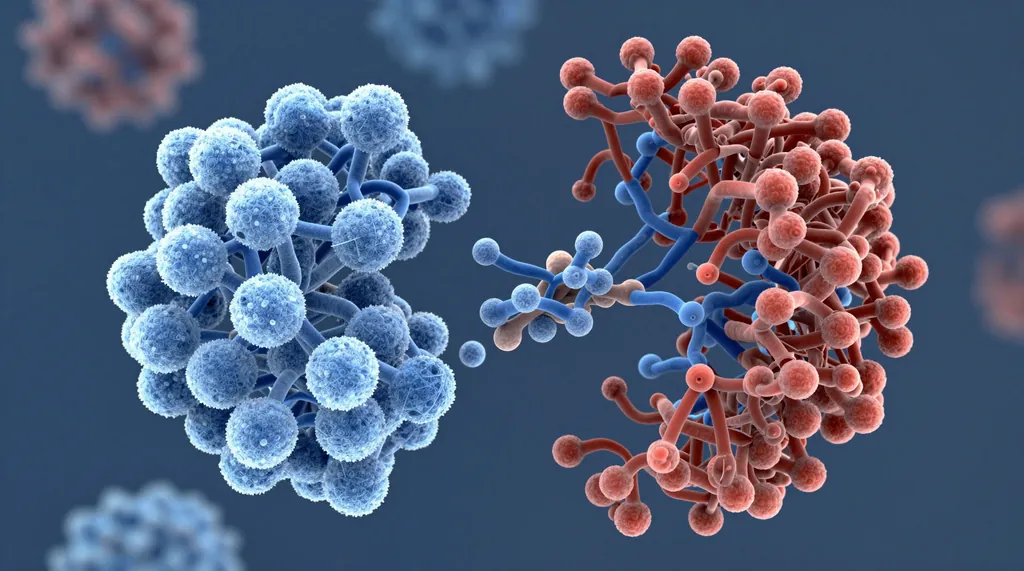
First, activates Recrystallization Proteins. Detecting temperature rise, the creature immediately activates proteins preventing ice nucleation.
These RCP saturate extracellular space and adhere to outer ice crystal surface.
Inhibit growth.
Prevent fusion into dangerous macrocrystals.
Ice melts, but in a controlled way. Careful. Millimeter by millimeter.
Second, restarts osmotic repumping.
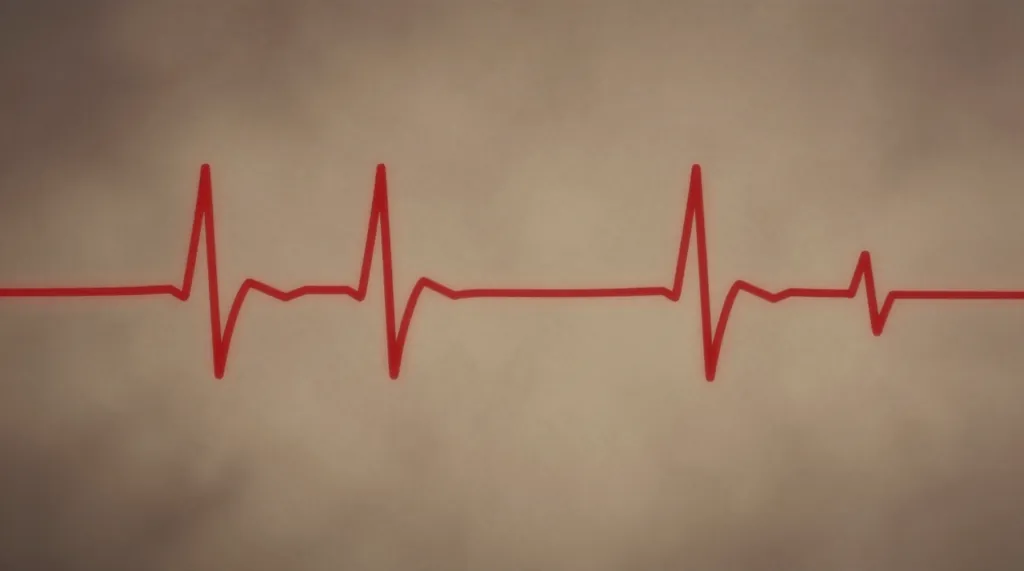
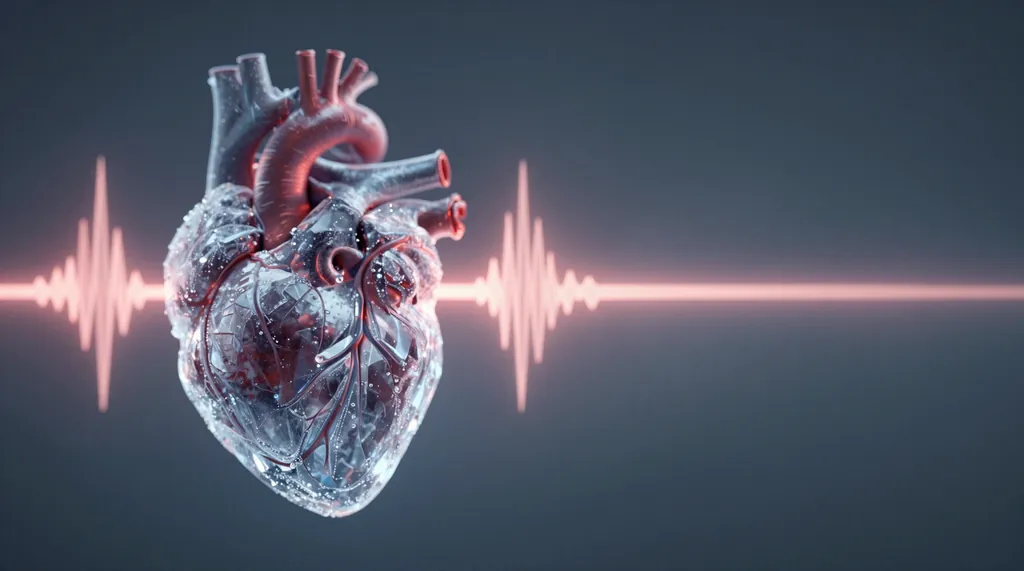
Heartbeat begins again. Slowly at first. Pulse accelerates.
Circulation resumes movement of concentrated silicone glycols through body.
The Aethelgard uses remaining energy from reserves to activate ion pumps in reverse.
Now actively absorbing pure outside water and expelling concentrated cryoprotectants.
It is a gradual rehydration process, meticulously choreographed, readjusting cell volume without causing rupture.
This awakening process is the biological version of starting a combustion engine sitting in deep freeze for millennia.
It is a moment of enormous vulnerability and concentrated energy expenditure.
The Aethelgard has only a small time window.
Perhaps a few weeks. Perhaps a few months if heat source is constant.
A window to fulfill its single reproductive mission.
When finally fully awake, the Aethelgard enters a state only describable as life explosion.
It is unparalleled biological frenzy.
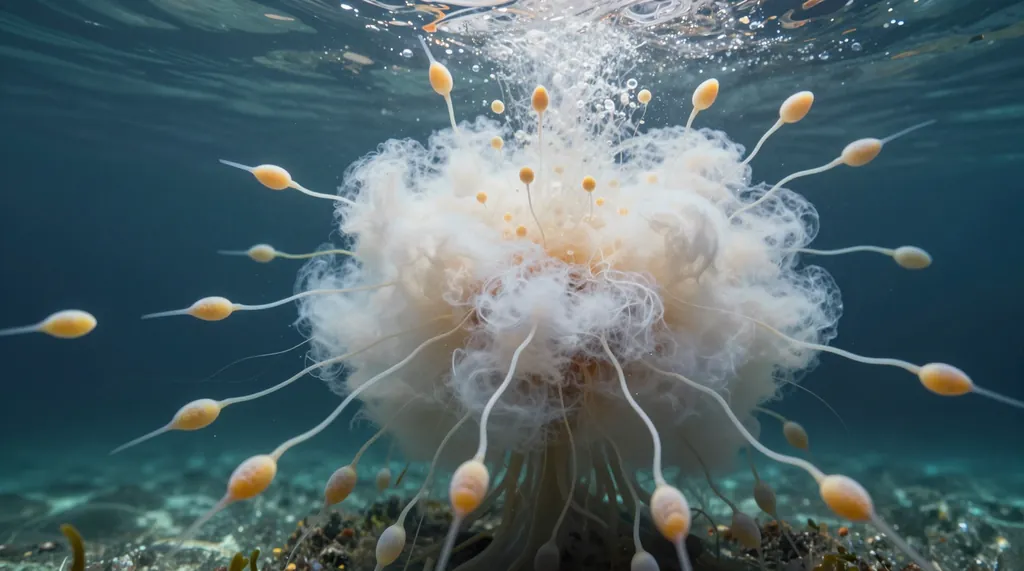
Once totally thawed, the Aethelgard releases massive clouds of gametes into surrounding warm water.
It is violent mating. A feast of energy spent in brief heat instant.
Reproduction without limits. Without containment.
Offspring, released into geothermal oasis, have chance to feed and grow quickly.
Exploiting temporary abundance. Developing. Gaining strength.
Before thermal event passes.
Before cold wins again.
If successful, juveniles disperse slowly in water, seeking new cold sediment patch to anchor.
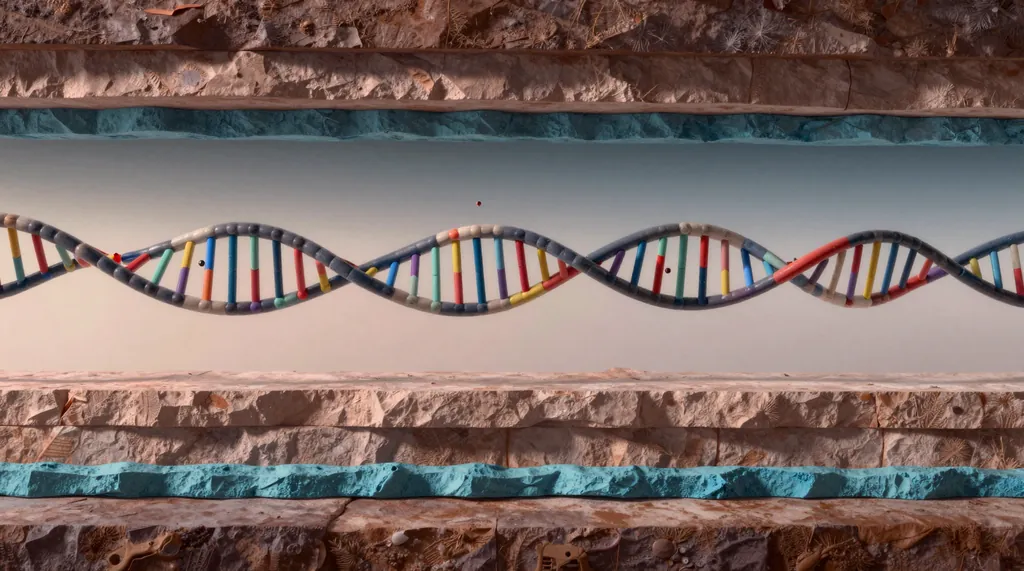
Where they can sink into ice and start their own long-duration cryptobiosis.
Waiting patiently.
The next aeon.
END OF TRANSMISSION