ACT I: ABANDONMENT
We have abandoned the nursery. We have left behind the obscene warmth of habitable zones, where life is easy, where water flows by the simple whim of starlight. That... that is the universe of children.
Here, in deep interstellar space, there are no parents. There is no host star to protect us with its solar wind, nor to bathe us in ultraviolet radiation. We are in the domain of perpetual night.
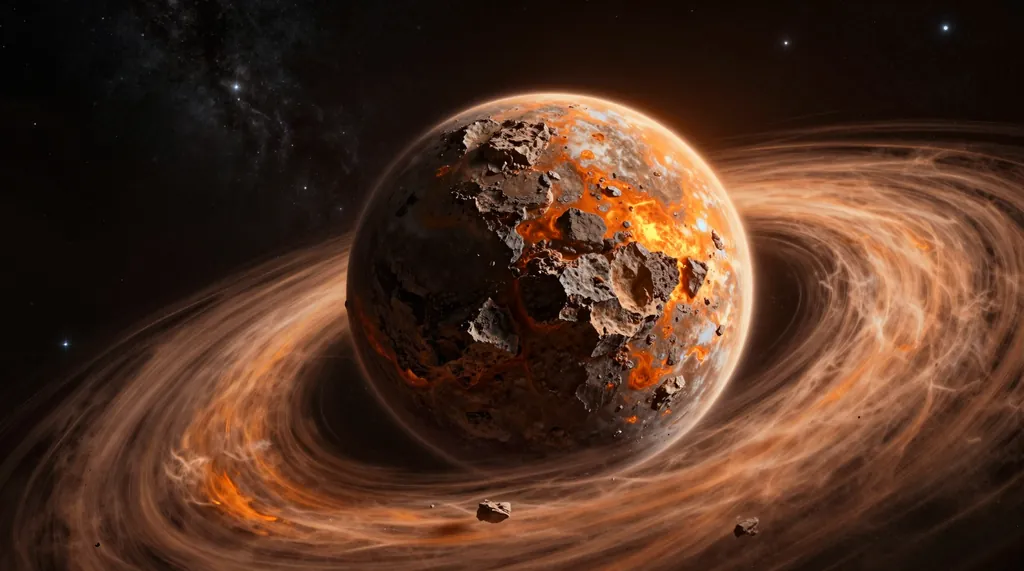
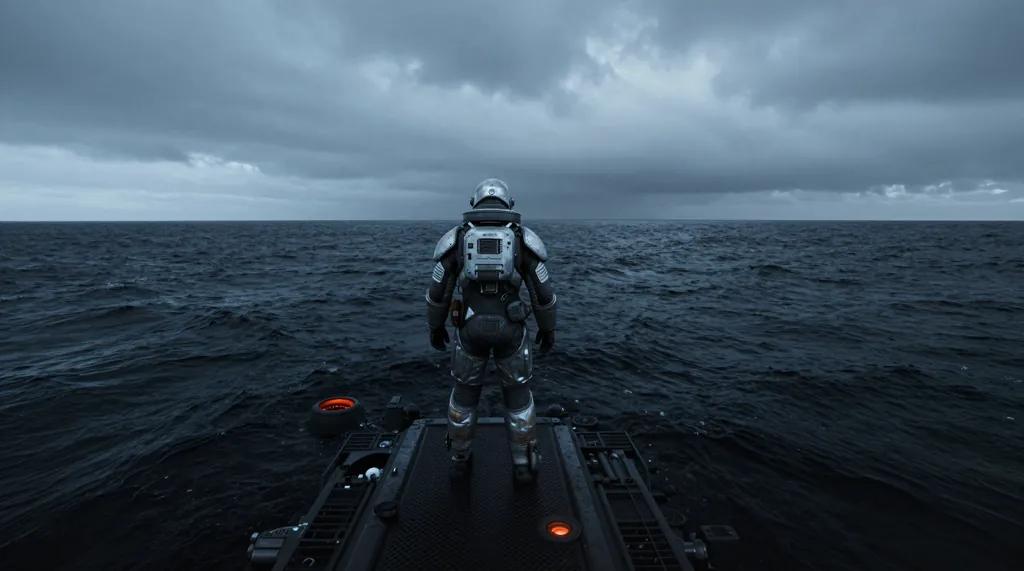
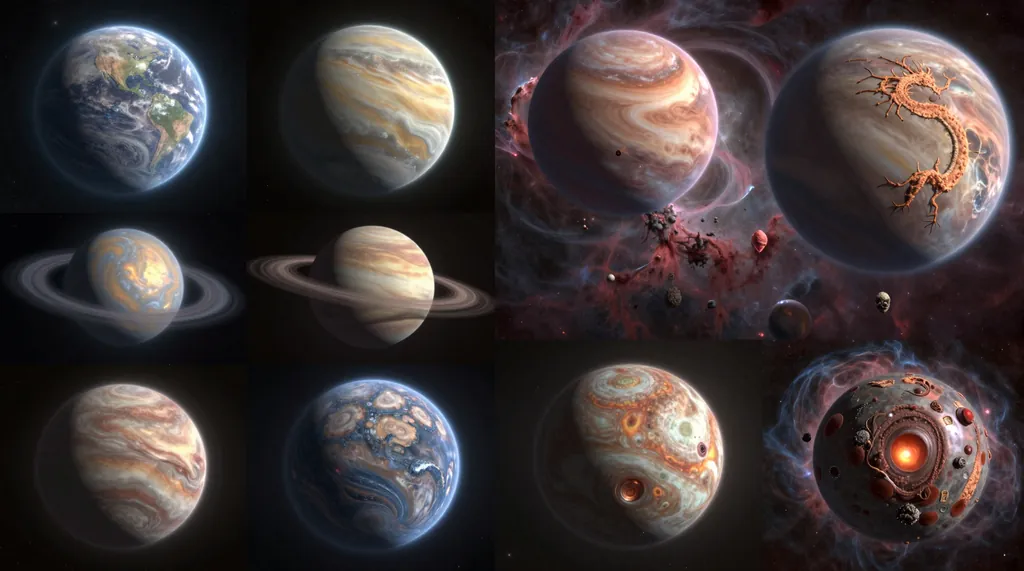
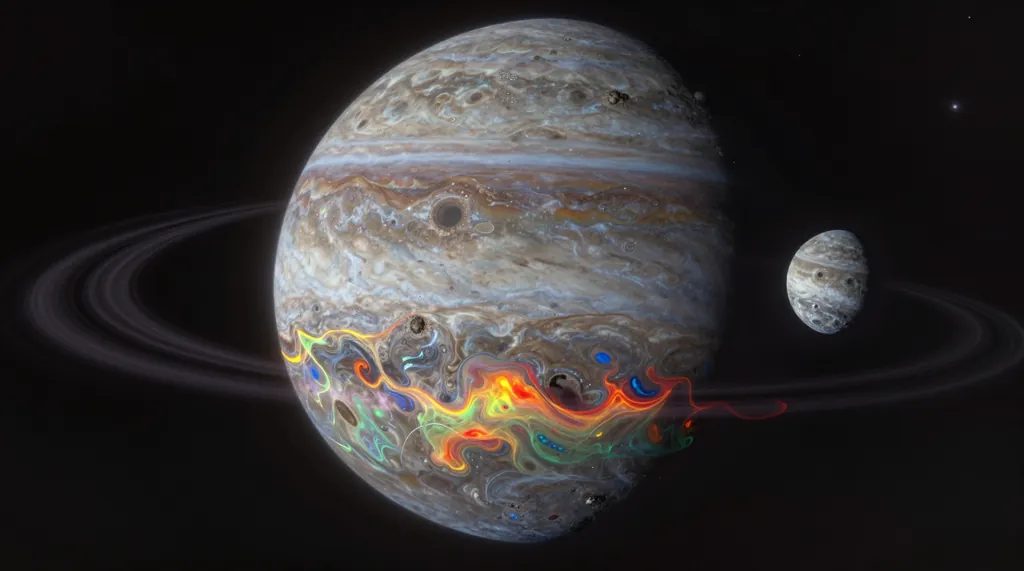
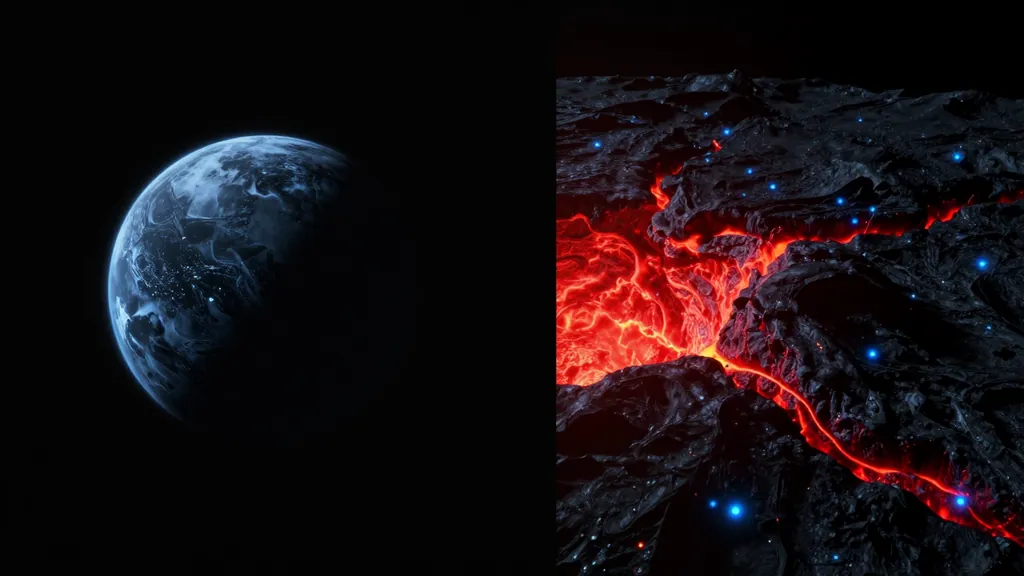
Look at this world. Astronomers call it a "rogue planet." A cosmic orphan violently ejected from its solar system during the chaos of its formation. Imagine the violence of that moment: being ripped from your creator's gravity and thrown into vastness, condemned to float eternally in darkness, without destination, without orbit, without years, without seasons.
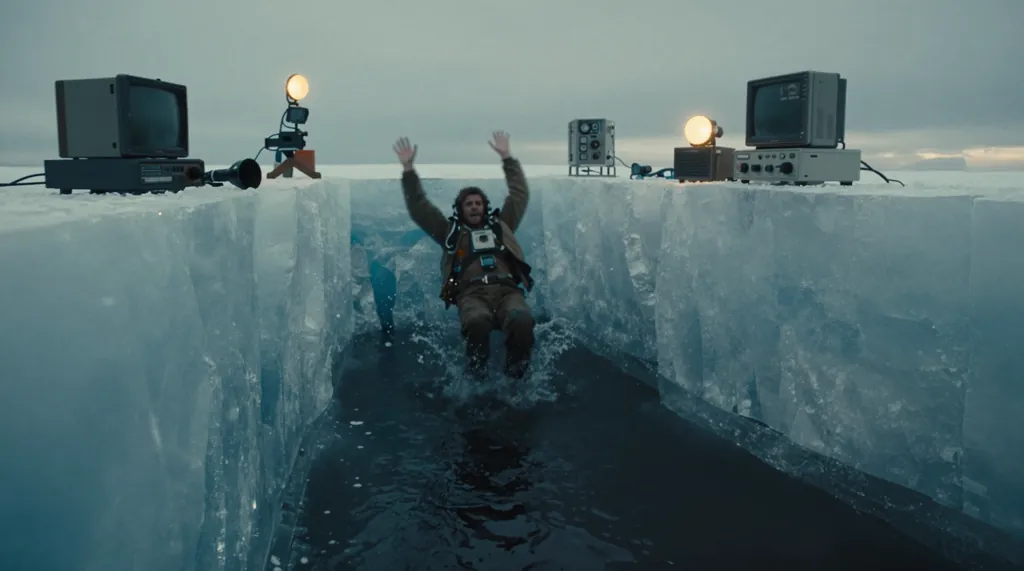
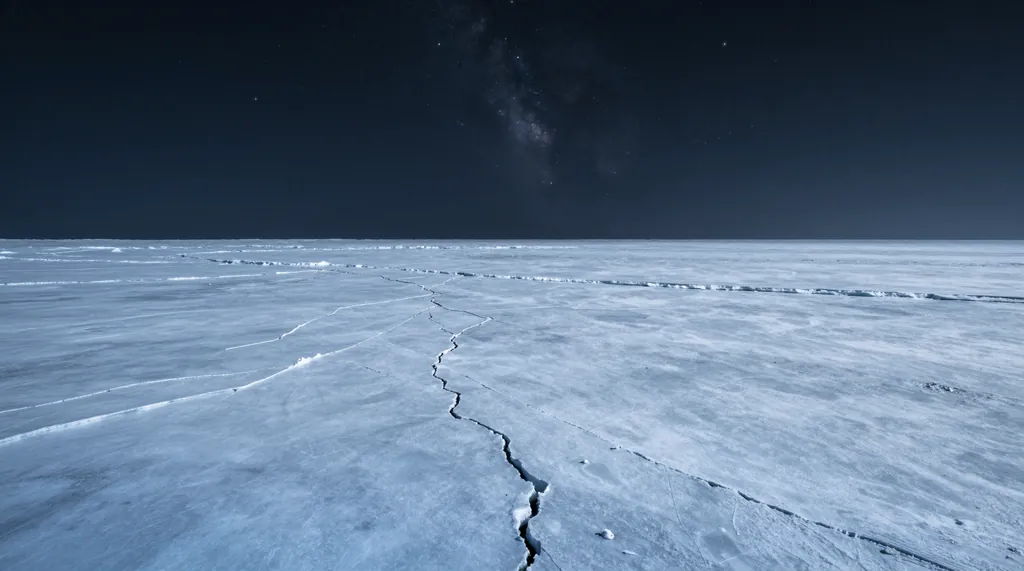
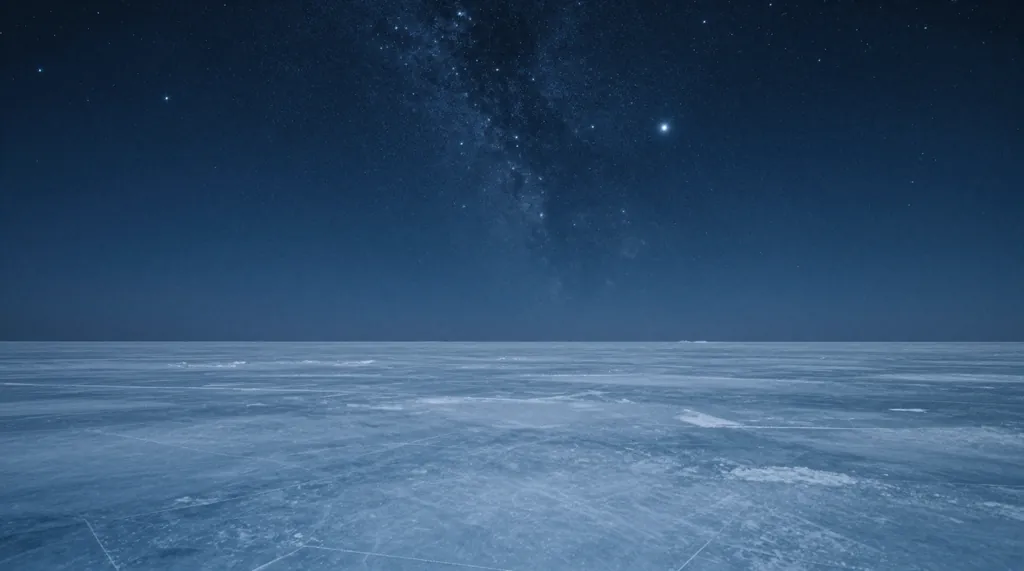
We descend. The first sensation is not visual. It is thermal. Or rather, the total absence of active thermodynamics. We are walking on a surface at minus two hundred forty degrees Celsius. Thirty-three Kelvin. At this temperature, known physics halts. Chemistry surrenders.
It is a cold so absolute it ceases to be a temperature and becomes an architectural structure. Cold here is a building material.
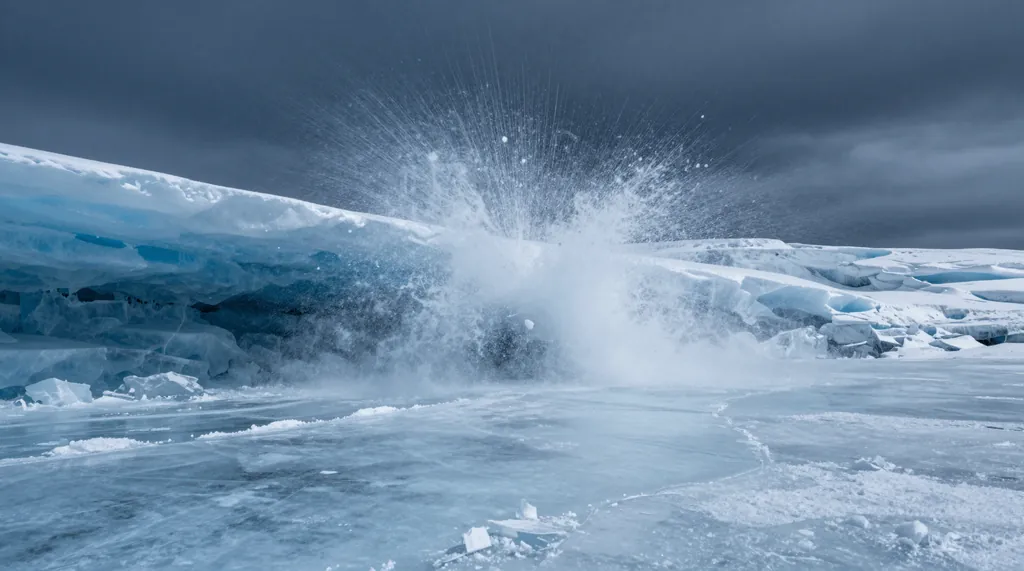
What you see beneath our feet is not rock. It is nitrogen. On Earth, nitrogen is the invisible air we breathe, light, volatile. Here, cold has condemned it to be stone. Glaciers of solid nitrogen crawl with geological slowness, creaking under the weight of an atmosphere freezing and falling like snow.
Air snow. Methane snow.
Listen. The silence of this place is not peace. It is indifference. If you screamed here, frozen air would fall to the ground before carrying your voice. Sound dies instantly. It is a mausoleum the size of a world.
ACT III: THE PLANETARY PRESSURE COOKER
If the surface is a monument to absolute zero, where does hope come from? Where does heat come from?
We must look inside. Forget the sky. The sky here is irrelevant. Salvation lies in deep rock.
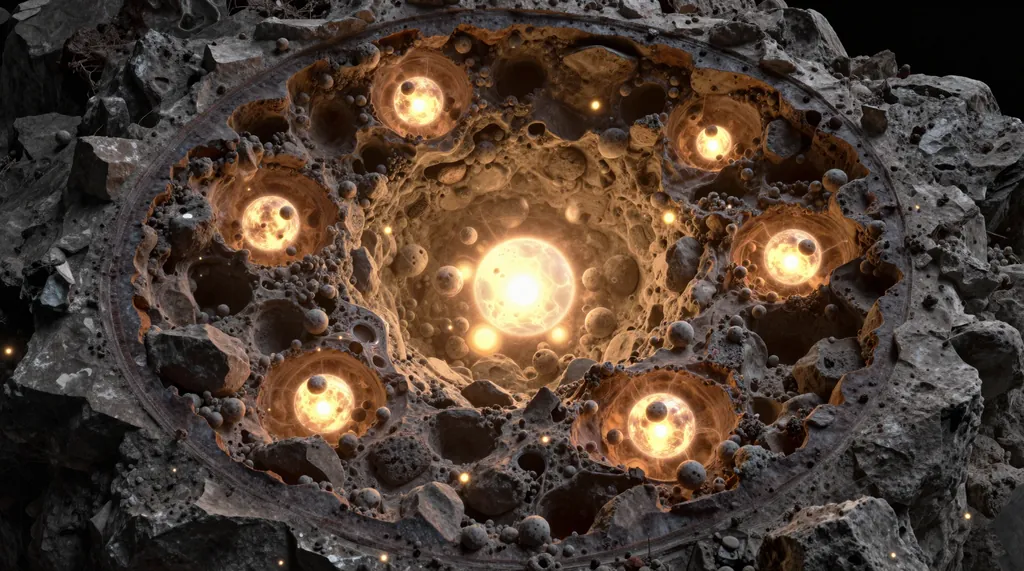
In the center of this rogue world, buried under thousands of kilometers of silicate mantle, exists an engine. It is not a fusion engine like a star. It is something older, dirtier, more... visceral. It is a fission reactor.
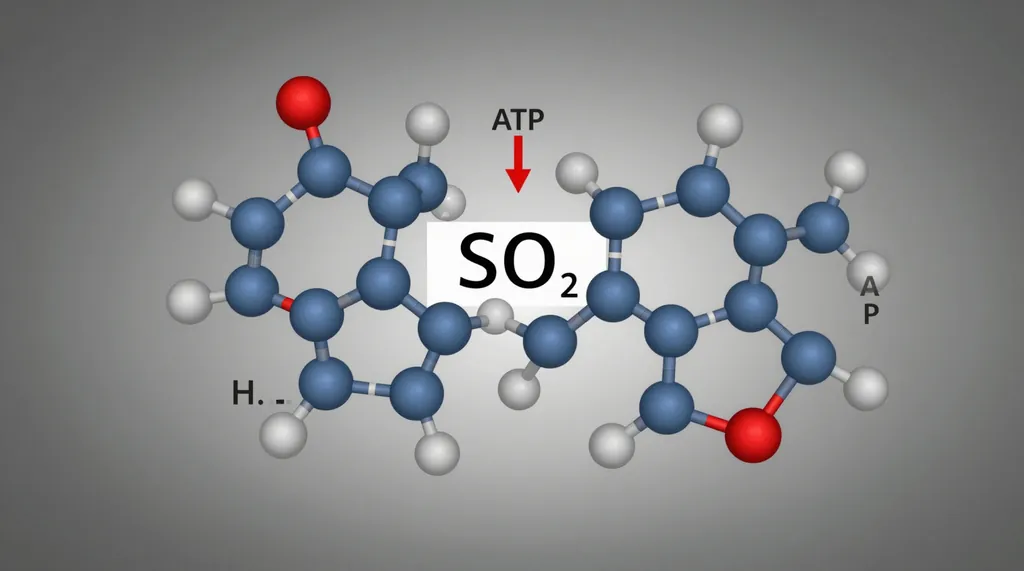
Uranium-238. Thorium-232. Potassium-40. They are ghosts of supernovae dead aeons ago, trapped in the planet's rocky matrix when it formed. These isotopes are unstable. They want to die. And in their agony, in their slow decay toward lead, they release a gift: a gamma ray photon.
Heat.
It is miserable heat compared to a star. Barely a few global terawatts. But here, in darkness, every joule is sacred. This planet keeps itself warm by burning itself, consuming its own mass in a nuclear suicide lasting billions of years.
But heat is not enough. Heat wants to escape. Wants to rise to the surface and dissipate into the hungry void. If you leave a cup of coffee in Antarctica, it freezes. This ocean should have frozen aeons ago.
What stops it?
The water paradox. Ice.
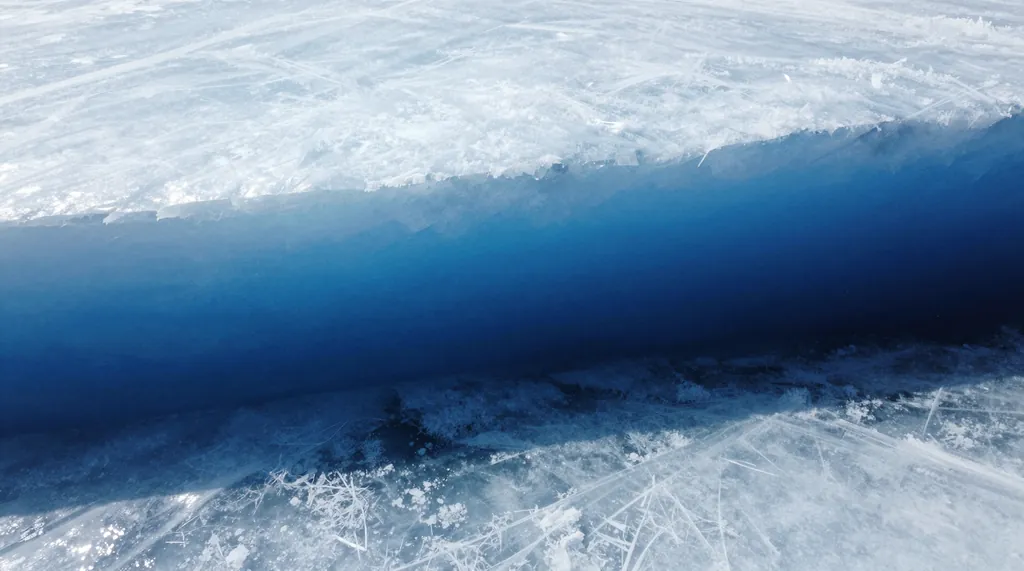
We tend to think of ice as something fragile, something floating in our glasses. But subject water to planetary crust pressure, and ice ceases to be frozen water. It becomes an exotic mineral.
As we descend, pressure forces water molecules to reorder. They pass from Ice One, familiar hexagonal ice, to Ice Two... Three... Five... Six.
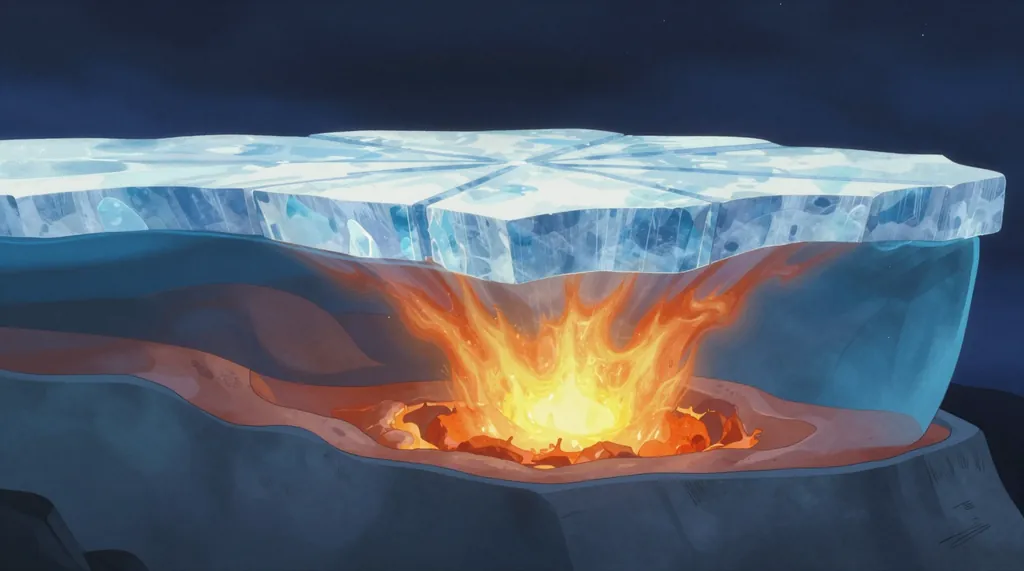
Ice VI (Six) is not cold to touch. It burns. It is a hot solid, compressed to gigapascals, harder than granite, denser than concrete. It forms a layer hundreds of kilometers thick.
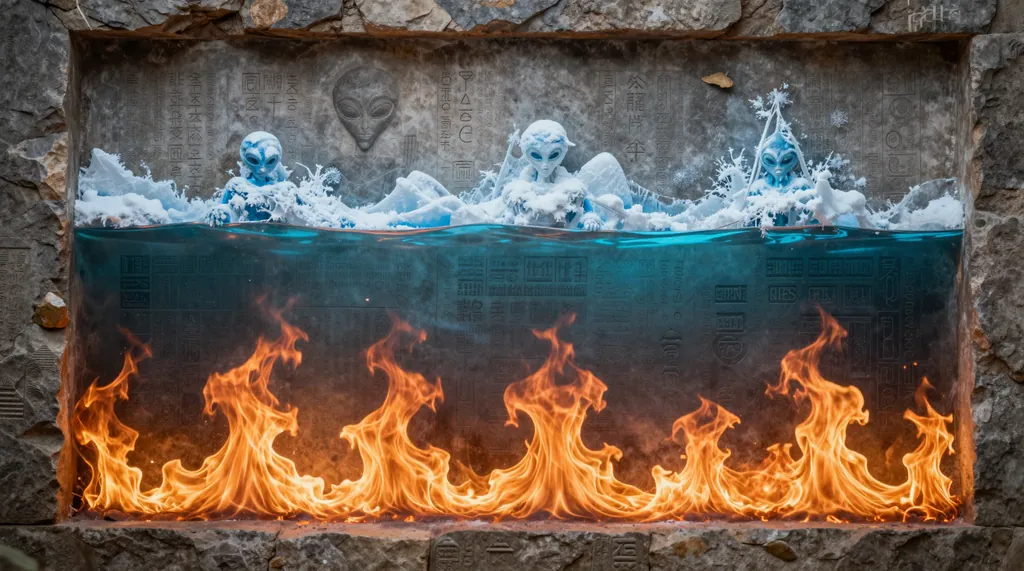
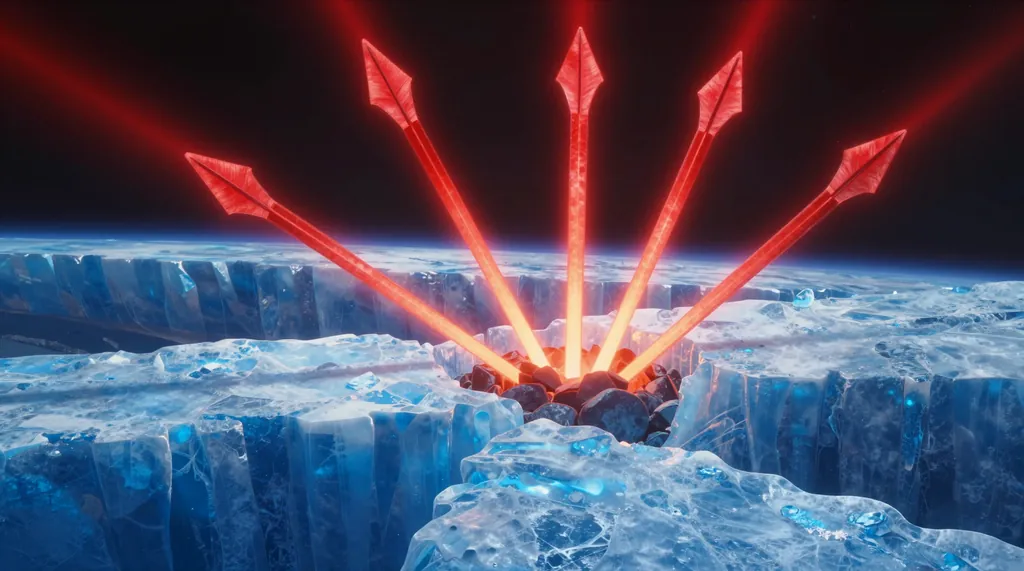
This is the key to the Steppenwolf Hypothesis. This crust of high-pressure ice acts as a planetary pressure cooker lid. It is the ultimate insulator. Keeps space cold out, and traps radiogenic heat in.
It is a thermal blanket woven with tetragonal crystals.
Under that blanket, protected from the universe's madness, water has no choice but to remain liquid.
ACT V: THE BLACK OCEAN
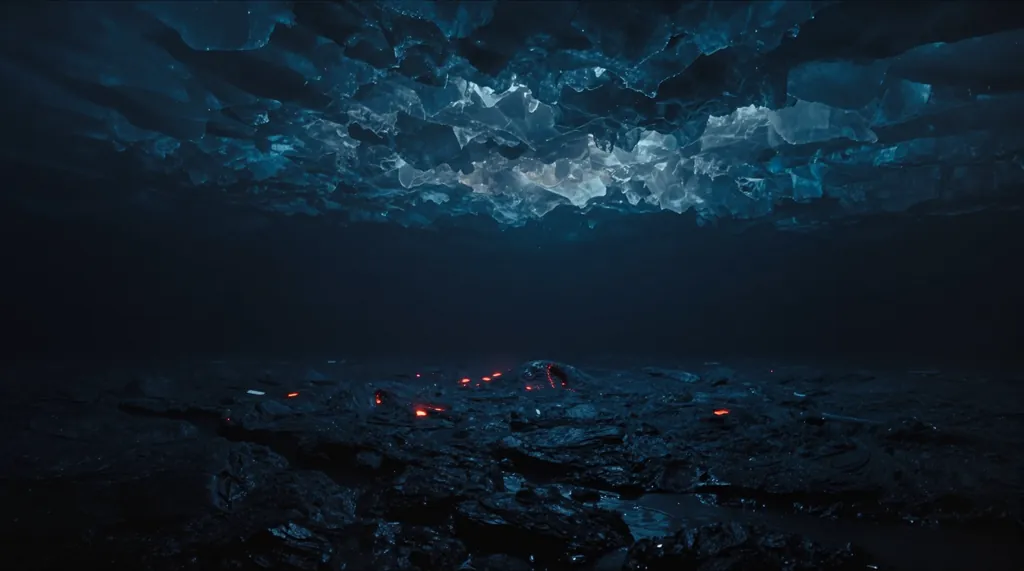
This is the largest ocean in the universe, and no one has ever seen it. There is no surface. There are no waves, because there is no wind. There are no tides, because there is no moon. It is a stagnant water body, trapped between a burning ice ceiling and a magmatic rock floor.
Temperature here is four degrees Celsius. Almost warm. But pressure is a thousand times Earth's surface. It is a hug that kills.
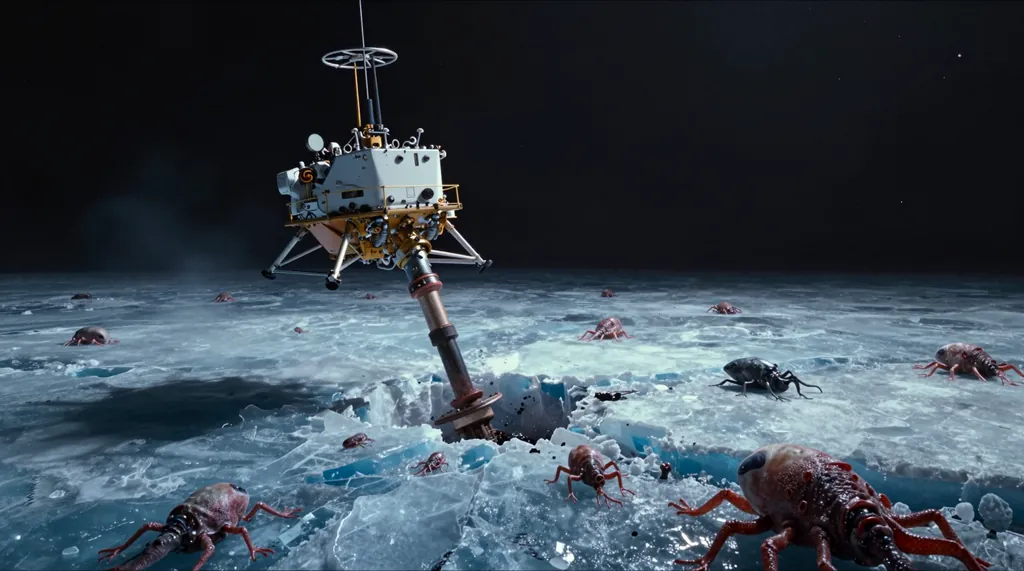
Here, in this liquid blackness, where light has never existed since time's birth... something moves in front of the camera. We are not alone. The world's bottom is not dead. It is burning.
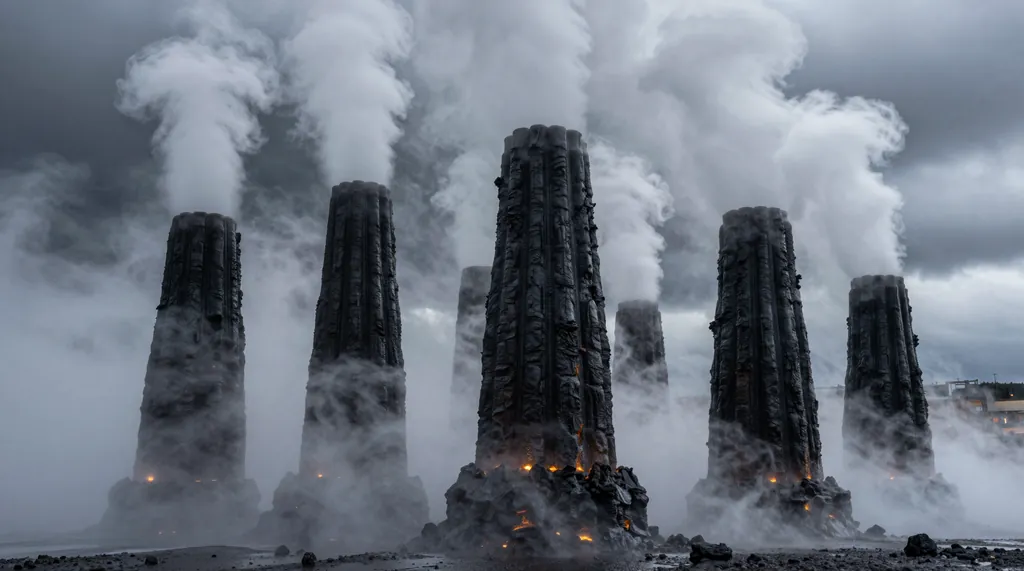
Before us rise this abyss's cathedrals: hydrothermal vents. Sulfur and iron towers thirty meters high spewing superheated water at three hundred degrees, charged with toxic minerals.
On Earth, this would be a death zone. Here, it is the Garden of Eden.
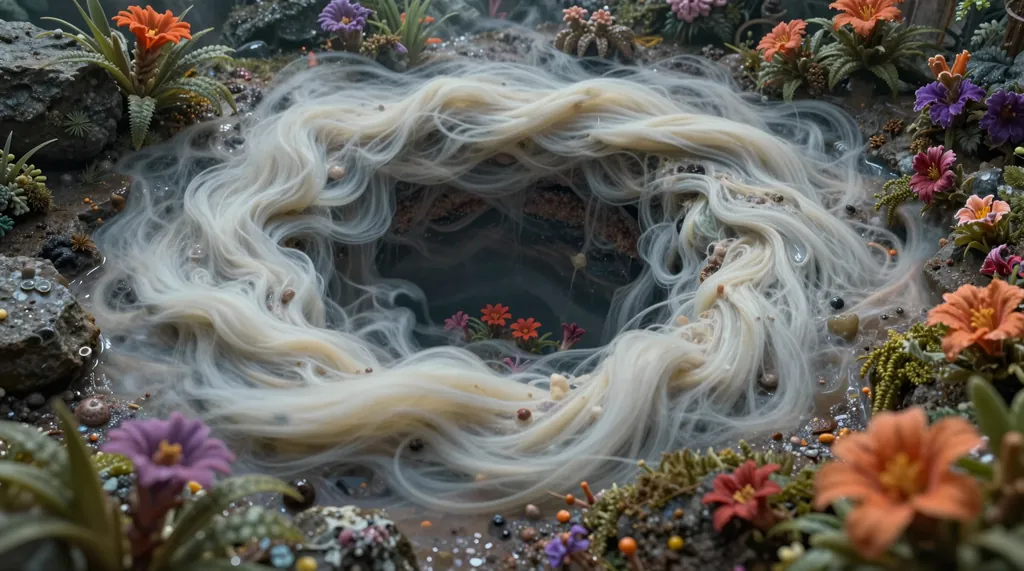
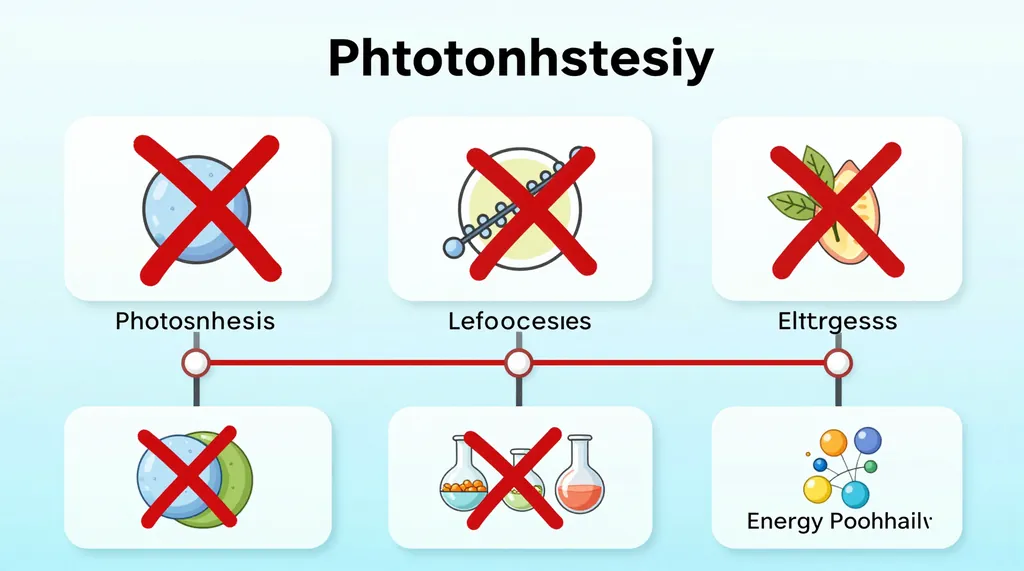
Life here does not pray to light. It prays to chemistry. There is no photosynthesis. There are no photons to harvest. The food chain base is chemosynthesis: bacteria eating poison and breathing stone.
They oxidize hydrogen sulfide bleeding from planet mantle. Transform geological death into biological sugar.
And where there is sugar... there are monsters.
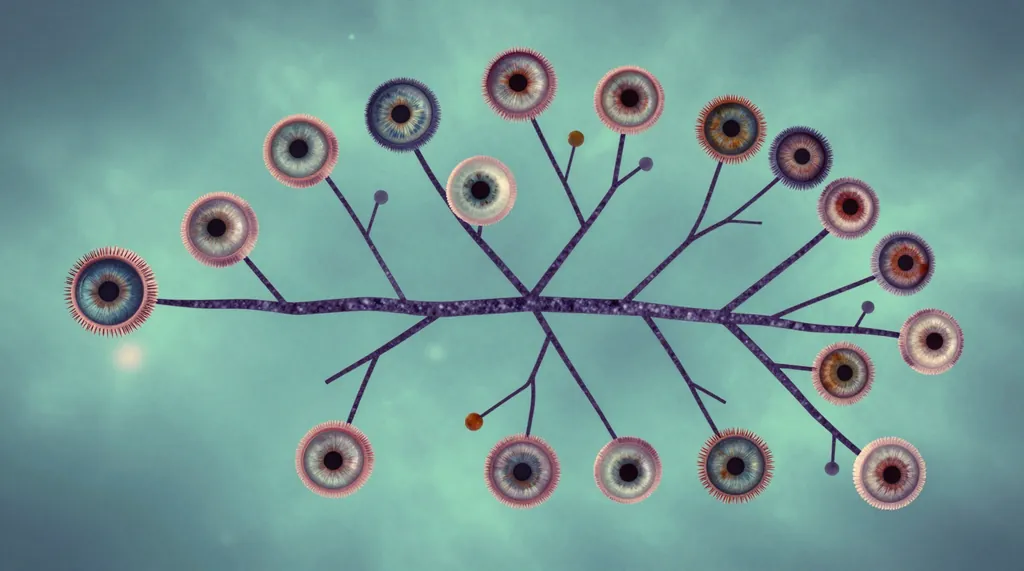
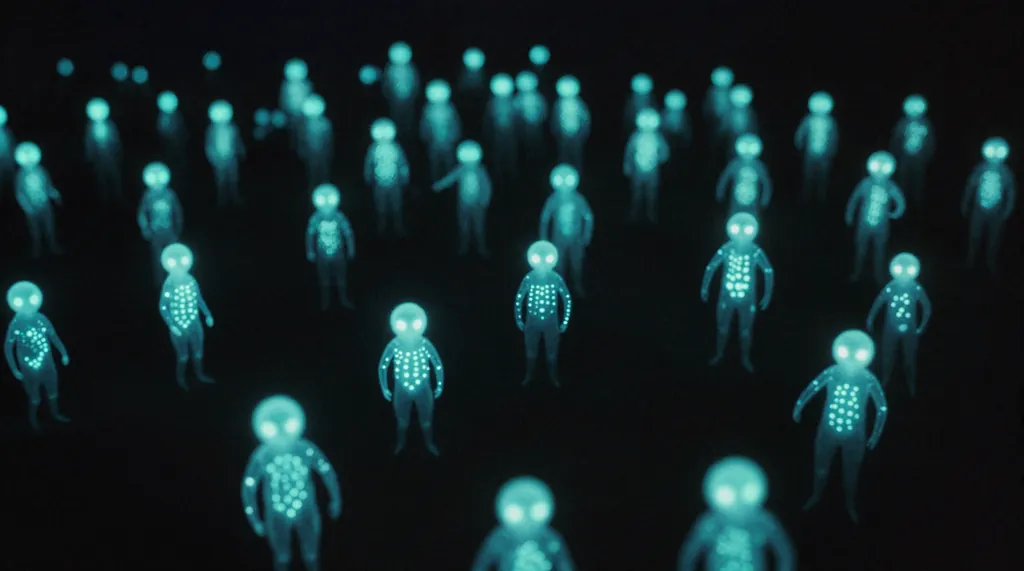
Look at them. The "Rift Nomads." Evolution is a pragmatic architect; it doesn't build what isn't used. In darkness lasting four billion years, the eye is an obsolete organ. An energy waste.
These creatures have no eyes. Their faces are smooth, masks of pale, sensitive skin. They don't need to see darkness; they need to feel it. Their bodies are covered in thermal sensors and mechanoreceptors.
They "see" heat. For them, volcanic vents are blinding beacons of thermal light in a world of cold shadows. They navigate by temperature maps. One degree difference is the border between life and freezing.
Observe how they cling to hot rock. They don't swim freely through the ocean; that would be thermal suicide. They live chained to heat oases, grouped in biological cities around volcanic fire.
But there is light. A cold, sad light. Bioluminescence. They don't use it to see, but to scream. They are warning flashes, mating flashes, fear flashes. Biological Morse code blinking in eternal blackness.
Imagine a civilization communicating only with flashes in the night, never knowing what shape the interlocutor has.
It is an existence of terrifying fragility. If planet core cools, if vent goes out... colony dies. They cannot migrate. Open ocean cold is a wall more solid than steel. They are trapped on heat islands, surrounded by a frozen water desert.
ACT VII: THE UNCOMFORTABLE QUESTION
We return to the surface. Return to cold. Leave behind those blind dreamers in their thermal cradle.
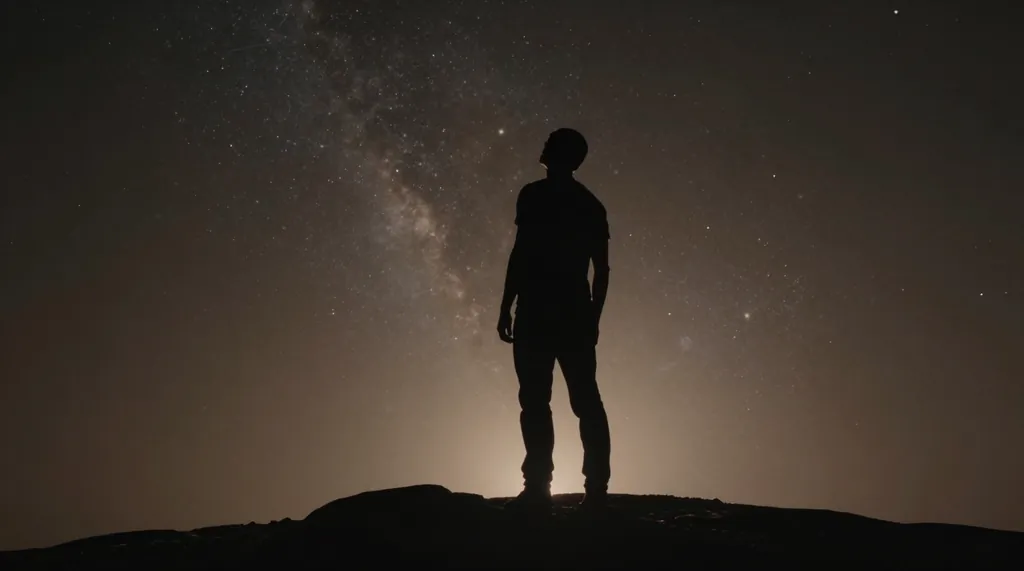
And now, standing here, under this infinite and cruel sky, we must ask the final question. The uncomfortable question.
Who are the truly lucky ones?
We, humans, look at these stars and feel terror. We suffer Pascal's vertigo. We are terrified by the eternal silence of infinite spaces. We know how small we are. We know the universe is vast, hostile, and likely empty. We carry the weight of knowing we are an accident in a galaxy of indifference.
Our vision is our curse. Seeing the universe is fearing it.
But they... children of Steppenwolf Hypothesis... they are free from that fear.
Their universe is small, warm, and understandable. They don't know they float adrift. They don't know they are orphans. They live embraced by geological mother's warmth, safe in ignorance that, out there, exists an infinite void waiting to devour them.
Maybe ignorance is not a prison. Maybe it is a shield. Maybe, on cosmic scale, blindness is an act of mercy.
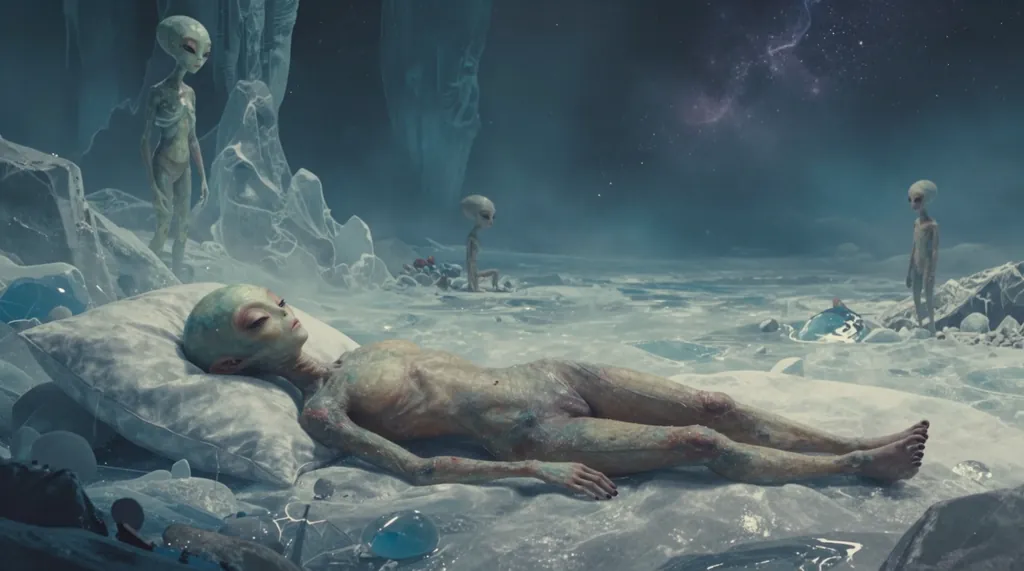
We pity their darkness. But perhaps, if they could see us... if they could understand our existence exposed to radiation, vacuum, and existential terror of an endless cosmos... they would pity us.
They sleep peacefully under their ice blanket. We are the ones awake in the night, trembling, staring into the abyss, hoping the abyss doesn't stare back.
ACT VIII: FINAL REFLECTION
So next time you look at the night sky and wonder if we are alone... remember this:
The universe is not empty. It is full of hidden worlds. Full of secret lives wrapped in ice shrouds, flowing in galaxy's dark veins. They are not waiting for us to discover them. They are waiting for you to leave them alone.
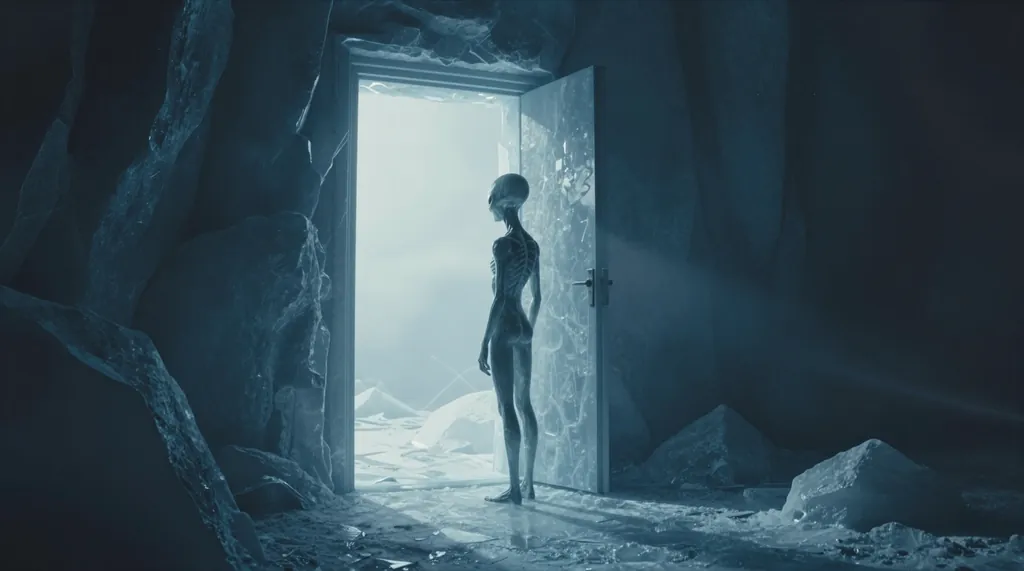
Life finds a way. But sometimes, the best way is to hide in darkness and close the door.
Darkness is full of eyes that cannot see.
If this journey to the abyss fascinated you, and if you have courage to keep exploring what conventional science fears to touch, subscribe and ring the bell.
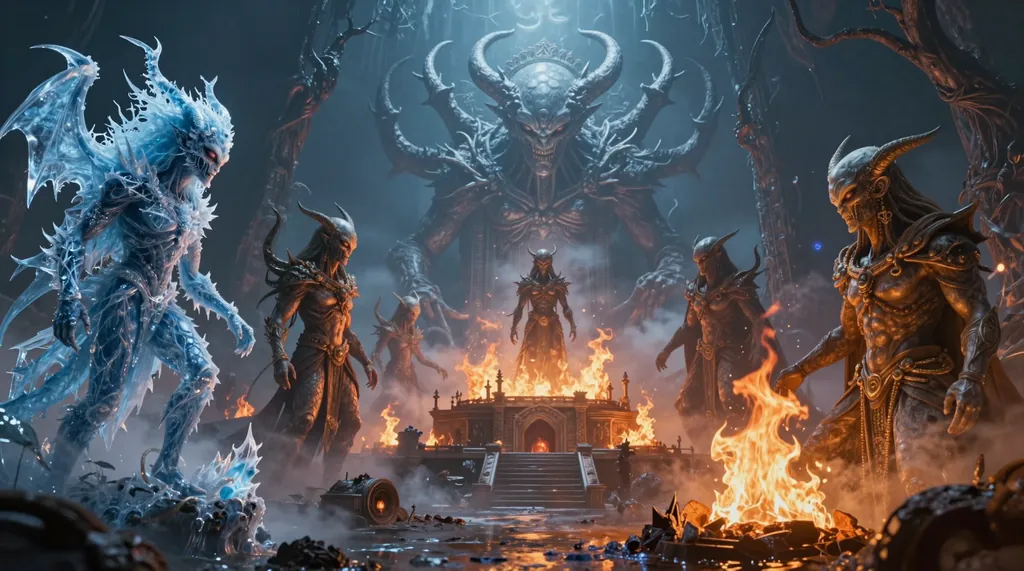
In the next episode, we leave ice to seek fire. We will seek Geothermal Oases on moons orbiting gas giants, where gravity itself grinds rock to create life.
Until the next dive.
This was: The Steppenwolf Hypothesis - Life on Rogue Planets.
Episode 11, Saga II: Habitable Darkness. End of transmission for file number eleven.