ACT I: THE DESCENT INTO THE COLD
We have left the ceiling behind.
That crust of solid ice that protected us from the outer void, that sky that was as concrete as the rock of any planet, is now kilometers above. It disappears. It is lost in the black infinity that ascended behind us.
It no longer exists for us.
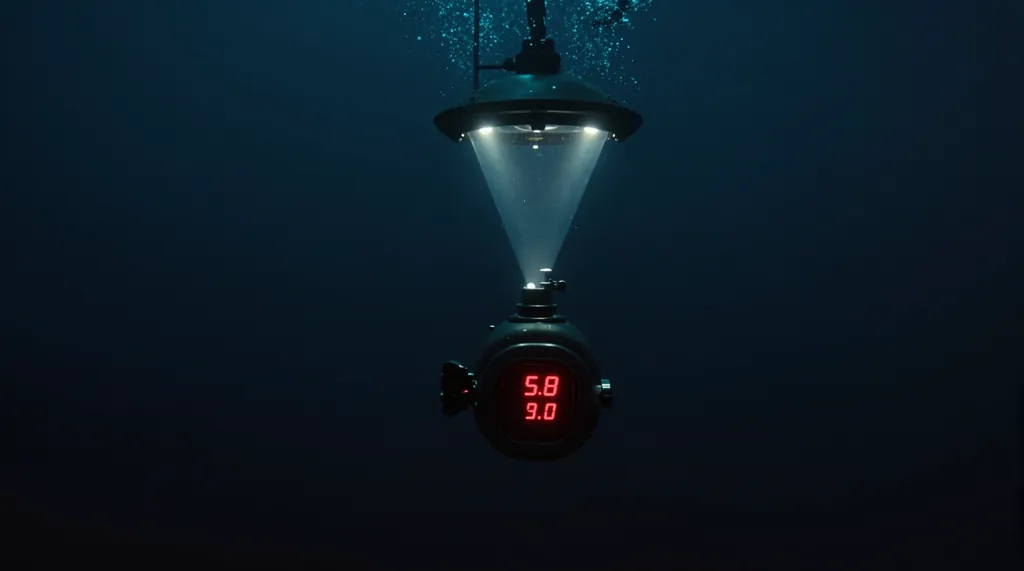
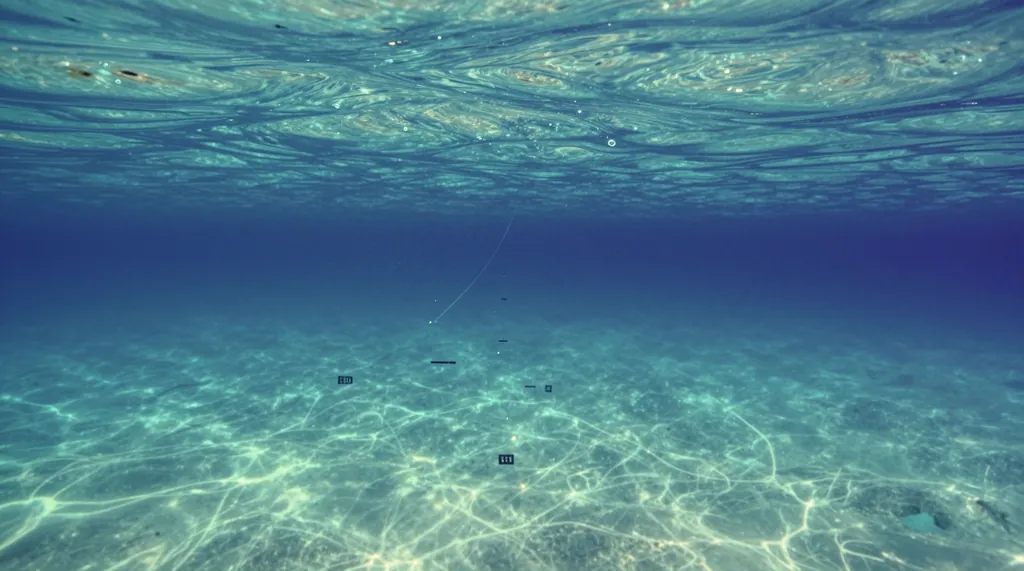
Now, there is only the fall. A fall that has lasted for hours. A fall that will continue for hours more. We are descending through the loneliest column of water in the universe.
Imagine the weight.
On Earth, the atmosphere weighs on your shoulders like a feather. Like the air itself, invisible, almost inconceivable. We can ignore it. We can walk as if it didn't exist, as if pressure weren't real.
Here, the water weighs like a cathedral collapsing on your chest. As if every molecule were a stacked stone brick, stacked, stacked, until the weight is a tangible reality, a physical force you can almost feel compressing the titanium hull.
Every ten meters we descend, the pressure adds another atmosphere.
We are twenty kilometers deep.
The pressure here is two thousand bars.
Two. Thousand. Bars.
If you stuck your hand outside this probe—without a glove, without protection, just your skin—if you were foolish or desperate enough to do so, the pressure wouldn't just crush you. No. That would be too simple, too merciful.
The pressure would force water into your cells with such violence that your own biology would become a liquid implosion. Your blood would vaporize. Your inside would become outside. Your body would cease to be a vessel and become an explosion.
Here, soft matter is an offense to physics.
Only stone and metal survive.
Look around.
This is the Vertical Desert.
We have been going down for hours and haven't seen anything. Not a fish. Not a gelatinous jellyfish navigating the currents. Not even the faint glimmer of a bioluminescent bacterium, that flicker so dim it isn't even light, just the promise of light, barely a memory of what it means to shine.
Why?
Because we are in the dead zone. Not at the surface where nutrients might be falling, organic sediment from a more complex biology. Not at the bottom, where geothermal chimneys might be spewing exotic chemicals. We are in limbo. In the middle point. In the region where nothing is enough to sustain life, but where it isn't extreme enough to force survival innovations either.
We are in a void.
The water surrounding us is ancient. Taste it with your mind. It is salty, dense, metallic. It has a weight ordinary water would never have. It is water that hasn't touched the open air, hasn't felt the kiss of starlight, hasn't known the caress of a surface wave in four billion years.
It is water stagnant in time.
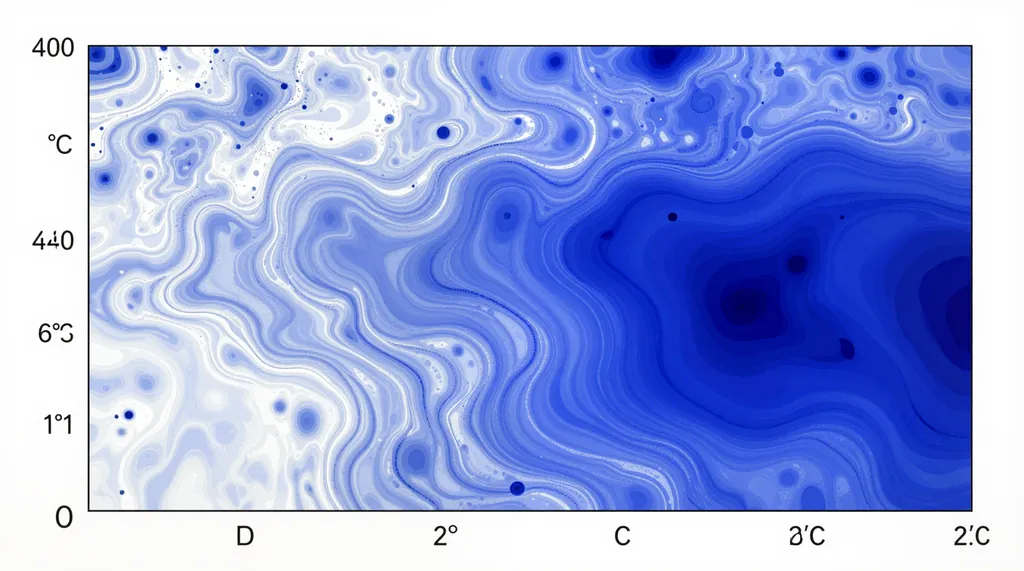
Thermodynamics is cruel here. The cold is minus two degrees Celsius. Water remains liquid only due to two factors: extreme salinity dissolving ice, and crushing pressure forcing it to stay in its aqueous form.
Feel how it steals heat from our ship's hull. Hear the metal creak. It contracts. The cold is not passive; the cold is a predator seeking any thermal gradient to devour, to bring it toward equilibrium, toward the death of molecular motion.
The cold seeks to turn everything to zero.
Entropy. That is the word. We are swimming in an ocean of maximum entropy. A place where energy has dispersed so much, so completely, that nothing should happen anymore. A place where history should have ended aeons ago.
But then...
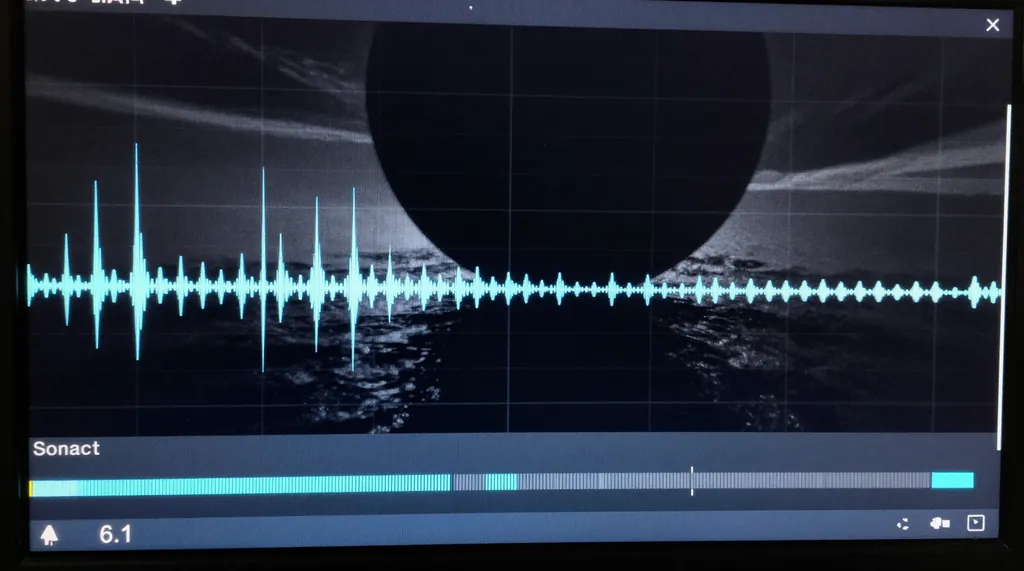
The sonar changes.
ACT III: DARK ALCHEMY
It is not just a geological anomaly.
It is not just a volcanic vent, a geophysical curiosity of no importance.
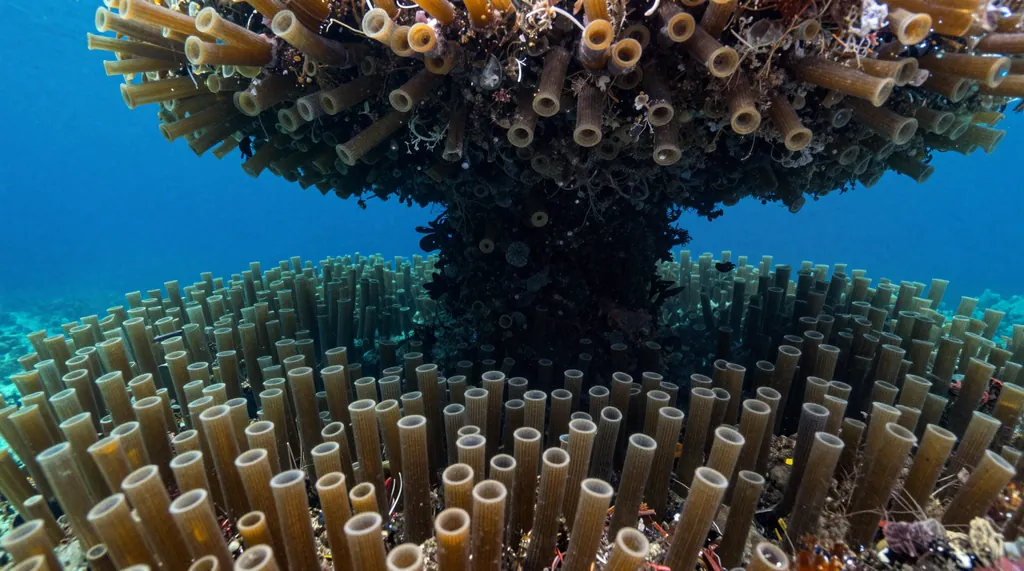
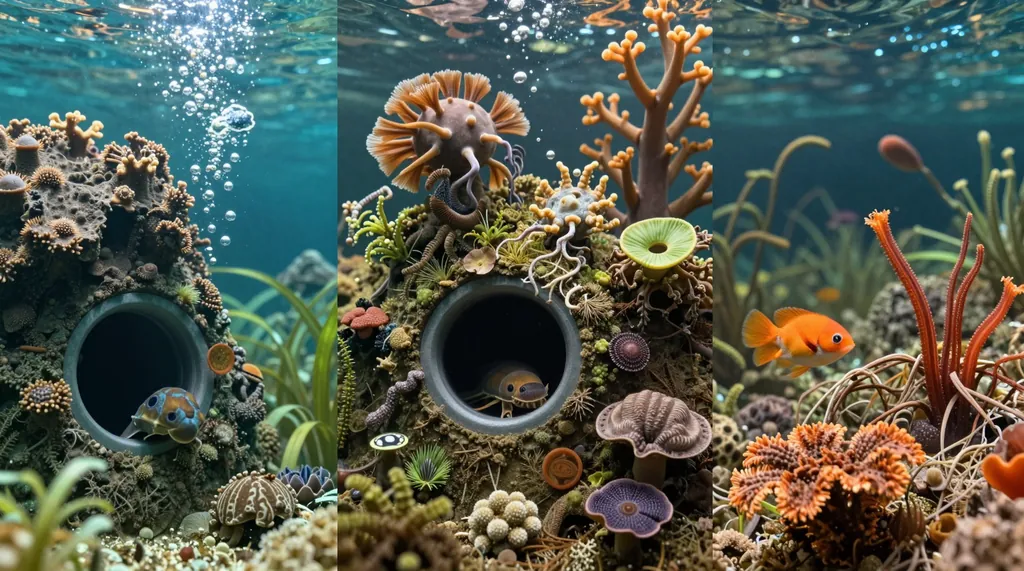
It is a city. A biological megalopolis. Crowded, dense, vibrant, completely alive, bursting with existence. There is so much biomass here, such a concentration of life per square meter, that it rivals Earth's rainforests. It rivals the oldest coral reefs. It rivals any ecosystem we have studied on our planet.
And all this—all this exists without a single photon of sunlight. Without ultraviolet radiation. Without heat coming from the star. All this exists in absolute secrecy, buried under twenty kilometers of ice, ignorant that there is a universe up there, ignorant that there are stars, ignorant that there is any other form of life except what inhabits these hot fragments of the ocean floor.
Welcome to the Oasis.
Welcome to the place where fire meets water, where the two most opposing forces in thermodynamics decide to coexist.
Here, physics becomes biology.
To understand the impossibility of this place, you must forget everything you know about terrestrial biology. Forget. Erase.
On Earth, life is a sun worshipper. It is a photonic sect. Every blade of grass, every alga floating in the ocean, every monumental tree in the jungle, does exactly the same thing: stretches its green arms toward the sky, waiting, begging, desperate to catch a particle of light that traveled one hundred fifty million kilometers to hit it.
All of us do this. Including me. Even right now, my cells are working thanks to ancestors who learned to cannibalize sunlight.
Photosynthesis. Building with light. That is the foundation of all life we know.
But there is no light here. Not a single quantum of solar energy has ever penetrated the ice covering this world. There are no photons here. There are no electromagnetic waves of the visible spectrum. There is only darkness.
Absolute darkness.
According to surface logic, according to everything we learn in biology, according to the central dogma of life, this place should be completely sterile. A perfect biological desert. Without light, there are no plants. Without plants, there are no herbivores. Without herbivores, there are no predators. The pyramid of life has no base. No pyramid can exist.
But here, somehow, here life has found another way.
Look at these bacteria.
Those viscous mats of orange and white covering every inch of rock around the vent are not dirt. They are not useless mineral deposits. They are not residues of geochemical processes.
They are the greatest alchemists in the universe.
They have invented a way to eat stone. They have discovered a metabolism photosynthesis could never achieve. We call it Chemosynthesis.
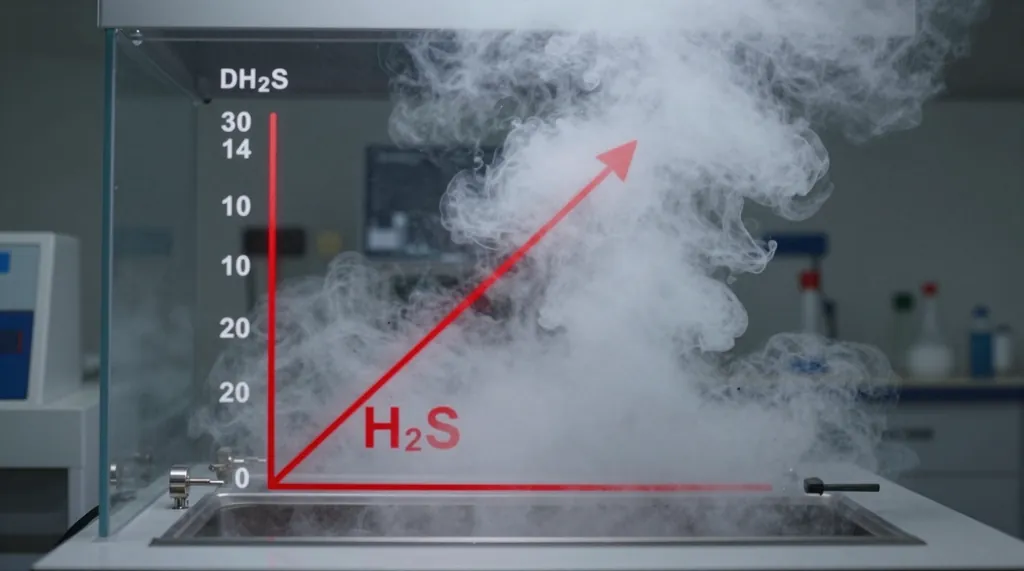
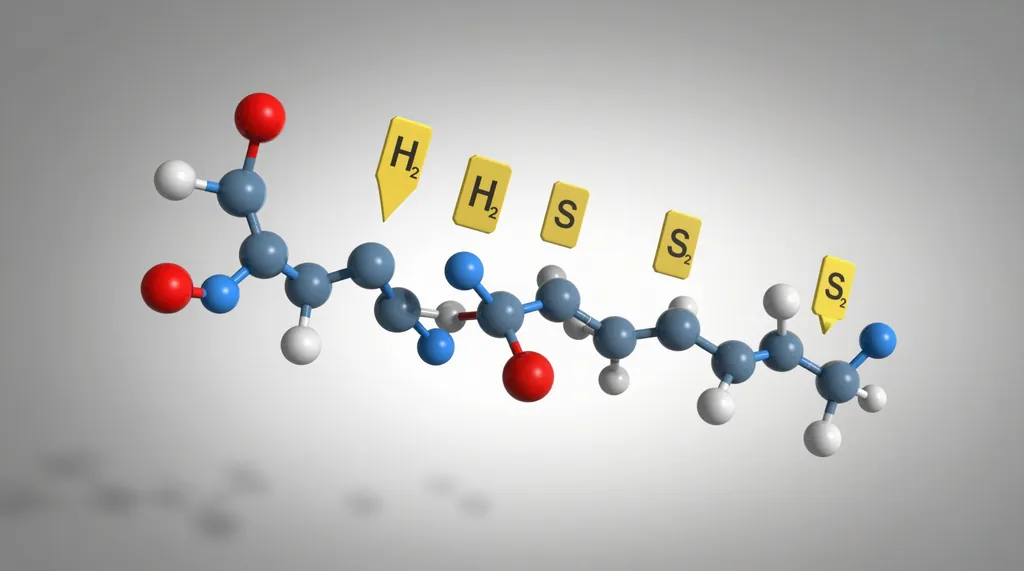
Instead of waiting for a gift from the sky, instead of begging a distant star for energy, these bacteria take what the planet bleeds directly from below. They take Hydrogen Sulfide. H₂S.
For us, it is a lethal gas. A whiff, just one whiff, would collapse your lungs and poison your blood in minutes. It is what smells like rotten eggs. It is what smells like death.
But for them... for them it is a fully charged battery. It is pure energy. It is life concentrated in molecular form.
Observe the brutal elegance of the process.
The bacteria take that toxic molecule, that gas that would kill any other life form, and break it violently. They strip electrons from sulfur with perfect chemical precision, as if cutting meat with a diamond knife.
That breakage releases energy.
And with that energy—energy stolen from the volcanic heart of the world, energy coming from nuclear fission in the core, energy older than the biosphere—with that energy, the bacteria do something miraculous.
They take inert carbon dissolved in water, carbon that has no life form, carbon that is chemically asleep, and weave it into sugar chains. Turn it into body. Turn it into life.
They are turning poison into food. They are turning what is toxic into what is nutritious.
This is the basis of everything you see here. This bacterial mat, this snow of microorganisms, this is the ice and grass of this alien ecosystem. They don't depend on weather, don't depend on seasons, don't depend on whether it's day or night.
Their god is geological. Completely, absolutely geological.
As long as the planet's core remains hot—and it will remain hot for billions of years more thanks to the radioactive decay of uranium and thorium—as long as the vent keeps spewing its toxic soup into the ocean, the banquet will never end.
It is perfect thermodynamic independence.
If this solar system's sun went out tomorrow, or if it exploded in a supernova vaporizing all planets, these creatures wouldn't care. They wouldn't even notice. They would be too busy eating sulfur, turning poison into sugar, living their small and strange lives in perpetual darkness.
ACT V: COSMIC ISOLATION
But there is an intrinsic tragedy in this paradise.
I need you to understand this. I need you to feel the weight of this.
We move away from the oasis. We rise slowly, leaving behind the vent's dim light. The glorious thermal energy sustaining this entire ecosystem begins to fade behind us.
Just a hundred meters from the vent, the desert returns. The cold returns. Death returns.
This oasis is an island. It is not a continent. It is not an archipelago connected by land bridges. It is a lonely island.
On Earth, if a forest burns, animals can flee to the next valley. Seeds can fly with wind for kilometers. Fish can swim upstream to a different tributary. The ocean connects all continents. Life can circulate, can migrate, can seek new opportunities.
Not here.
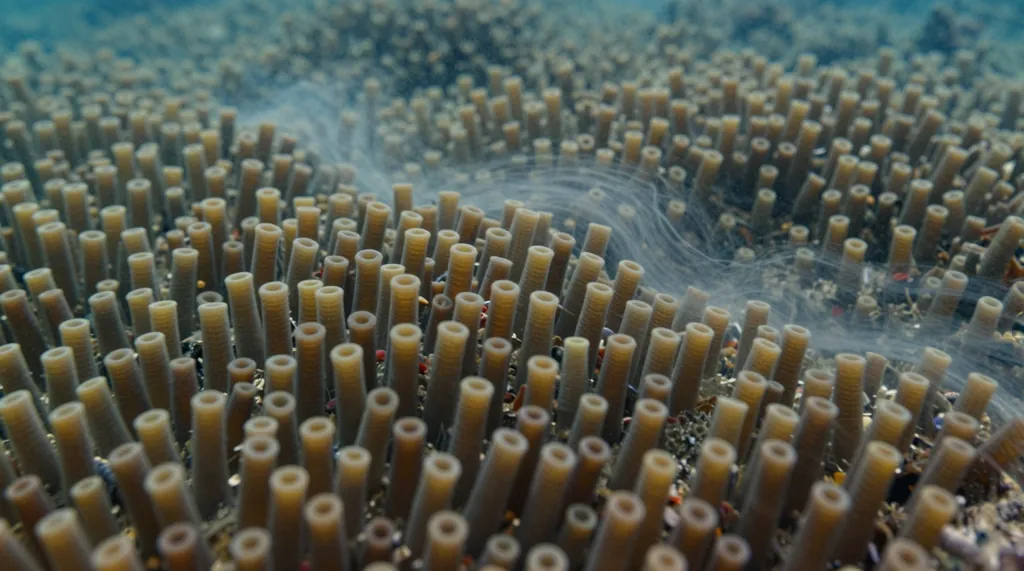
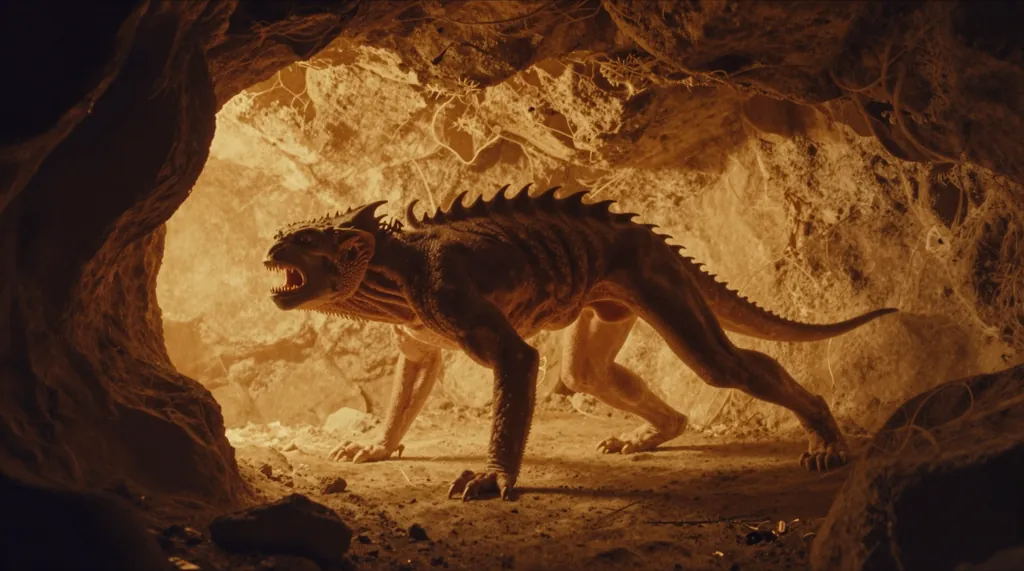
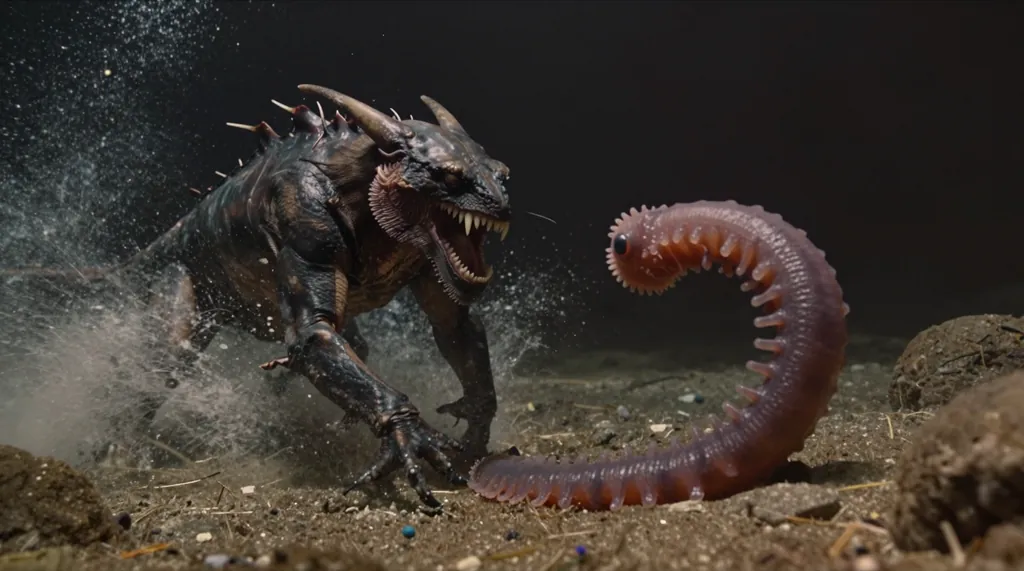
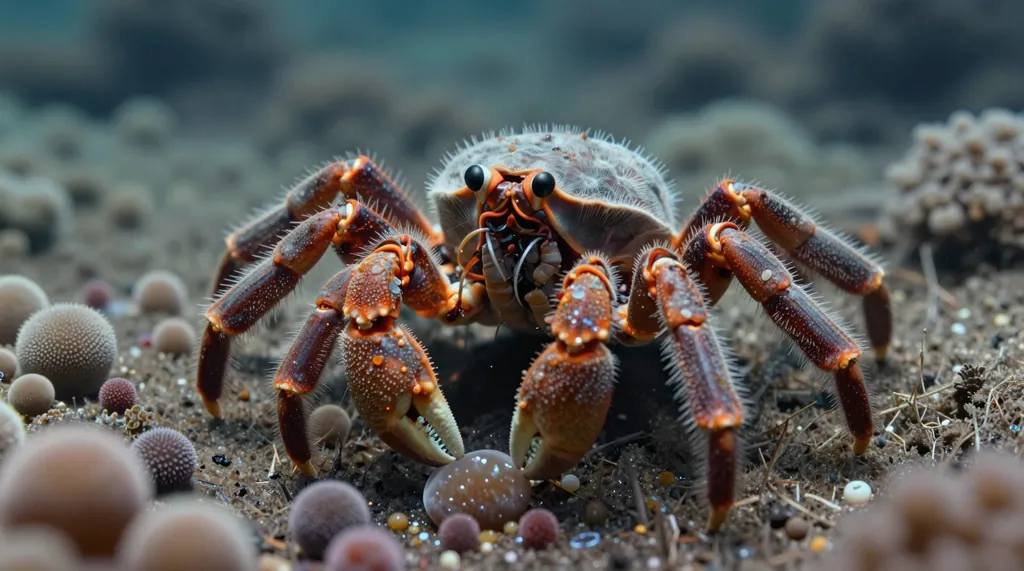
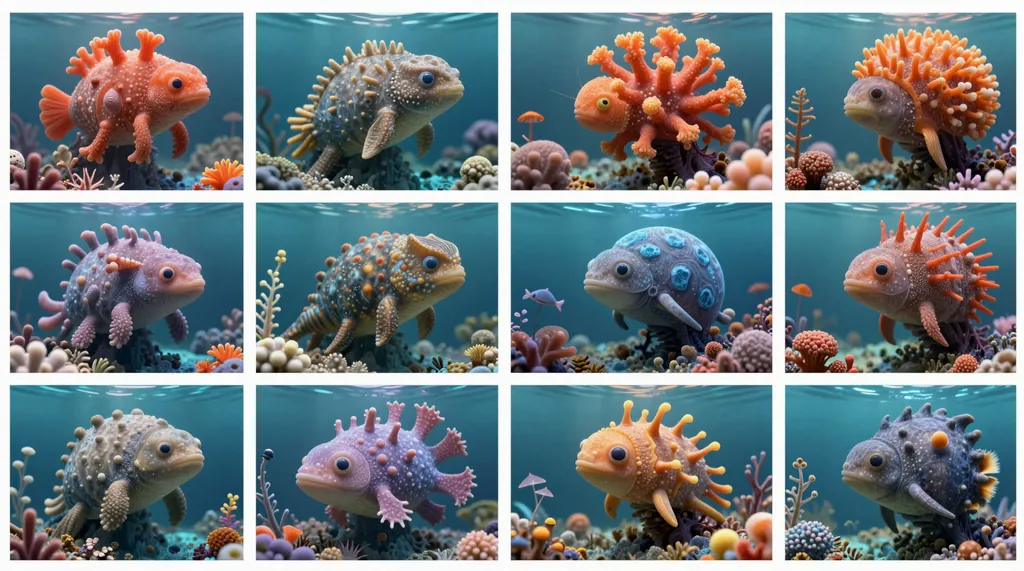
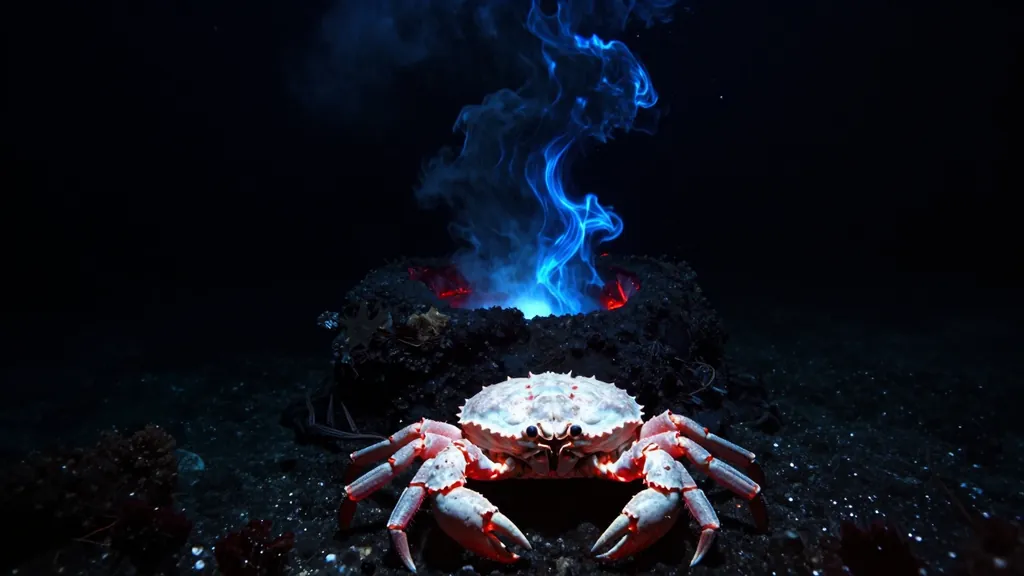
This vent field is surrounded by thousands of kilometers of sterile, frozen ocean. For these creatures, for tubeworms and yeti crabs and the rift leviathan, leaving the warm zone is death.
Cold water acts like space vacuum acts for us. It is an impassable barrier. It is more than a barrier: it is an instant death sentence. Step out of the warm zone and your enzymes slow down. Step out further and your cells begin losing integrity. Step out even further and you die.
They are prisoners in their own salvation. Captives in the only place they can live. Enslaved by geography, chained to this specific point on the globe.
This means each oasis is a completely solitary evolutionary experiment.
Imagine this. Imagine the depth of what I am telling you.
Life in this vent has evolved completely isolated from all other life on the planet. What lives here, what has adopted its form over millions of years, can be totally, absolutely different from what lives in another vent five hundred kilometers away.
There is no genetic exchange. There is no migration. There is no cross-contamination. There is no intergroup competition forcing evolutionary convergence.
In one oasis, evolution may have created giant worms with unique hemoglobin structure. In the next oasis, hundreds of kilometers north, perhaps crystal octopuses have evolved. Organisms modified for thermal light, for intelligent hunters, for prey capable of taking damage in new ways.
In yet another oasis, perhaps a swarm intelligence of crustaceans exists building bone and shell cities.
They will never meet.
They will never know of each other's existence.
They are biological civilizations separated by a universe of dead water, evolving in parallel, diverging toward increasingly strange forms, increasingly specialized, increasingly adapted to their specific niche.
Doomed to be born, live, and die in the absolute solitude of their own volcanic crack.
It is an isolation unparalleled anywhere on planet Earth.
And most terrifying of all...
Chimneys are not eternal.
Nothing is eternal. Everything changes. Everything ends.
One day, the earthquake will cease. The magma conduit feeding this chimney for millennia will block. Tectonic plates will shift. The hot water tap will close.
And when the fire goes out, when thermal energy sustaining this entire ecosystem dissipates into the ocean cold...
The cold will win.
The entire colony will freeze in darkness. Every tubeworm, every yeti crab, every chemosynthetic bacterium, every life form existing here, all of them will freeze solid.
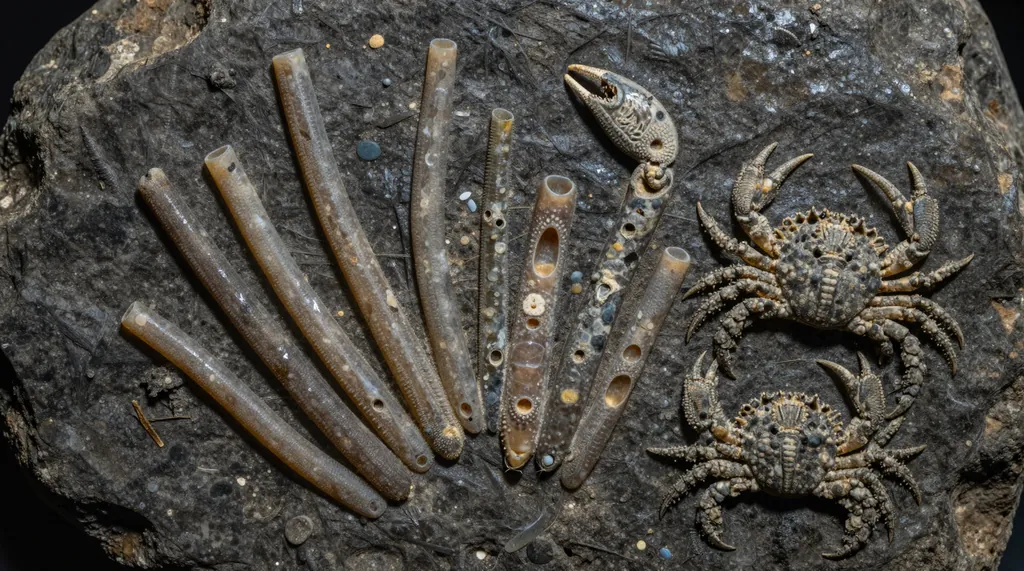
They will become fossils no one will ever find.
The geological record will close. It will be written on rocks no scientist will examine, in a language no biologist will be able to read.
It is an ephemeral existence. Clinging to the fleeting heat of a dying planet, counting its years on geological scale, waiting for the moment the fire goes out.
END OF TRANSMISSION