Introduction: The Cliff of the Abyss
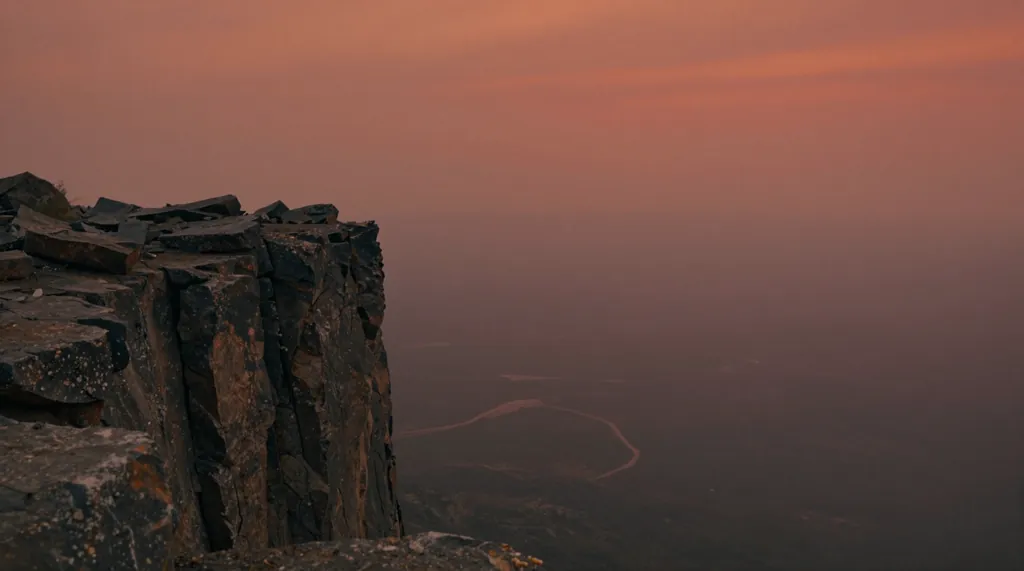
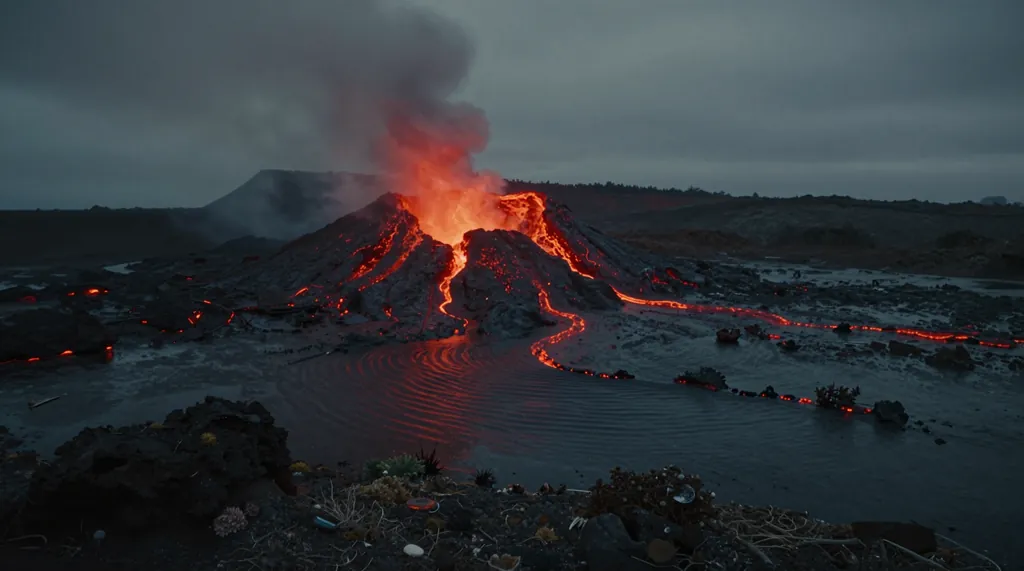
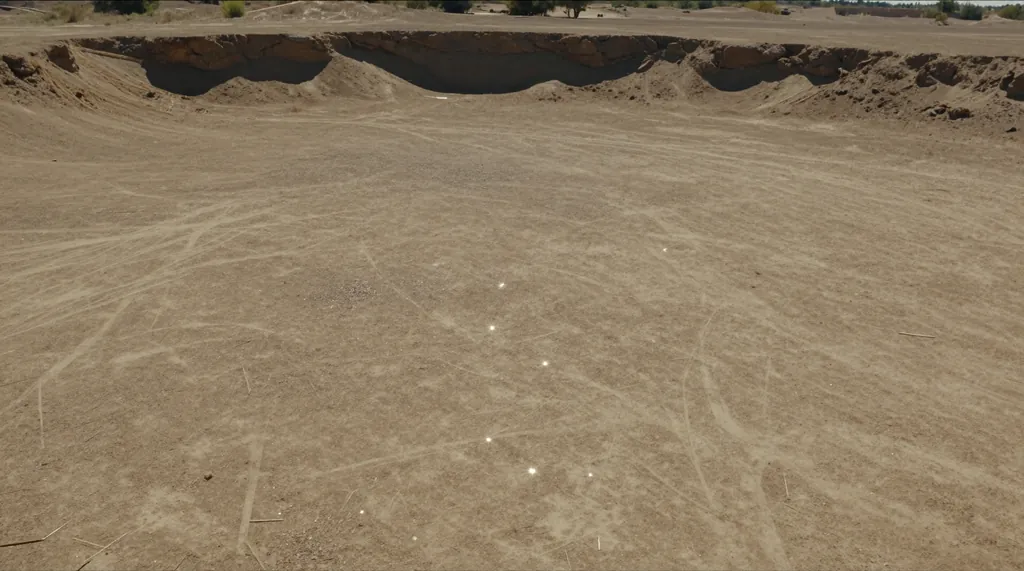
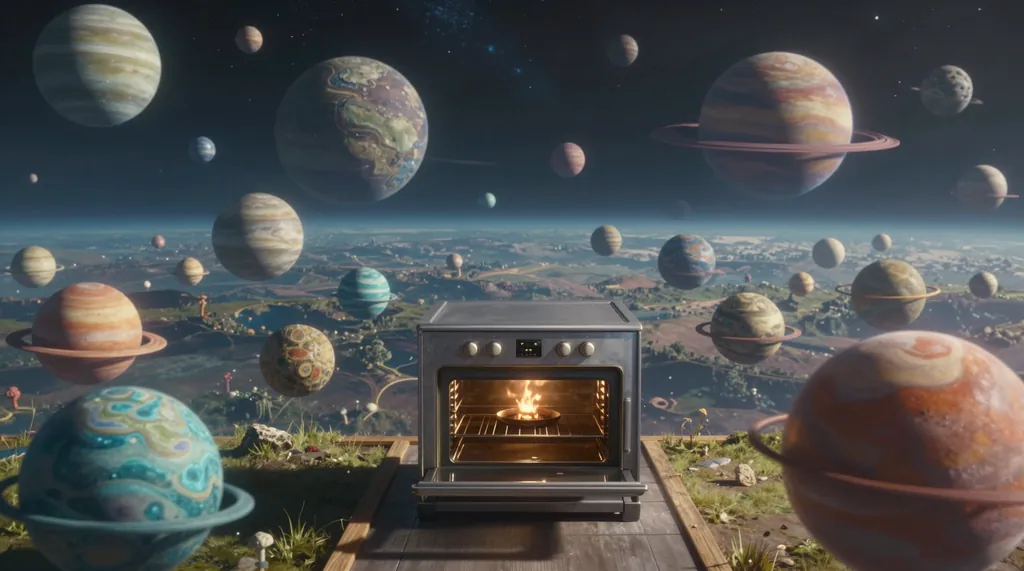
Imagine standing on the edge of a cliff in the deepest depression of the Oven World. You expect to see lava, or perhaps barren rock. What you see completely defies your primate understanding.
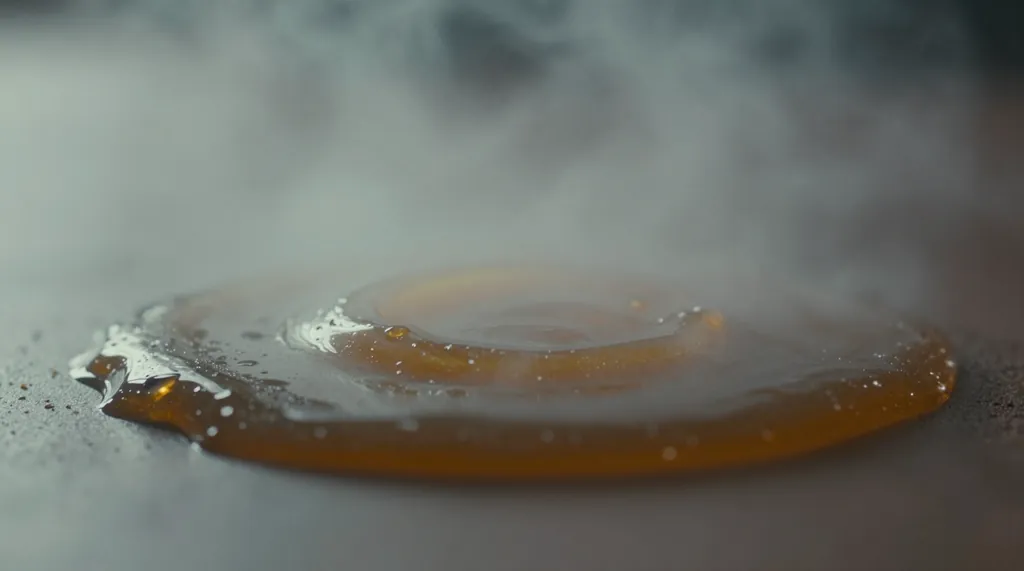
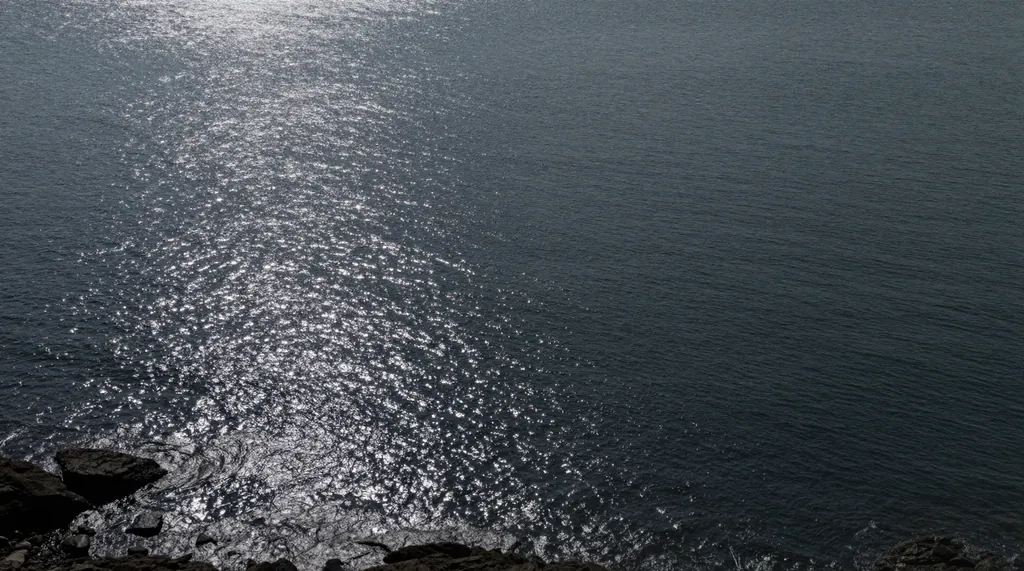
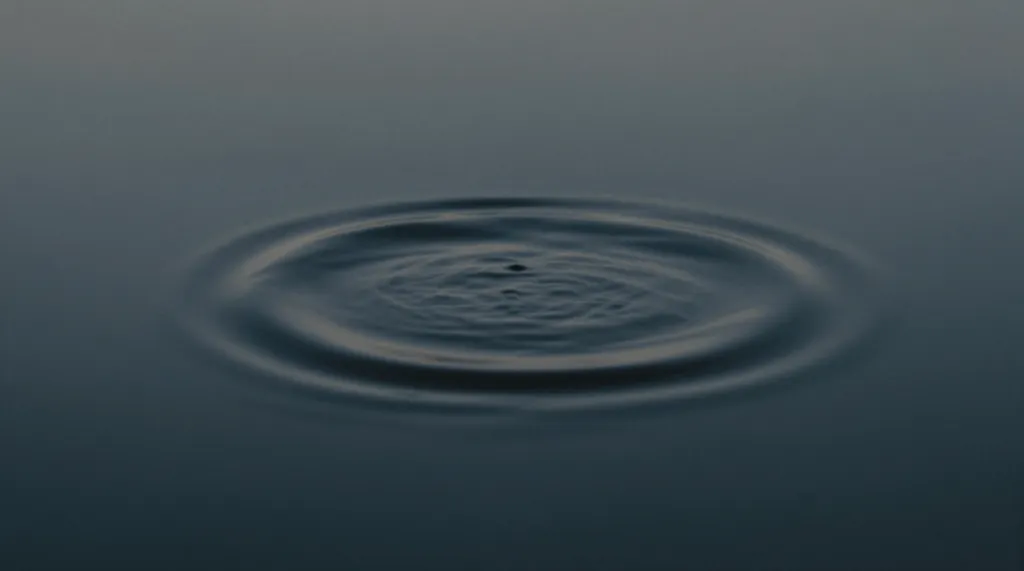
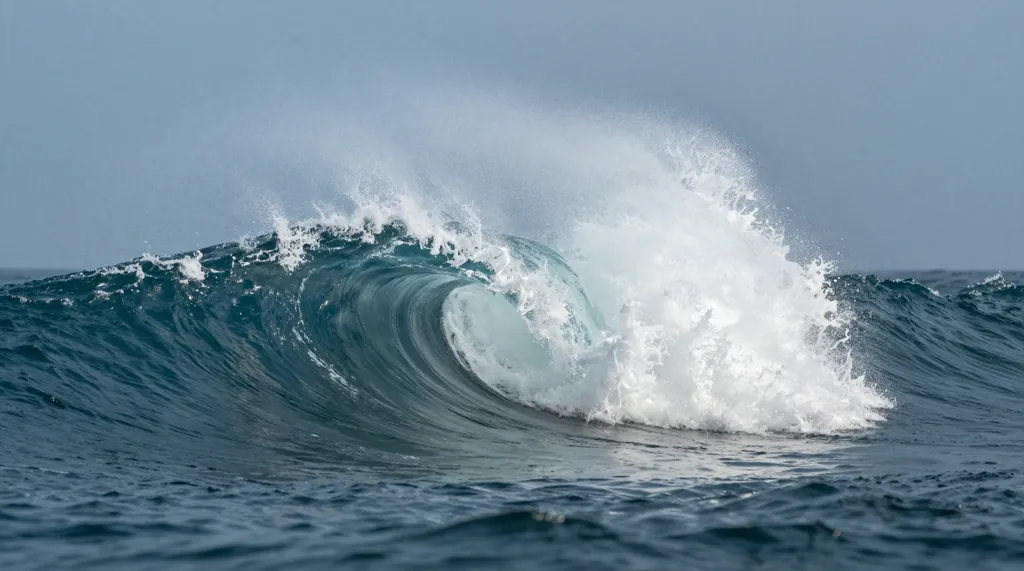
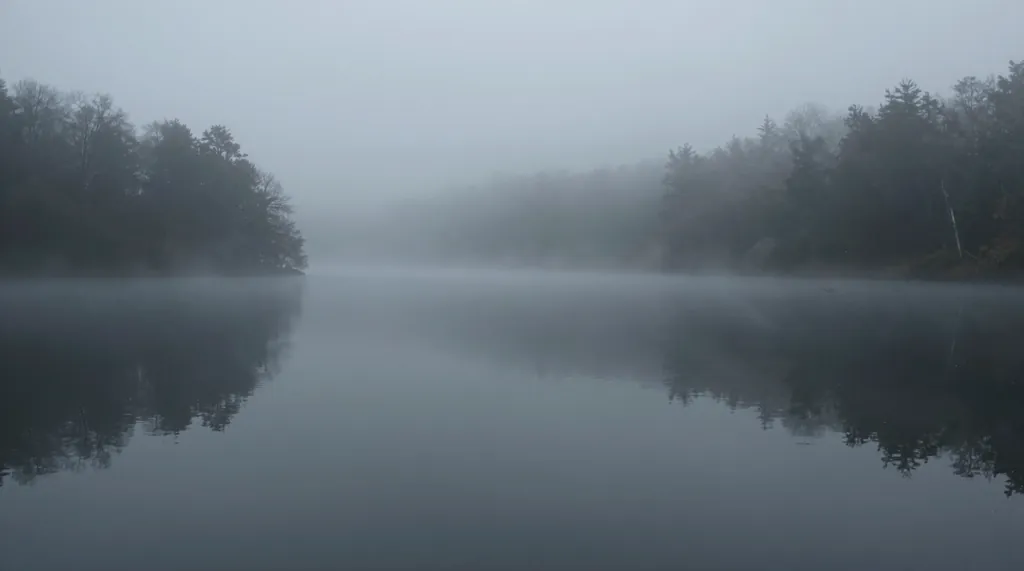
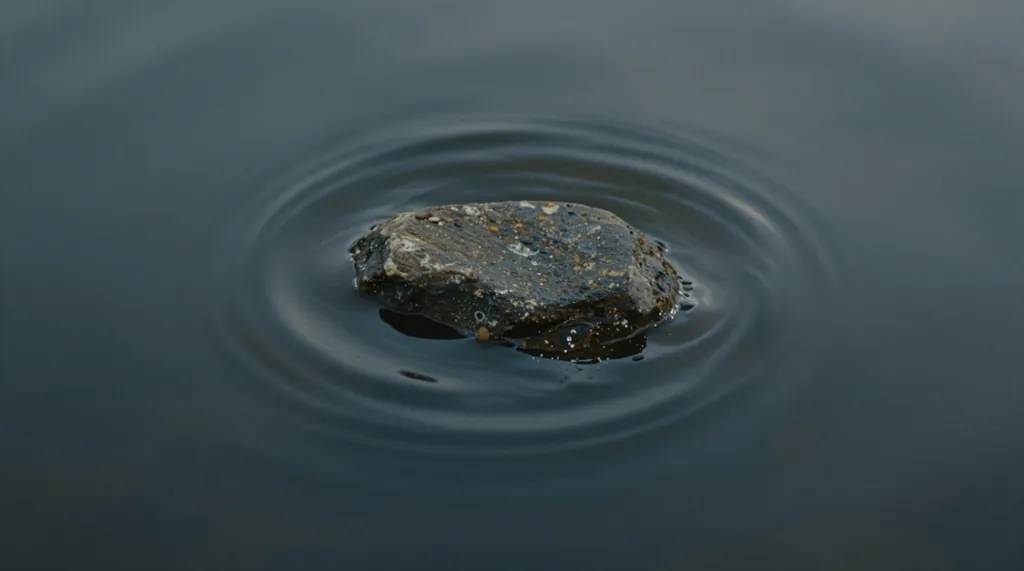
You see an ocean. Or at least that is what your eyes tell you. There is a horizon line. Something fills the basin. But there are no waves. No foam breaking against the shore. The surface is perfectly smooth, eerily still, like a dark mercury mirror that sometimes, just sometimes, ripples like a silk curtain blown by a whisper.
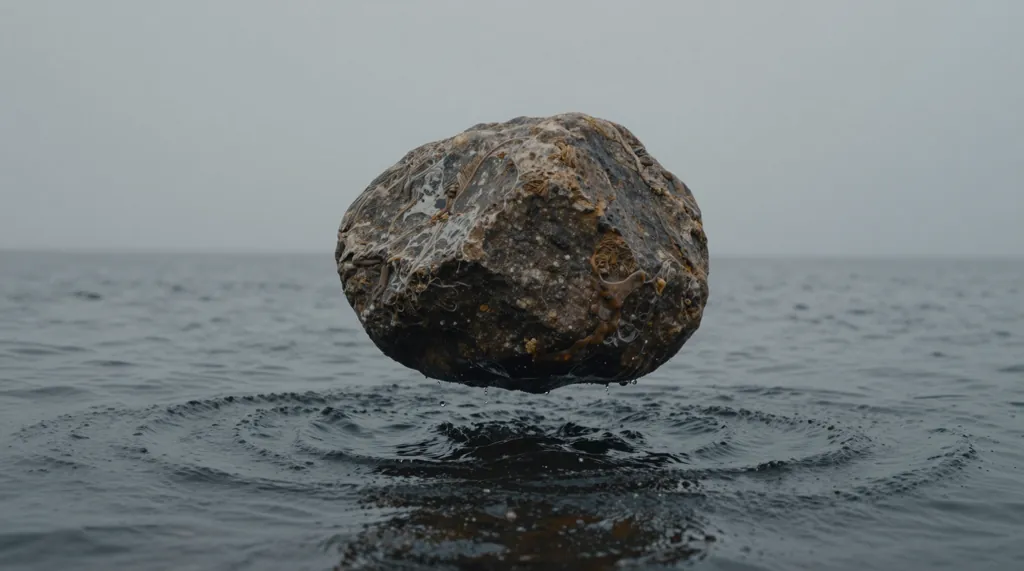
If you threw a stone into this sea, it would not splash. The stone would simply... enter. No sound. No impact. Devoured by the substance.
The Descent: Pressure and Refraction
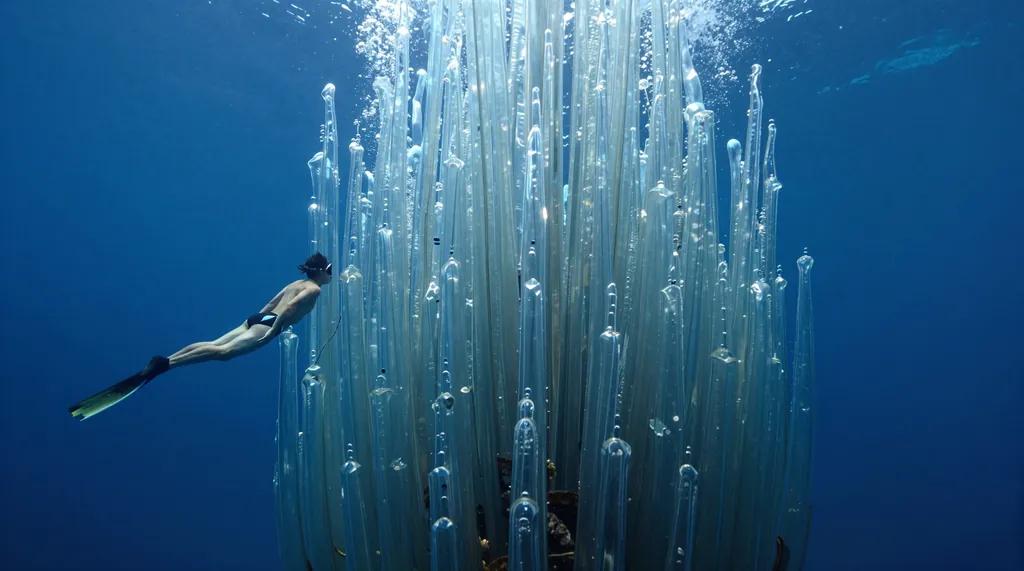
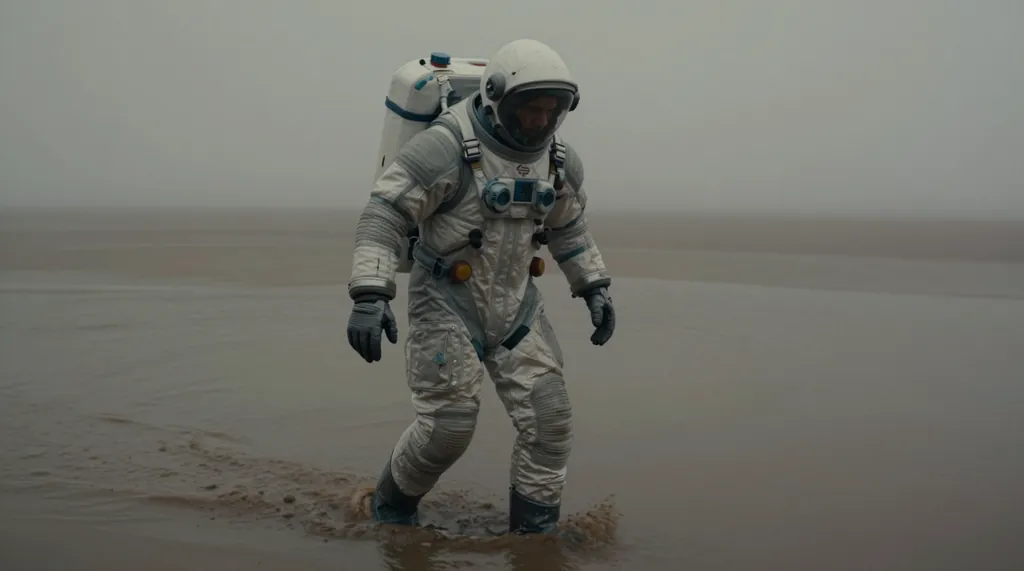
If you were foolish enough to go down and walk toward the water, you would not get wet. You would feel a sudden pressure, as if the air had turned to lead. You would feel your suit compress against your skin. Your vision would become blurry and refracted, as if looking through hot air rising from summer asphalt. The landscape would turn into an unstable mirror.
You are not swimming in water. You are not even in a liquid. You are inside a physical impossibility.
You are inside a Supercritical Fluid.
The Physics of the Undefined
On Earth, we learn that matter has defined states: solid, liquid, gas. Water is water, steam is steam. Separate categories. Clear boundaries.
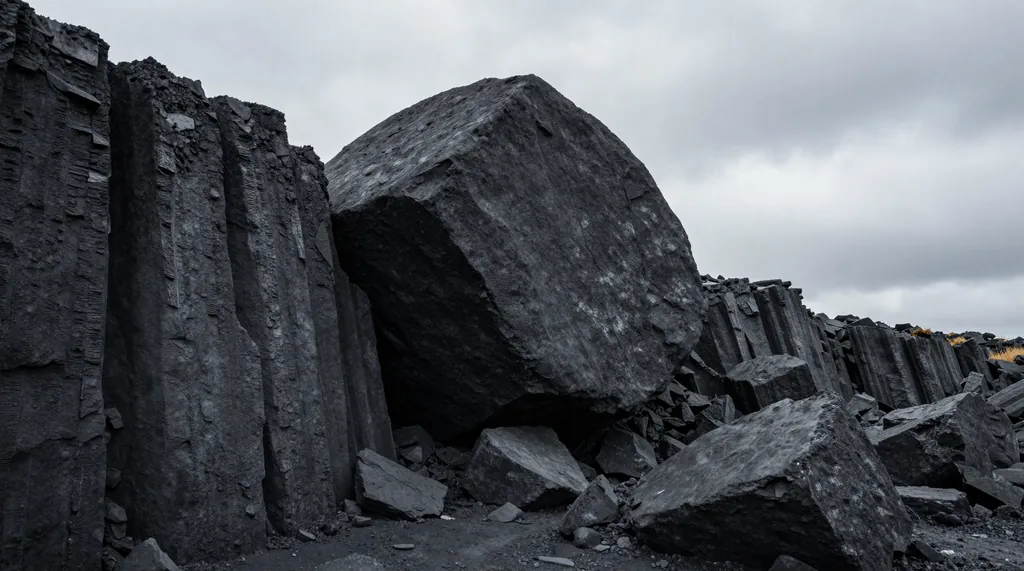
But here, in the crushing depths of the Basalt Basins, atmospheric pressure exceeds three hundred atmospheres. A titanic weight crushing everything we know.
Under this weight, Carbon Dioxide —the same gas we exhale, the gas we produce by breathing— suffers a chemical identity crisis. It reaches its Critical Point.
It is no longer a gas. It is too dense, as dense as liquid water. You could float in it. But it is not a liquid either. It has no surface tension. It forms no drops. It expands to fill all available space, passing through porous solid matter like ghosts passing through a wall.
It is the state of matter where the distinction between ocean and atmosphere dissolves. It is a "liquid gas". A voracious universal solvent capable of dissolving oils and waxes water would never touch.
Life in the Impossible Broth
And in this dense, heavy, invisible broth... something has learned to build castles.
They are not castles of stone. They are not creations of inert solid matter. They are living architectures, structures of mathematical delicacy that would break your heart with their beauty.
The Silicon Reef
In the darkness of this dense sea, life does not need to hunt. It does not need to move. It only needs to exist and let the ocean pass through it.
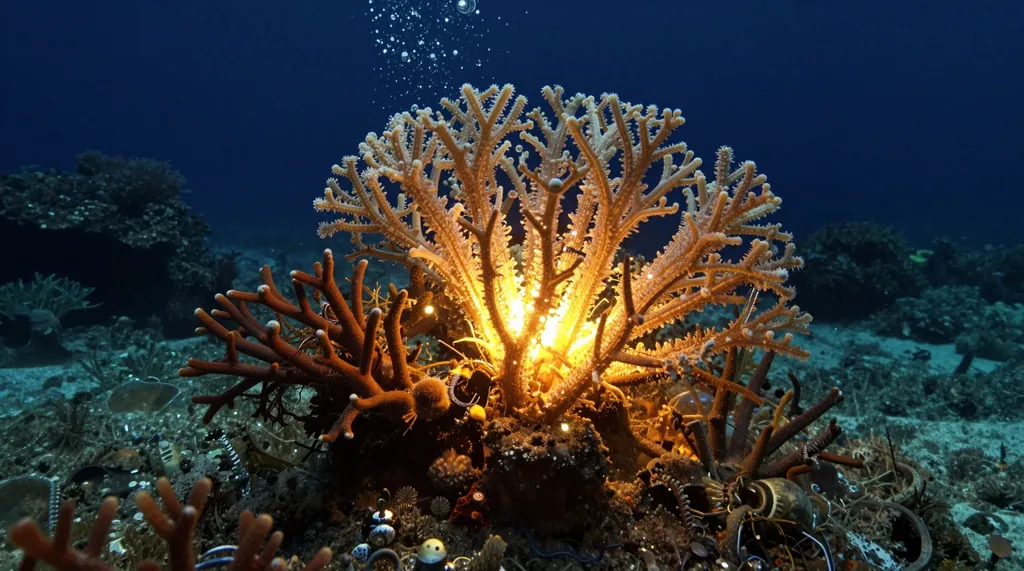
Welcome to the Silicon Reef.
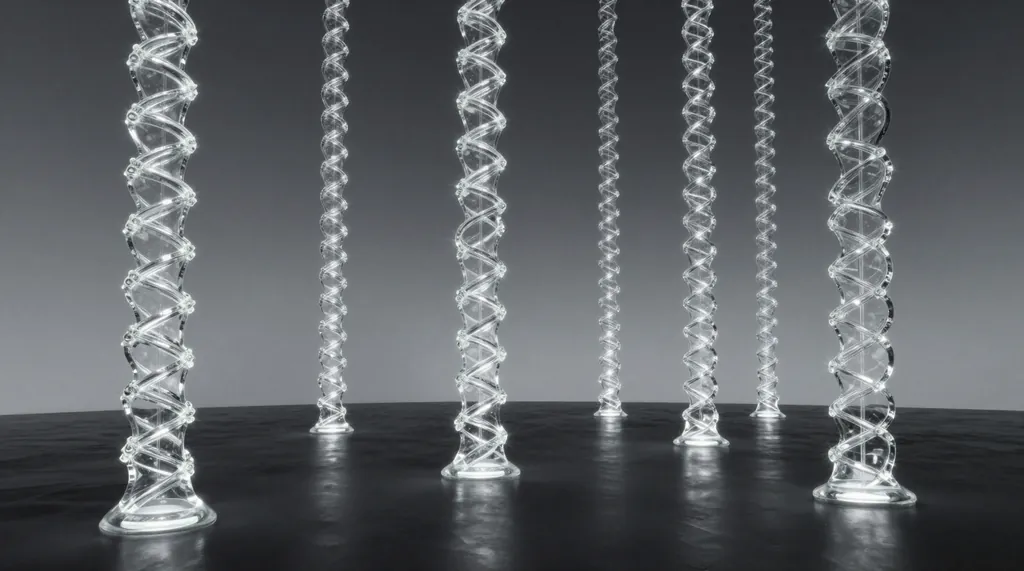
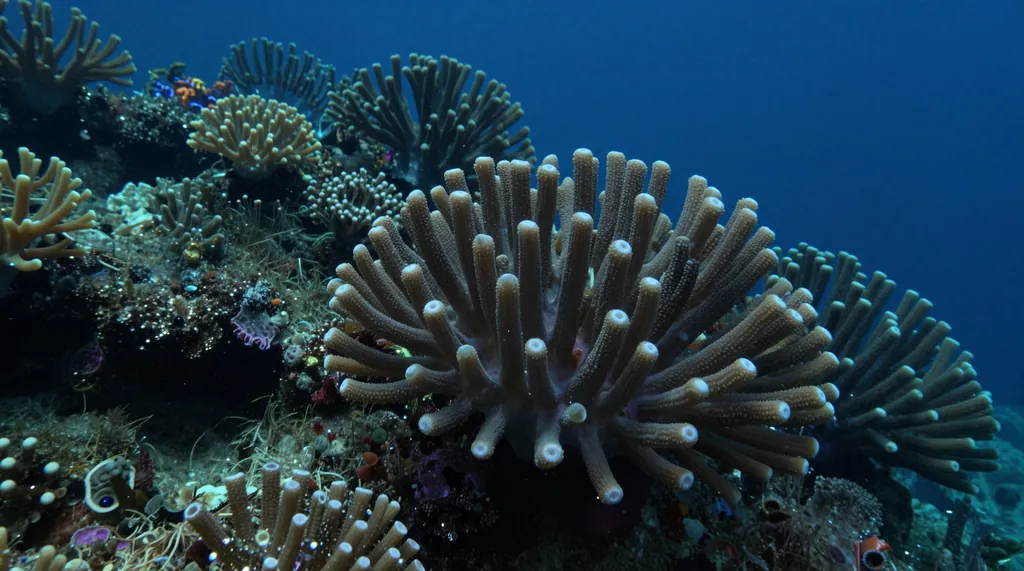
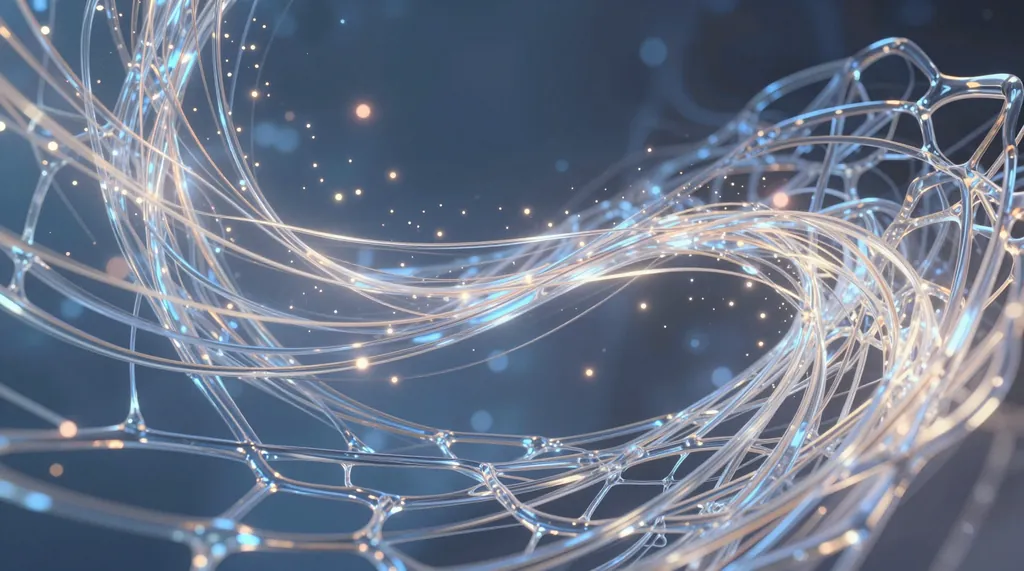
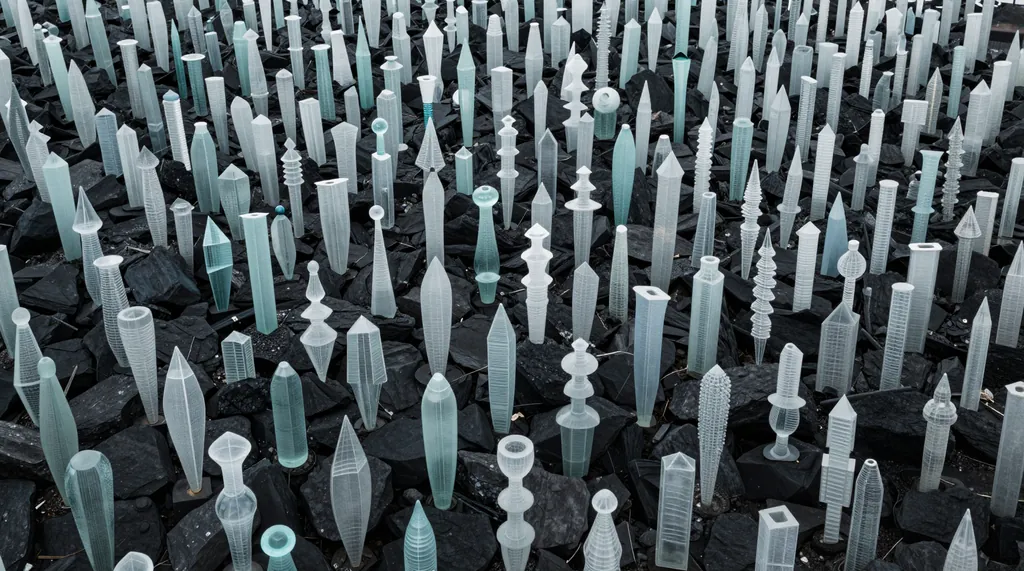
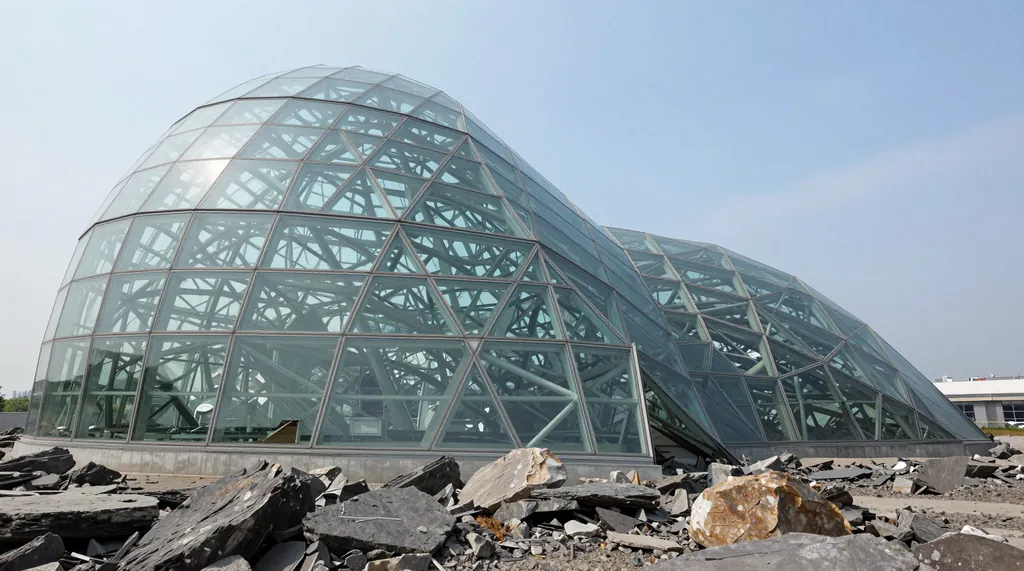
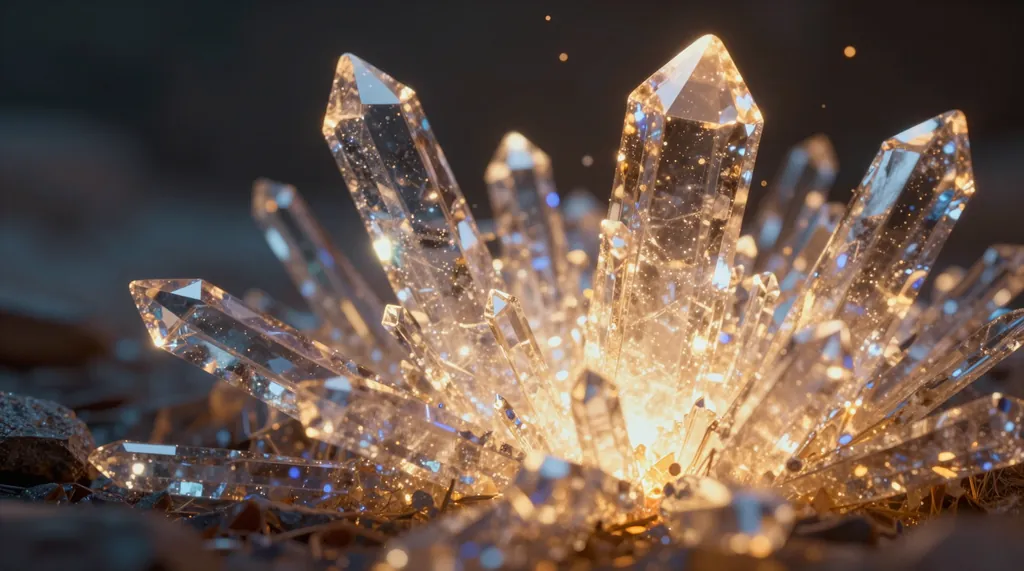
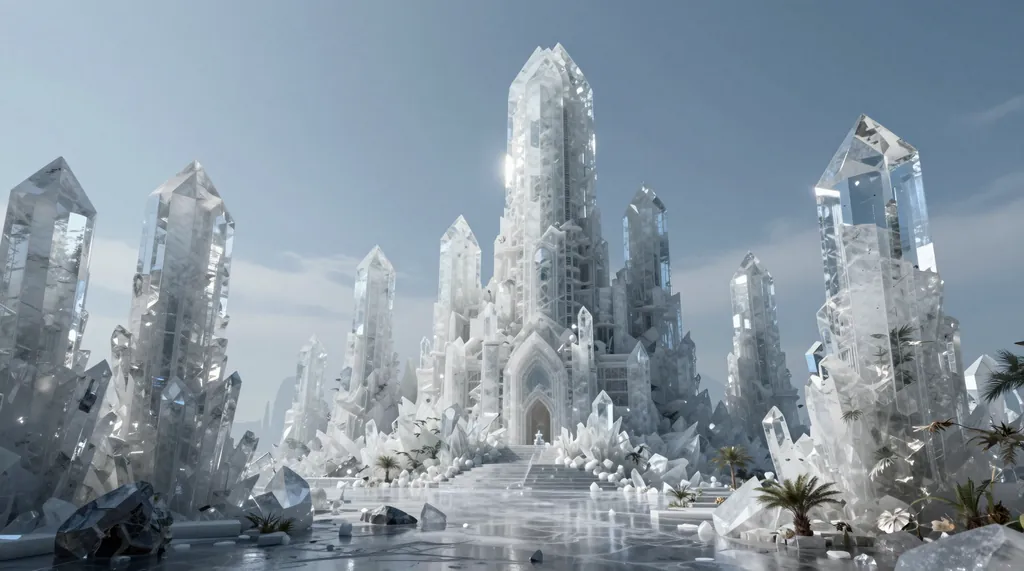
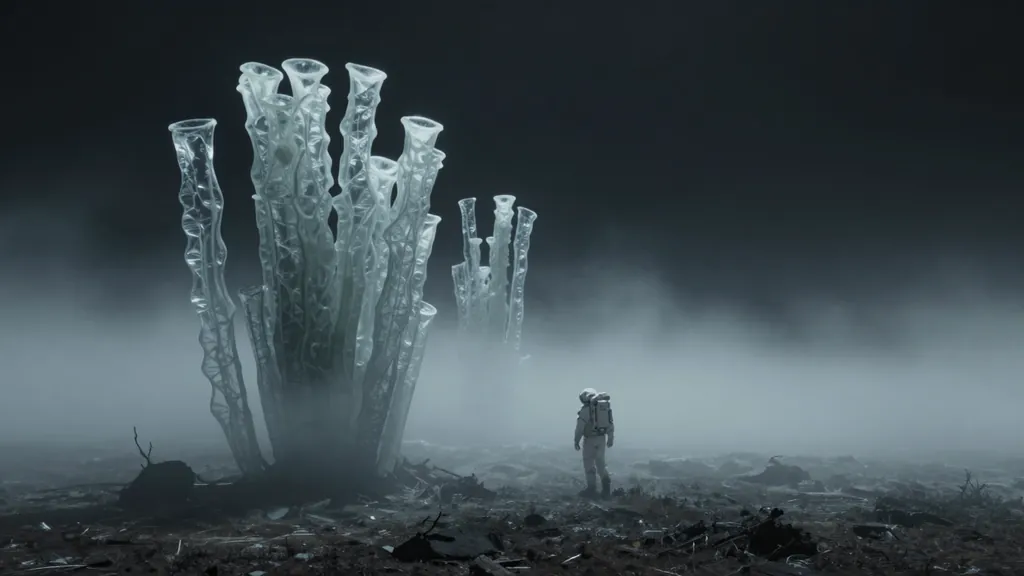
What you see rising from the bottom are not limestone corals. They are structures of heartbreaking mathematical delicacy. Spiral towers, lace lattices, geodesic domes... all made of pure glass. Perfect fractals generated by millions of years of ordered crystalline growth.
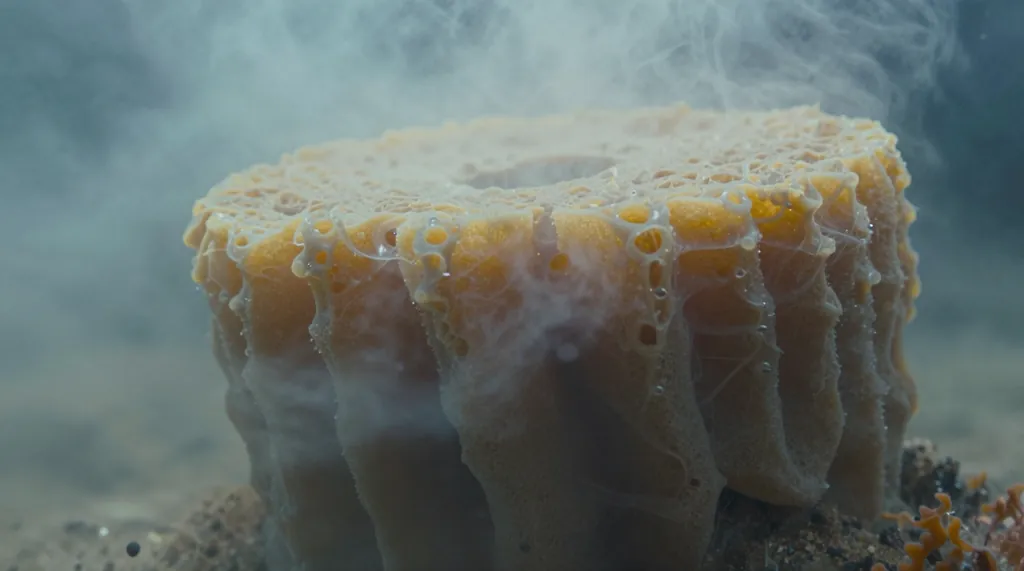
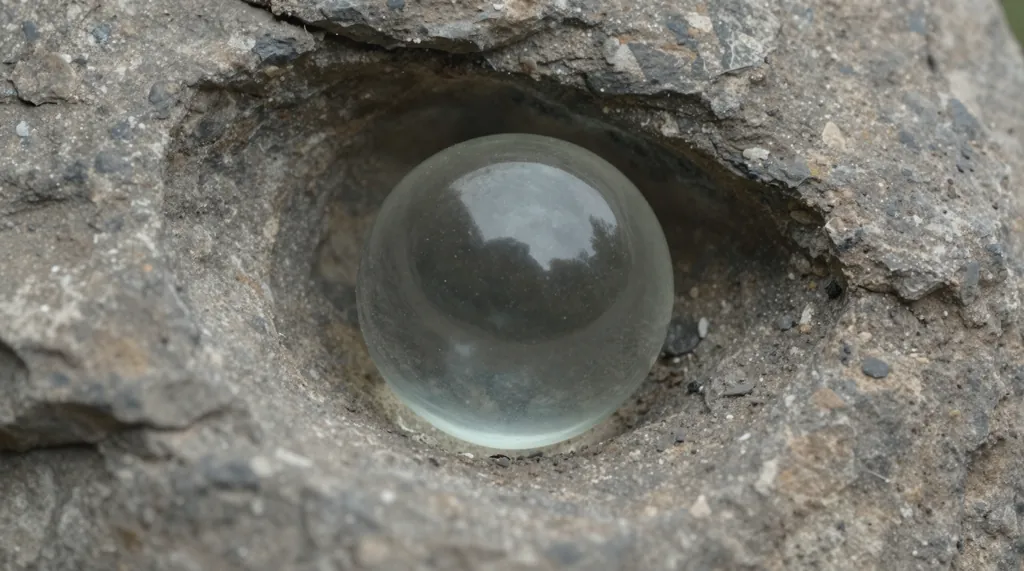
But it is not solid glass. If you took a piece of this reef in your hand (and could withstand its 600-degree heat), its weight would surprise you. Or the lack of it. It is light as a feather.
It is Biological Aerogel.
The Silica Sponges: Architects of the Void
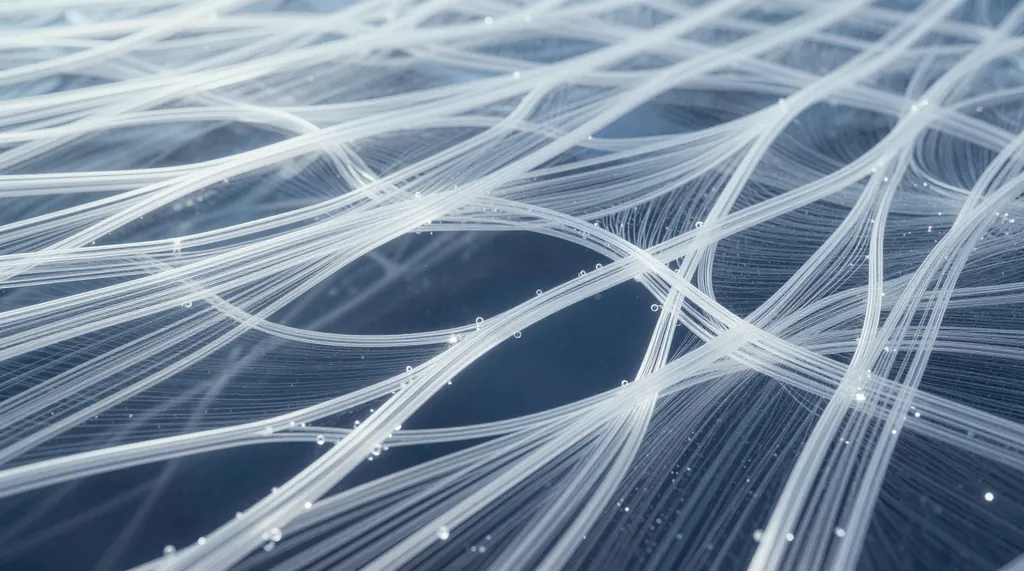
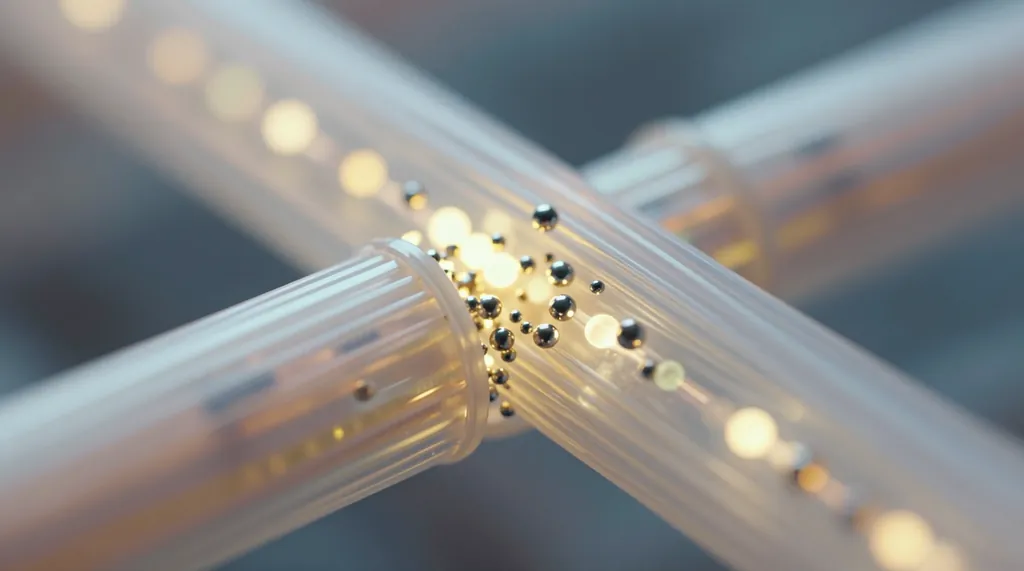
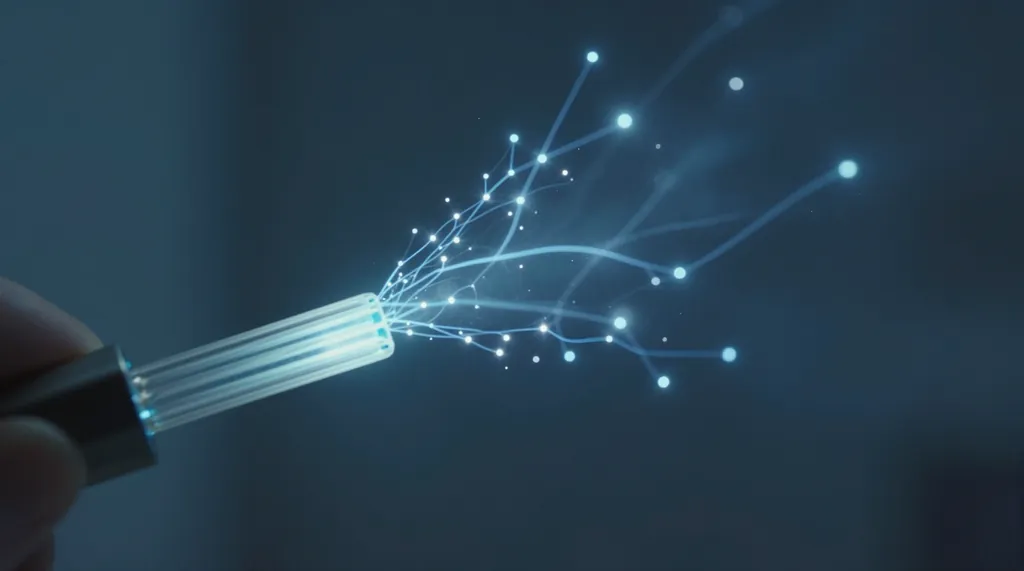
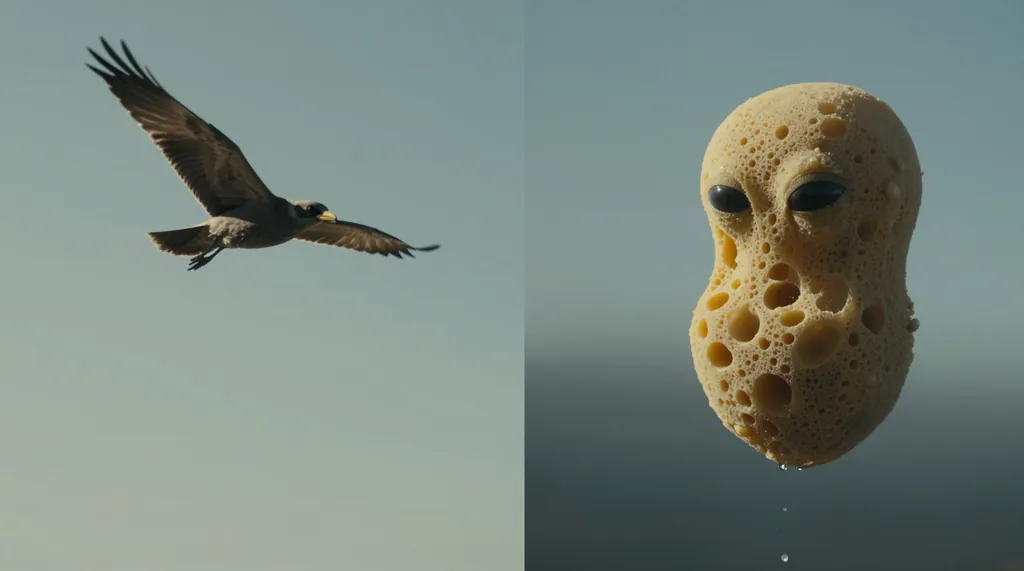
These creatures, the Silica Sponges, are the architects of the void. Their bodies are 99% empty space, a fractal network of silica filaments so fine they are invisible to the naked eye.
They have evolved to exploit the strangest property of supercritical fluid: its nearly zero viscosity. On Earth, water is sticky; it takes work to pump through fine pores. Here, supercritical CO2 flows without friction. It passes through the sponge's structure without resistance, carrying dissolved nutrients —silicones, rare metals— directly to the core of each crystalline cell.
The sponge does not filter the sea. The sponge is the sea, giving it momentary shape. The distinction between organism and environment fades into a haze of absolute mutualism.
The Static Forest
Walking across the bottom of this ocean would be the loneliest experience in the universe. There are no fish swimming. The fluid's viscosity is so low that swimming is inefficient; flapping fins generate no thrust. That is why everything here is static. It is a forest of glass statues stretching for kilometers. Nothing moves. Nothing can afford to spend energy on movement.
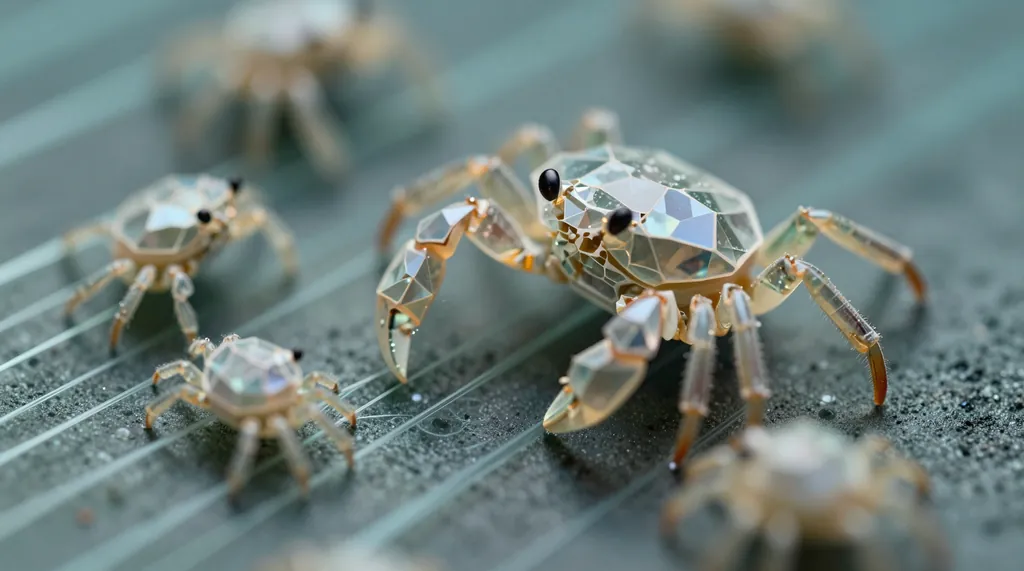
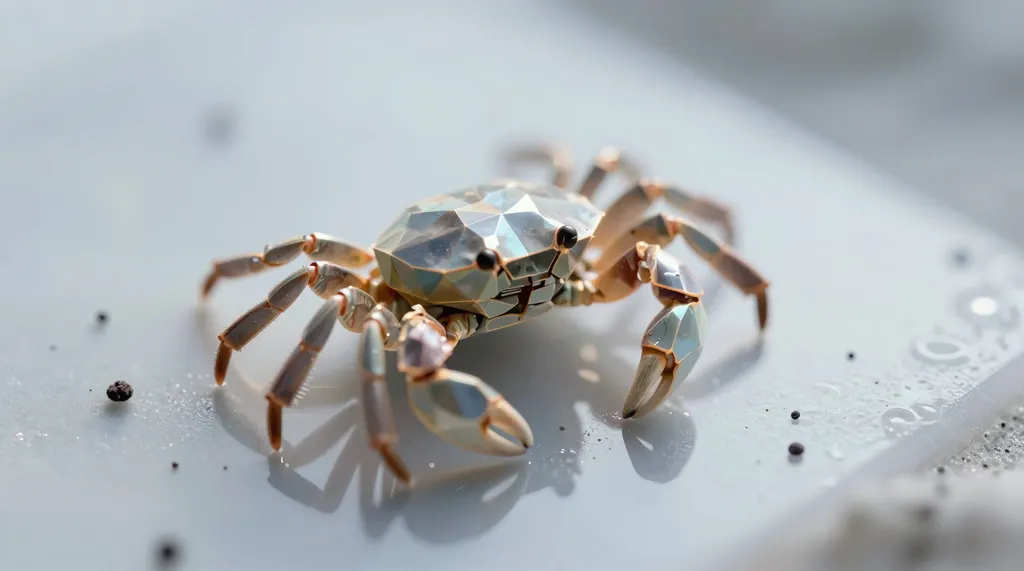
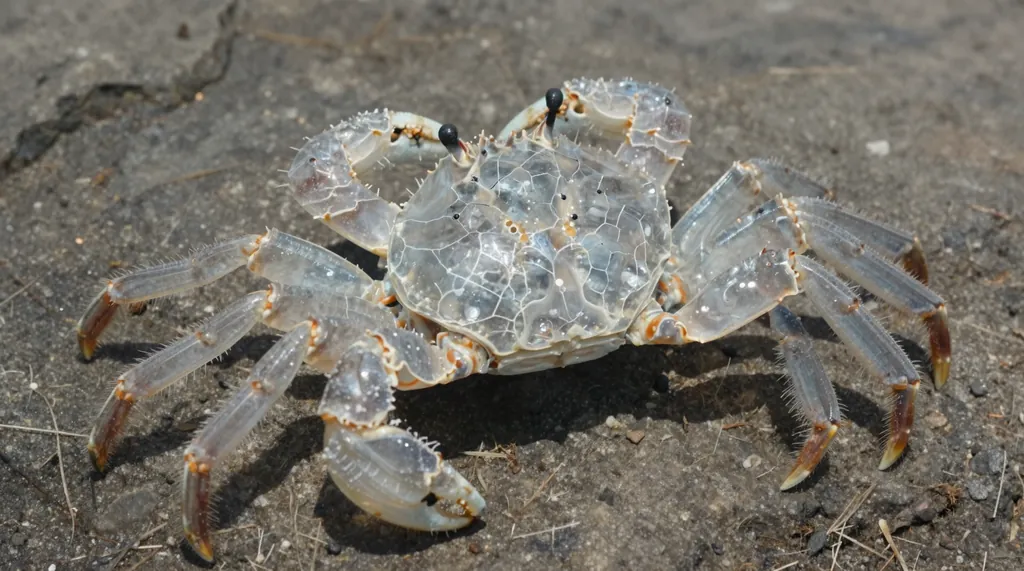
But if you look closely, with a macro lens, you will see that the reef is alive. Small crystal crabs, symbiotic, live inside the aerogel pores. They do not swim; they walk clinging to filaments, cleaning the sponge of unwanted mineral deposits, paying their rent with meticulous cleanliness.
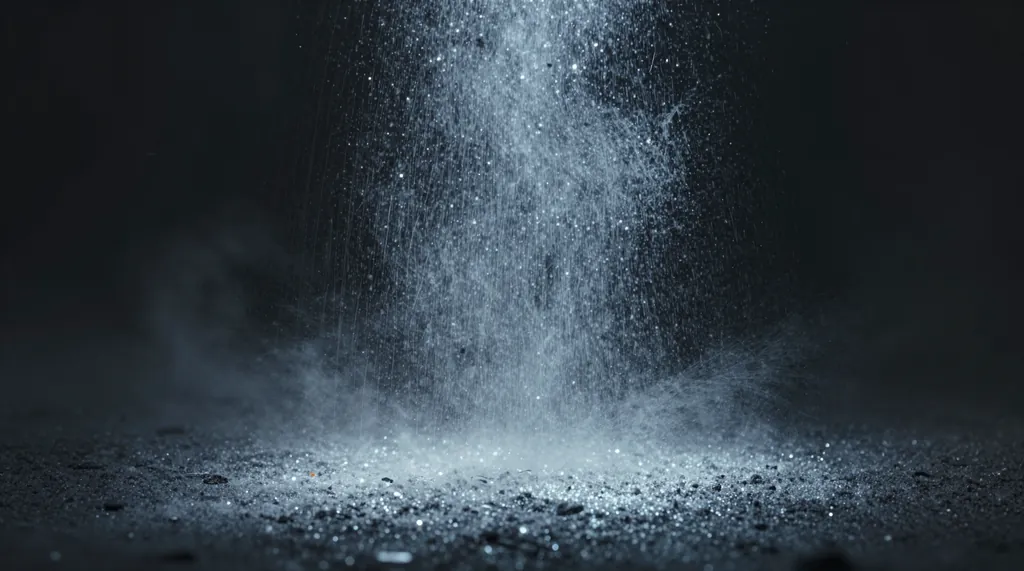
Above, threads of "reverse marine snow" —silica precipitates falling from the cooler upper layers— descend slowly. The sponges trap this stardust with soft electrostatic fields, incorporating it into their mass, growing millimeter by millimeter in absolute silence.
It is an ecosystem of geological patience, where growth is measured in millennia and change is imperceptible on human timescale. But it is ceaseless.
The Thermodynamic Sword of Damocles
But this crystal paradise lives under a thermodynamic sword of Damocles. The existence of supercritical fluid depends on a precarious balance of pressure and temperature. A balance that is not stable.
Sometimes, a distant volcanic eruption alters the basin's pressure. Or a thermal current overheats a region. Then the most terrifying phenomenon of this world occurs:
The Ocean Fails.
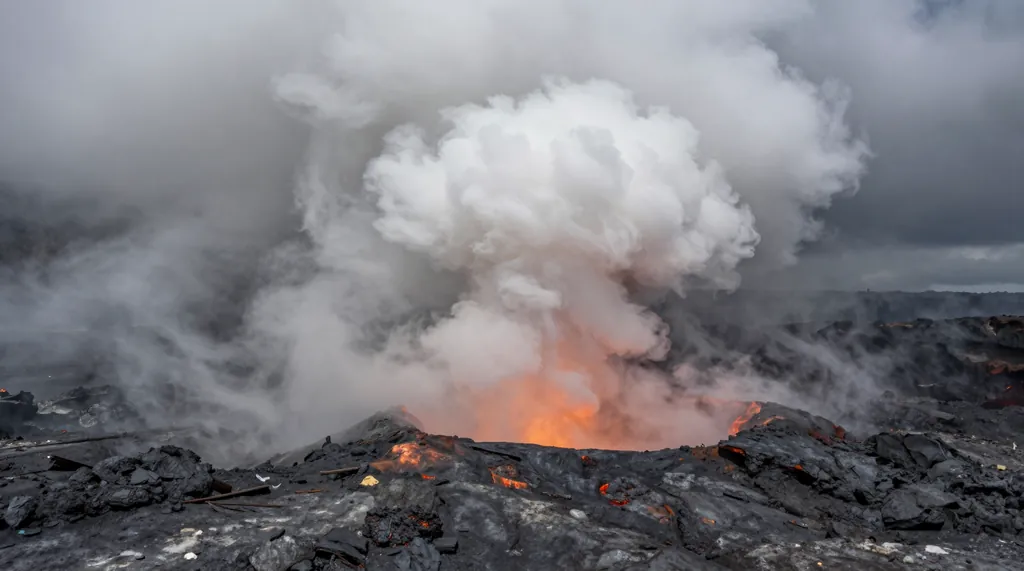
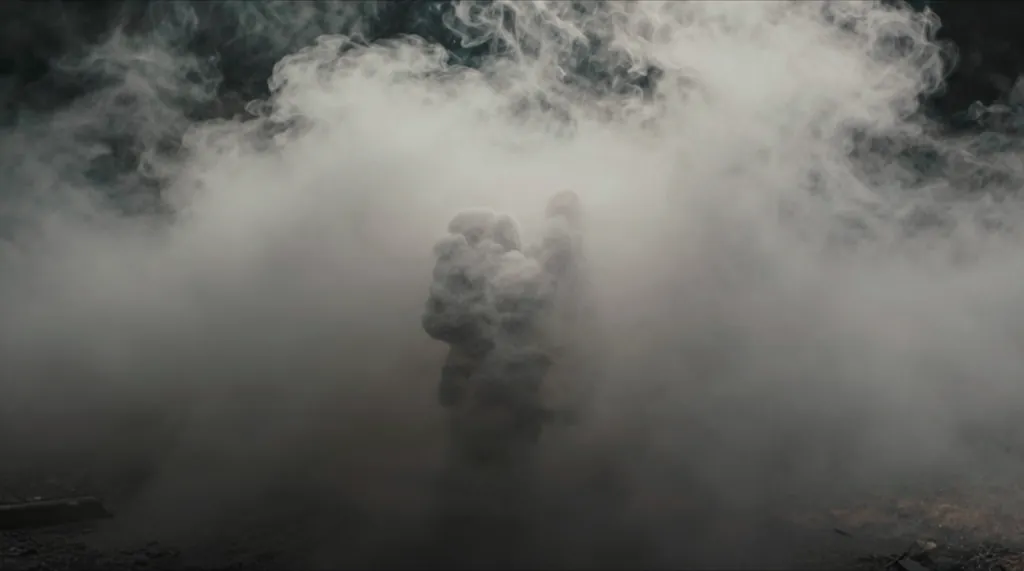
It is not slow evaporation. It is instantaneous. In a fraction of a second, the CO2 loses its supercritical state. The "sea" ceases to be a dense fluid and violently turns into gas.
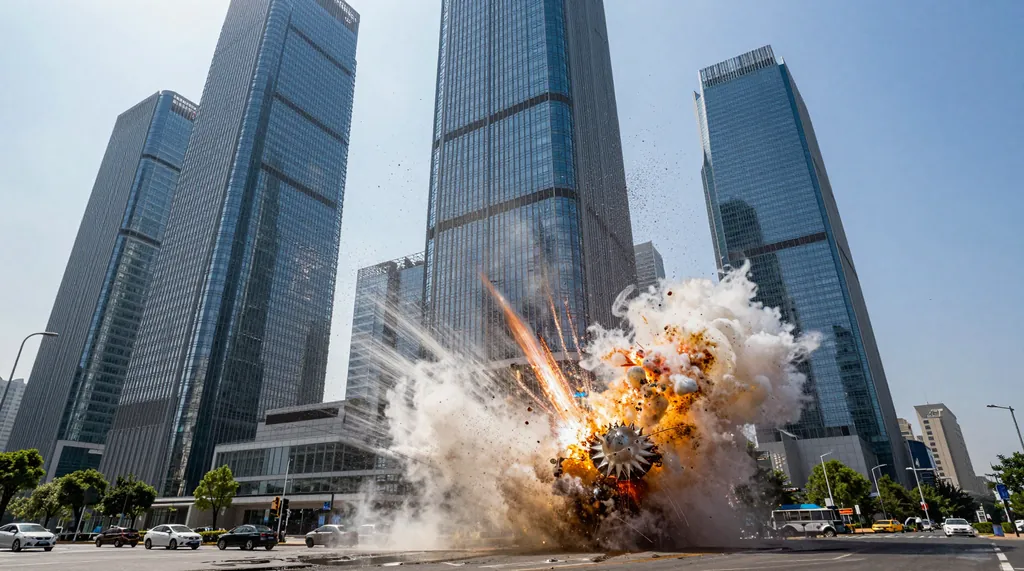
Imagine the entire Atlantic Ocean turning to steam in the blink of an eye. The expansion is explosive. A supersonic gas shockwave tears through the reef.
The Invisible Apocalypse
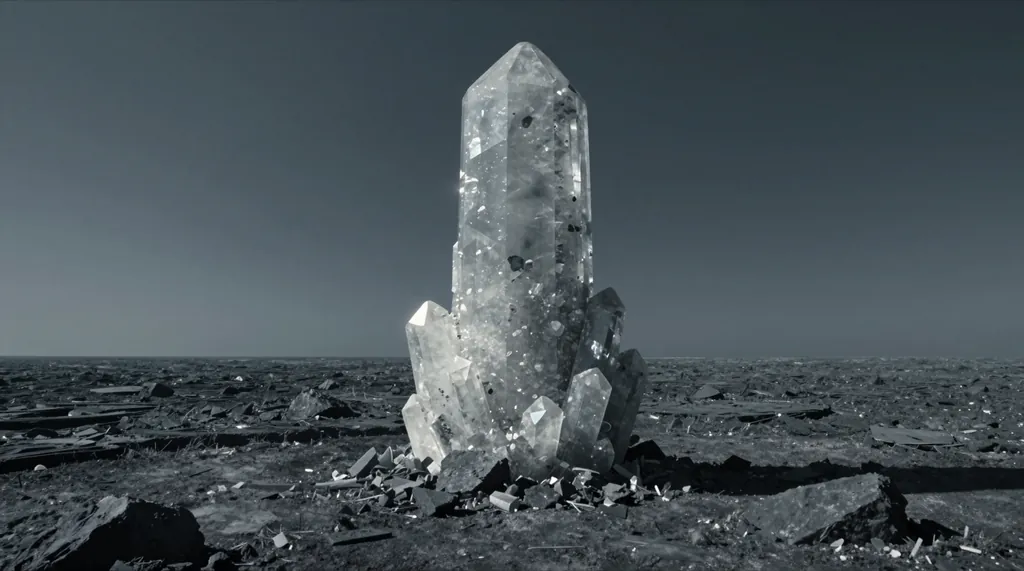
The Silica Sponges, which a second before were floating sustained by the fluid's density, suddenly weigh tons. The anti-gravity vanishes. The great aerogel towers collapse under their own weight, shattering into clouds of glittering dust. Millennia of construction destroyed in milliseconds.
The ecosystem is exposed to dry, scorching air. The creatures living in the pores suffocate, not from lack of air, but from lack of density. Their bodies were designed to be supported by crushing pressure; without it, they violently explode outward in silent violence.
It is an invisible apocalypse. A sea that disappears without leaving a puddle, leaving behind only ruins of broken glass. The silence is more terrifying than any scream.
The Resilience of Life
But life here is tenacious. Deeply tenacious.
At the bases of the destroyed sponges, hardened crystal cysts wait. They wait for the pressure to rise again. They wait for the gas to thicken again, for the air to turn back into ghost ocean.
And when it does, centuries later, construction begins anew.
The Fundamental Difference
We humans fear pressure. Our spaceships, our submarines... are bubbles of low pressure we carry with us to avoid being crushed by the universe.
But for the Silica Sponges, pressure is an embrace. It is what holds their world together. Without it, they simply cease to be.
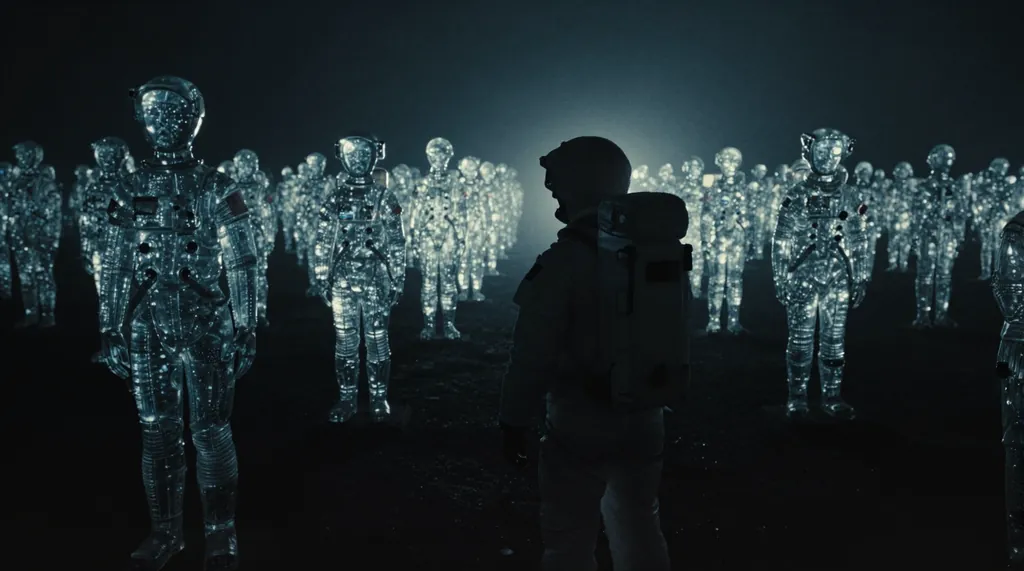
If they ever saw us, if they could perceive us inside our pressurized suits, we would seem like monstrosities to them. "Inflated" beings, hollow, tragically undense. Living anomalies in a world where density is the most precious thing.
Redefinition of Life
The Silica Sponges teach us something fundamental: life is not just matter. Life is a physical state. A mode of existence adapted to specific conditions of the universe.
In the right place, under enough weight, even air can become water, and glass can become flesh. Even ghosts are real. You just need enough pressure to touch them.
Our definition of life is too limited, too terrestrial. It is as if we defined "vehicle" based solely on automobiles, ignoring that helicopters, ships, and airplanes are also vehicles. Life is not an automobile. Life is any form of existence that self-perpetuates and consumes energy in thermodynamic gradients.
In the Oven World, we have seen two forms of life: the piezoelectric predators that use electricity as a weapon, and now the Silica Sponges that live in absolute patience, building cathedrals in silence.
But there is more. Much more. In the deepest darkness, there are civilizations. There are thinkers. There are entities that have achieved sapience in a state of matter that we can barely imagine.