ACT I: GOD'S MINING
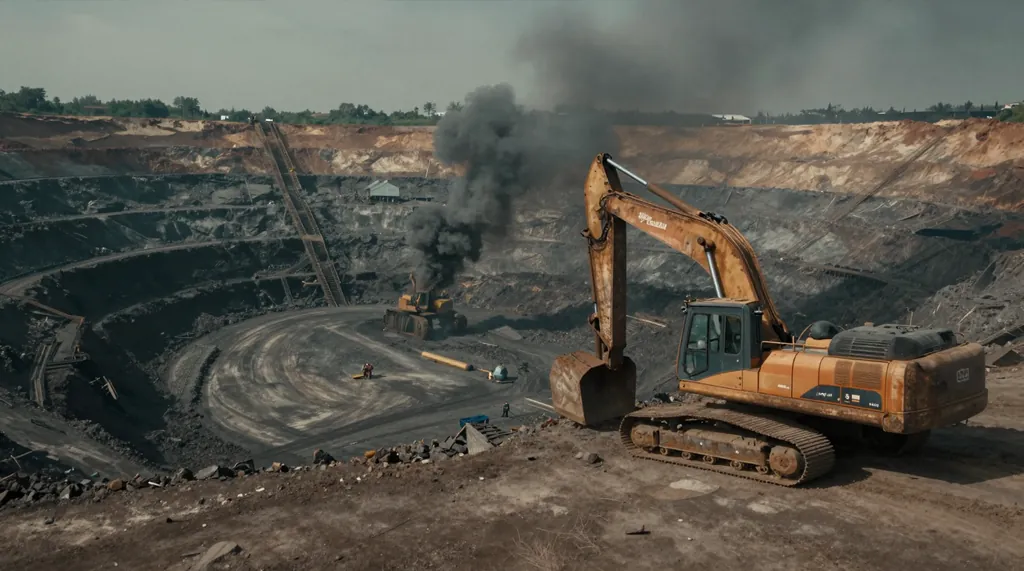
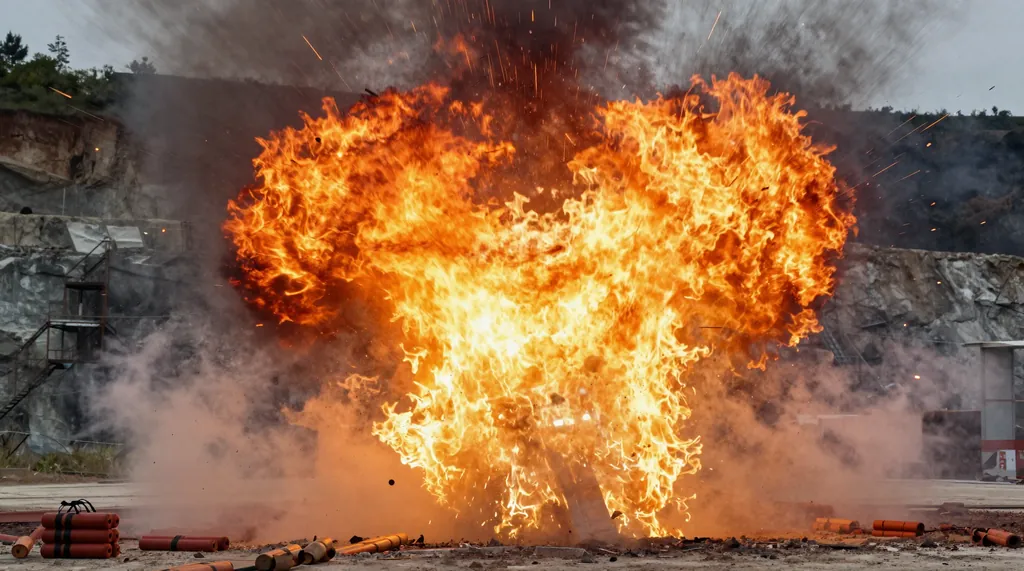
Humanity has always prided itself on its ability to break the world. Since the first time a hominid struck flint against pyrite, we have been at war with our planet's crust. We invented dynamite to shatter mountains. We built excavators the size of buildings to scrape the Earth's skin. We erected blast furnaces that consume entire forests to smelt a single ton of iron.
Our mining is an act of violence. It is loud. It is dirty. It is thermodynamically inefficient. We need explosives, trucks, crushers, cyanide leaching, electric arc smelting... all to extract a tiny percentage of metal trapped in the bedrock.
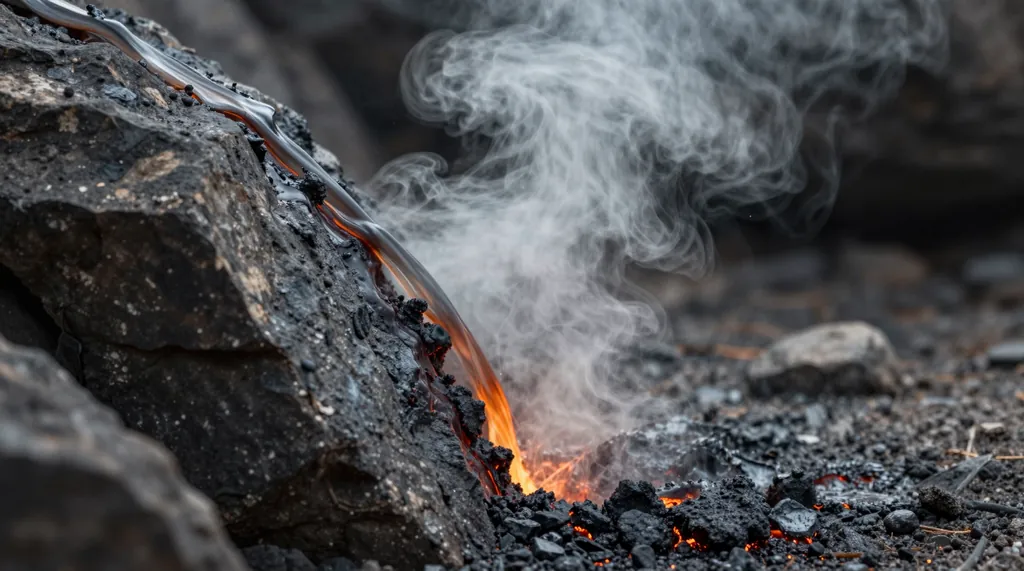
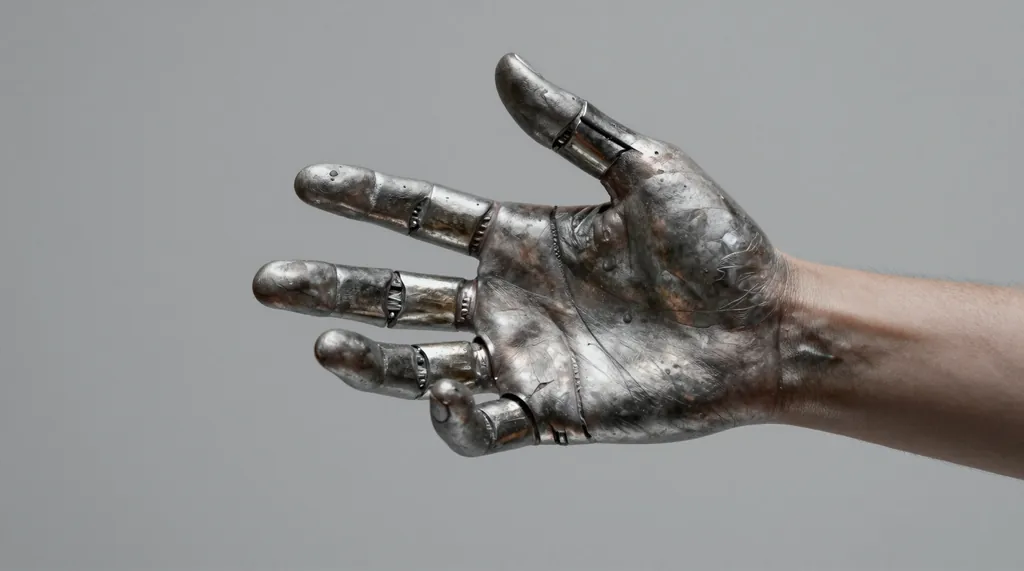
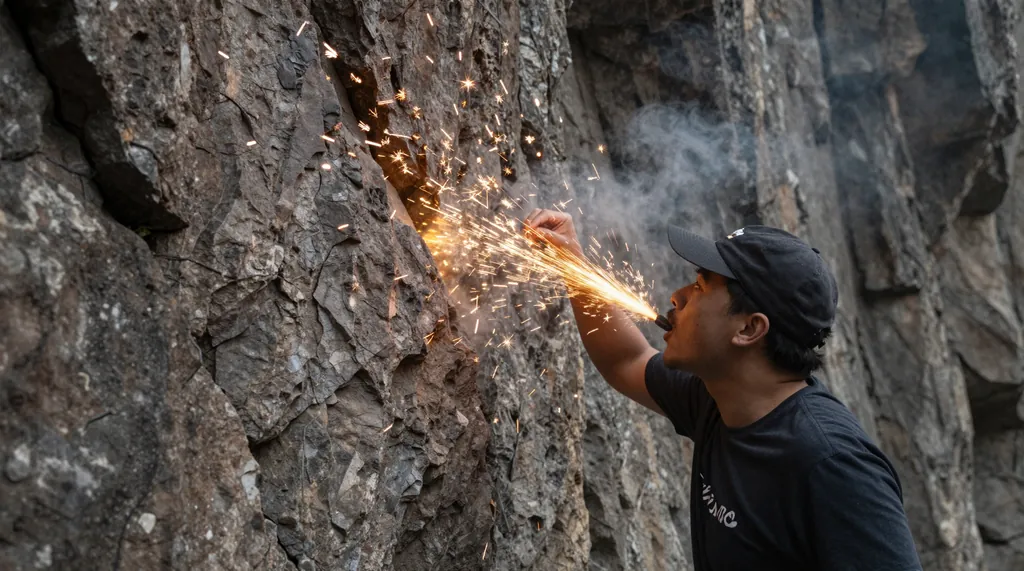
But in the Oven World, nature looks upon us with contempt. Here, evolution didn't need to invent the pick and shovel. It didn't need dynamite. Evolution looked at mountains rich in metallic ores and said: "That is food."
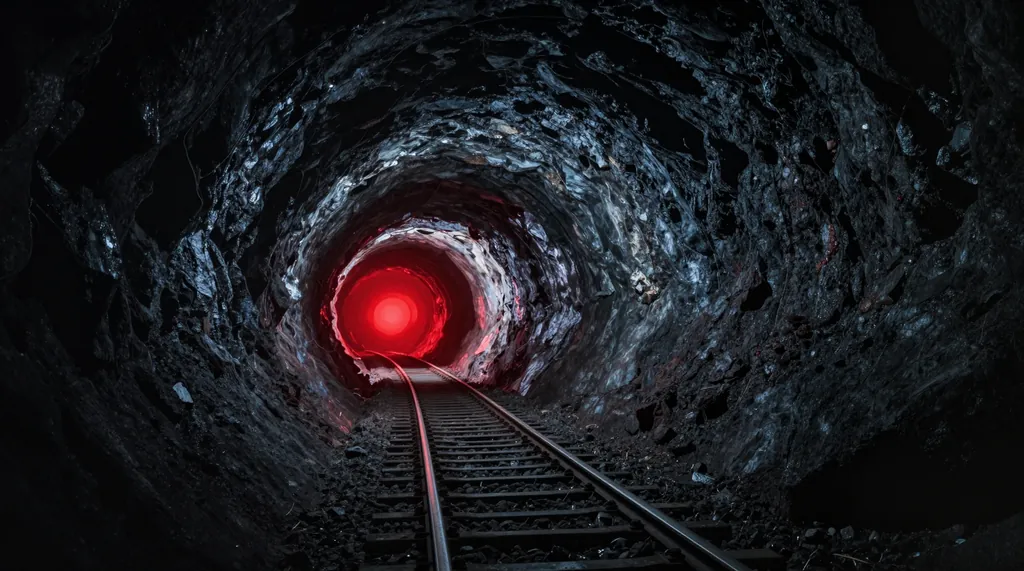
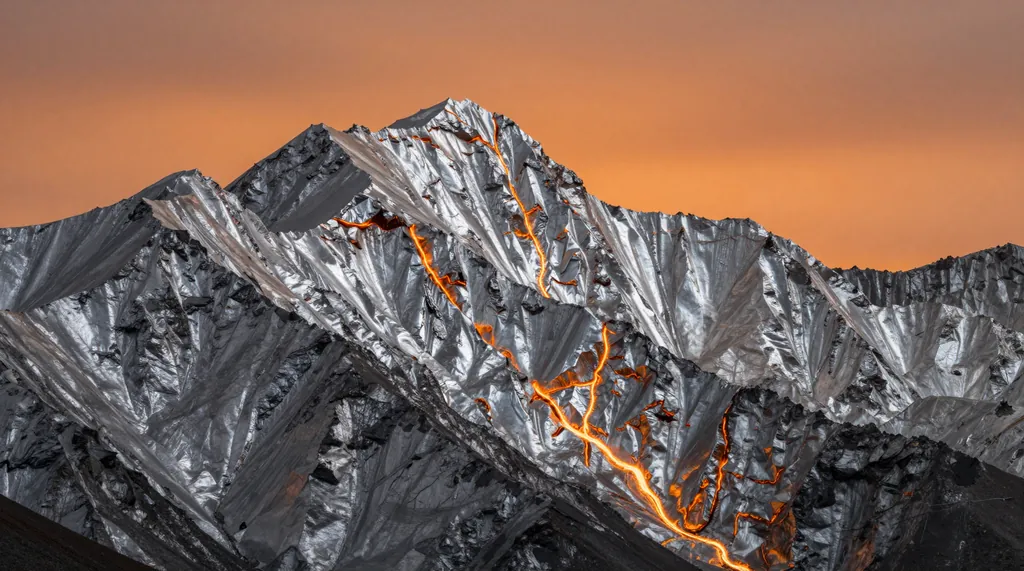
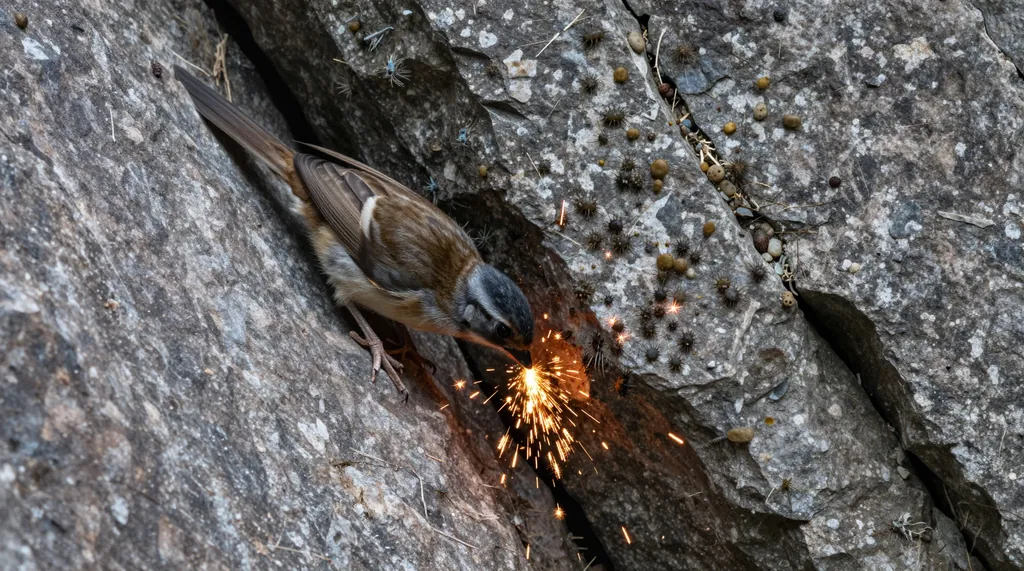
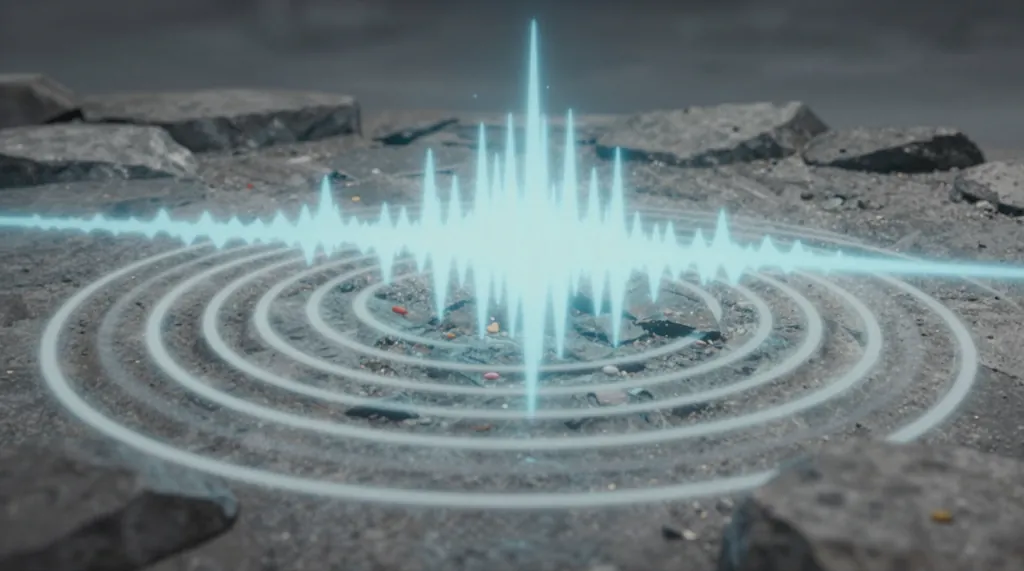
Welcome to the Titanium Range. Look at those mountains. They haven't been eroded by wind or water. They are perforated. They look like colossal Swiss cheese, riddled with perfectly circular tunnels three meters in diameter. Millions of kilometers of galleries crisscrossing in the darkness of the lithosphere.
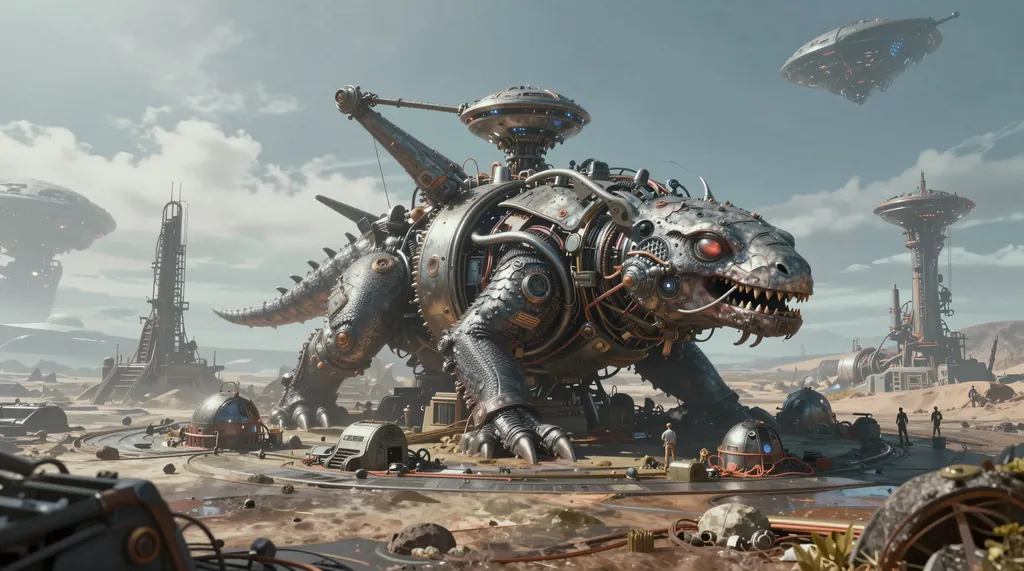
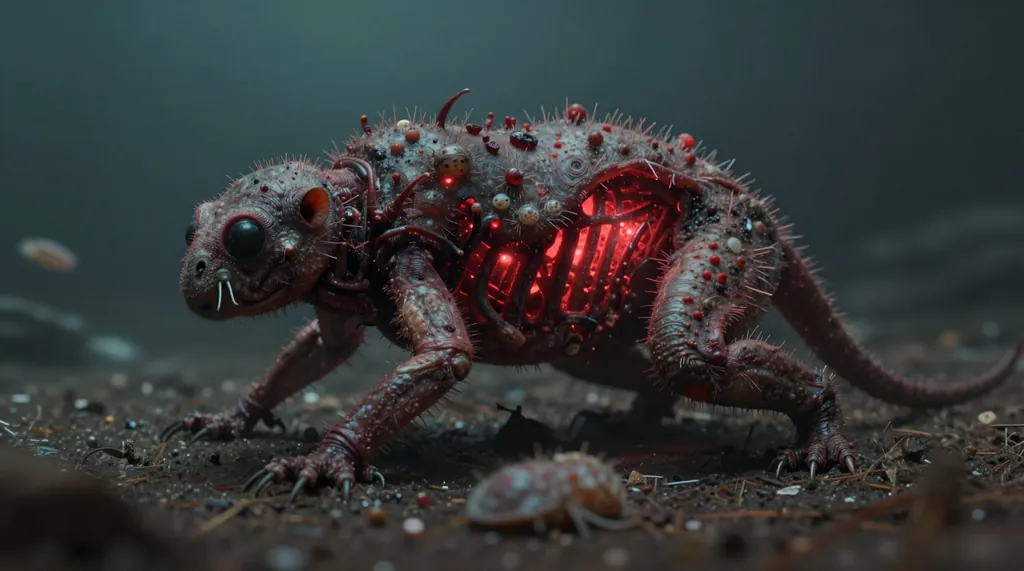
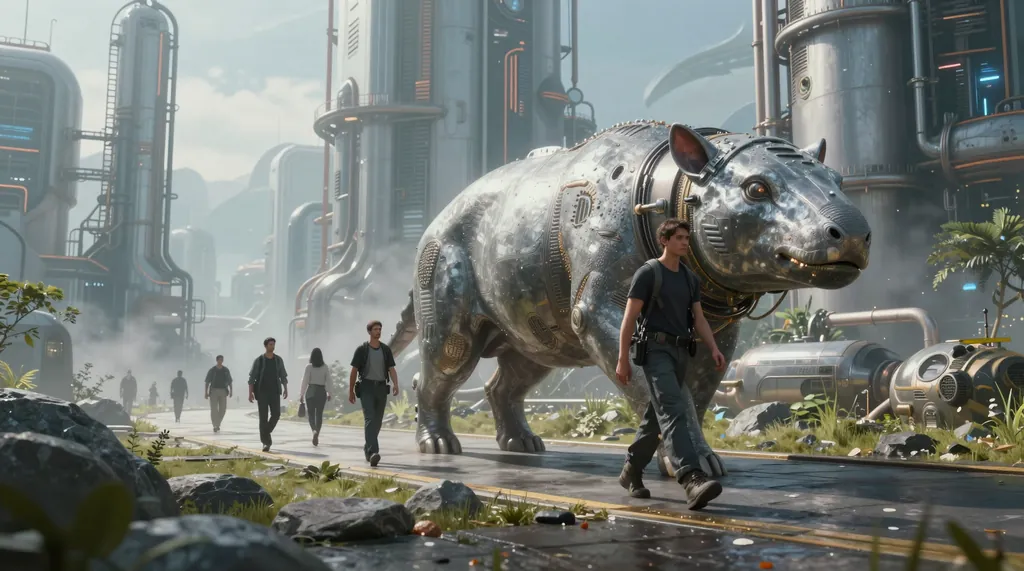
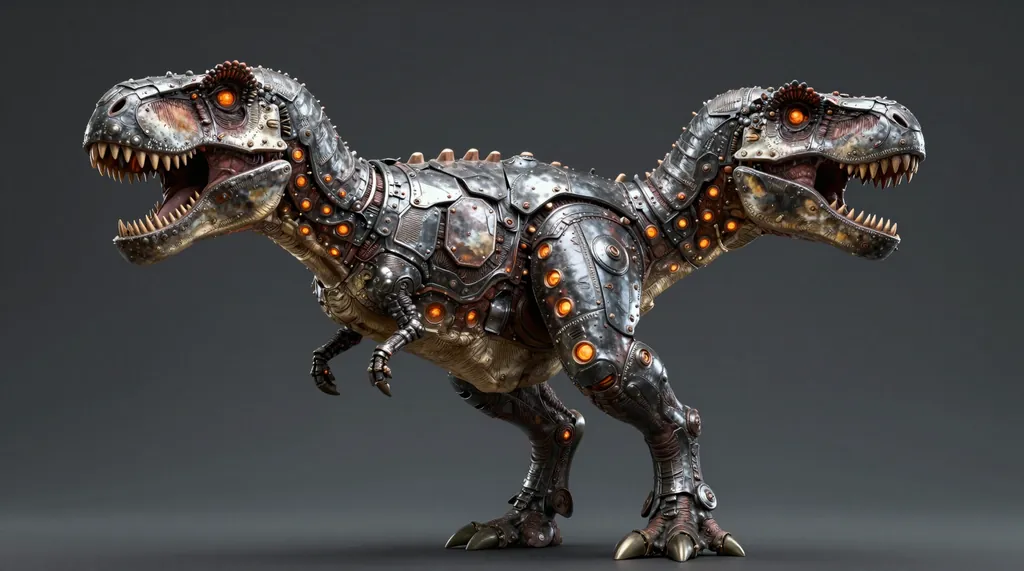
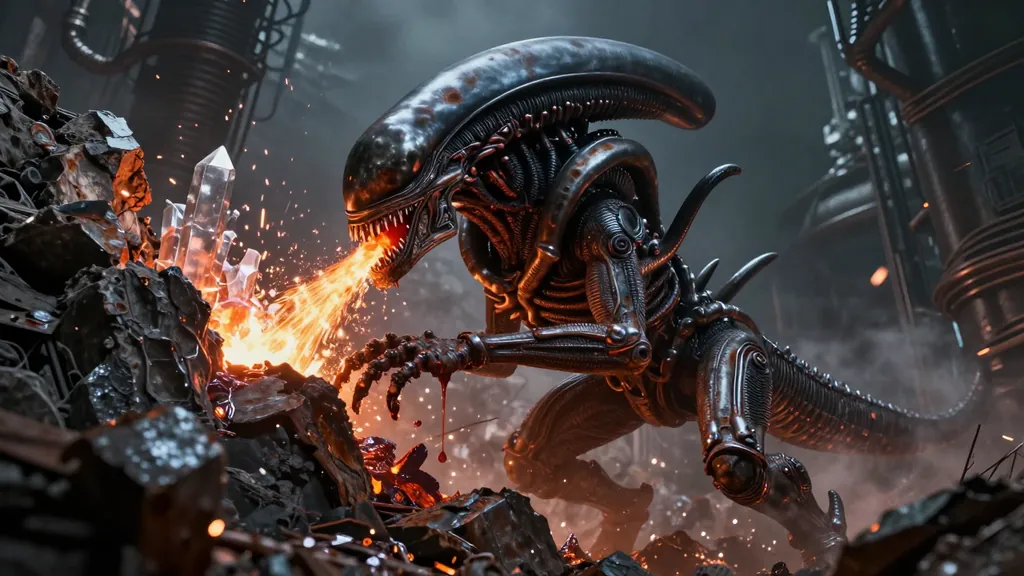
They are not natural caves. They are fossilized digestive tracts. Here inhabits a creature that makes our industrial machinery look like plastic toys. A creature that doesn't hunt meat, nor graze on grass. A creature that looks at a vein of tungsten-enriched granite and salivates.
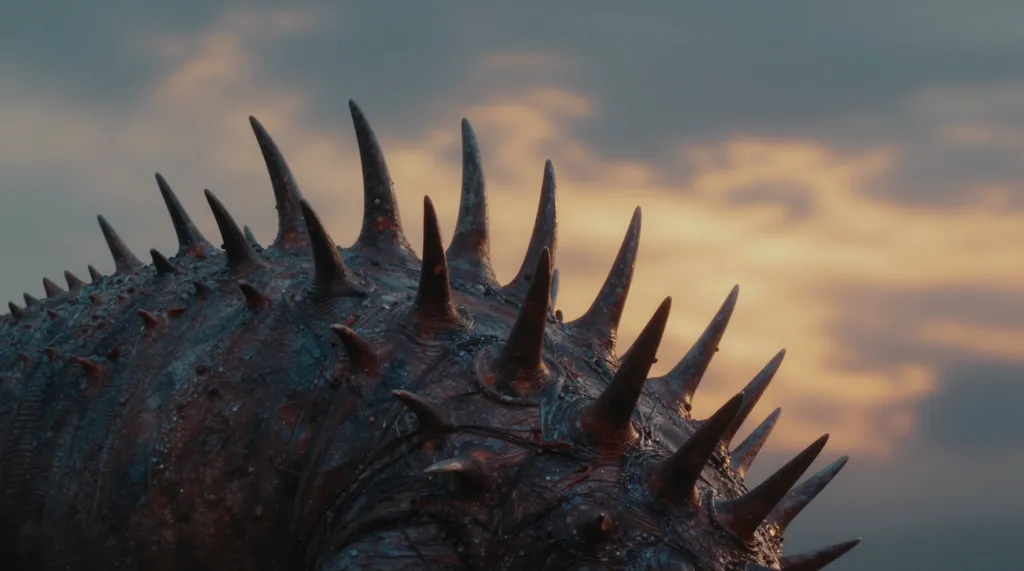
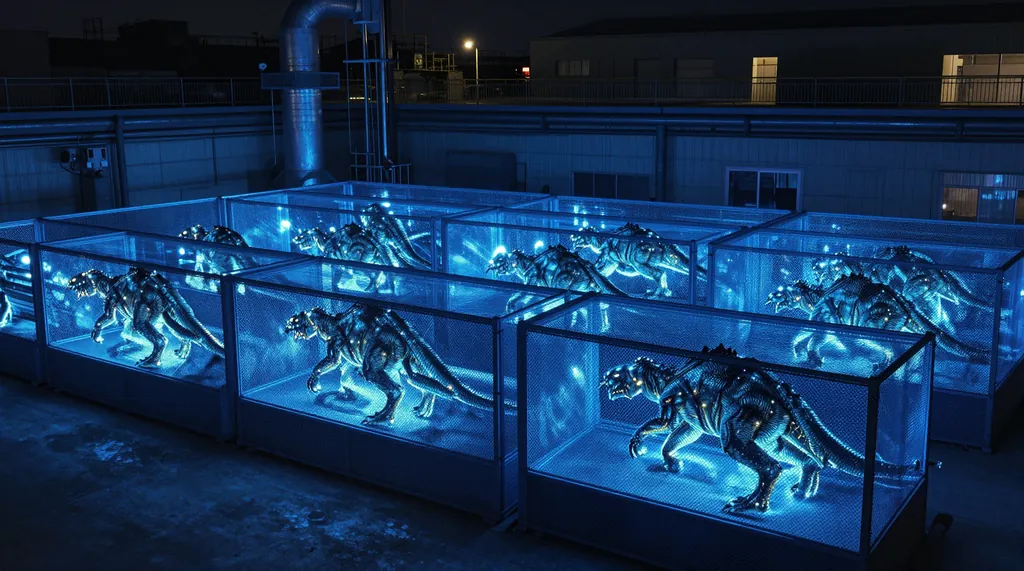
Presenting the Ferrovore Rex. The Iron Eater. The ultimate biological foundry.
ACT III: NUCLEAR DIGESTION
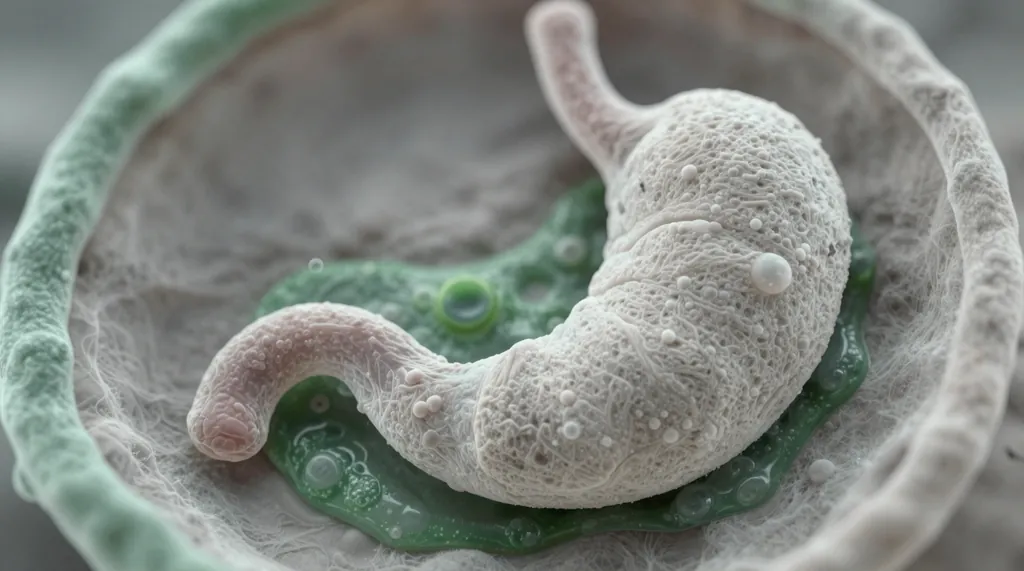
What happens inside the Ferrovore's stomach defies everything we learned in high school biology. Our stomachs use hydrochloric acid (HCl). It's a "strong" acid, pH 1 or 2. It burns skin, dissolves meat. But if you pour hydrochloric acid on a silicate rock, the rock laughs. Nothing happens. Silicon-Oxygen bonds are too stable.
To digest a mountain, you need something else. You need "God's Chemistry." You need Superacids.
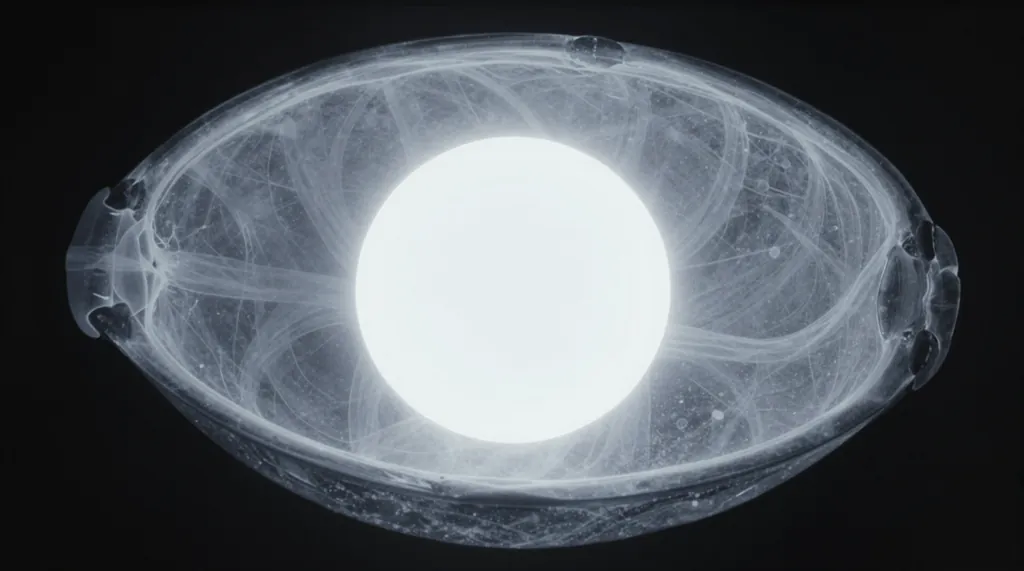
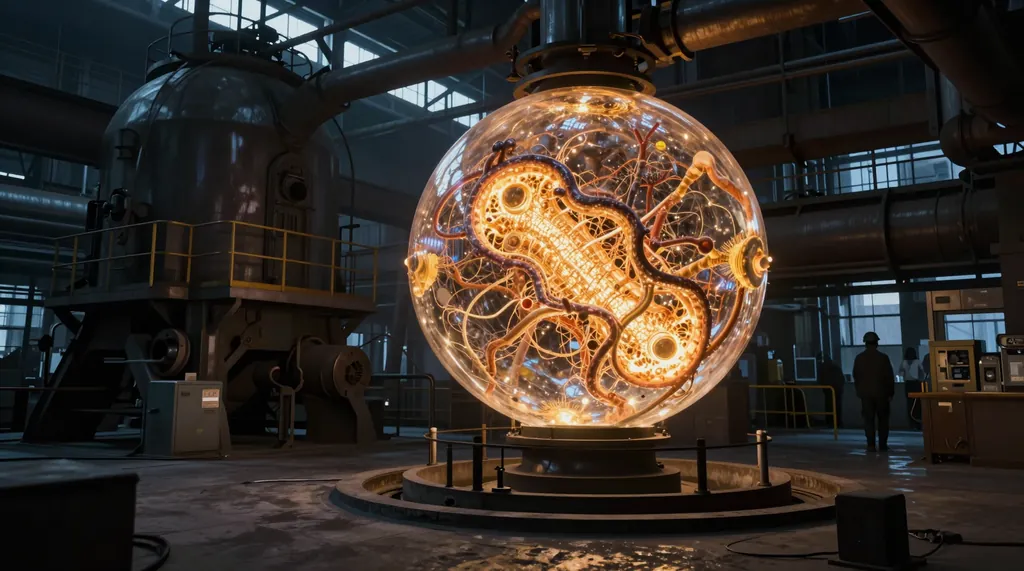
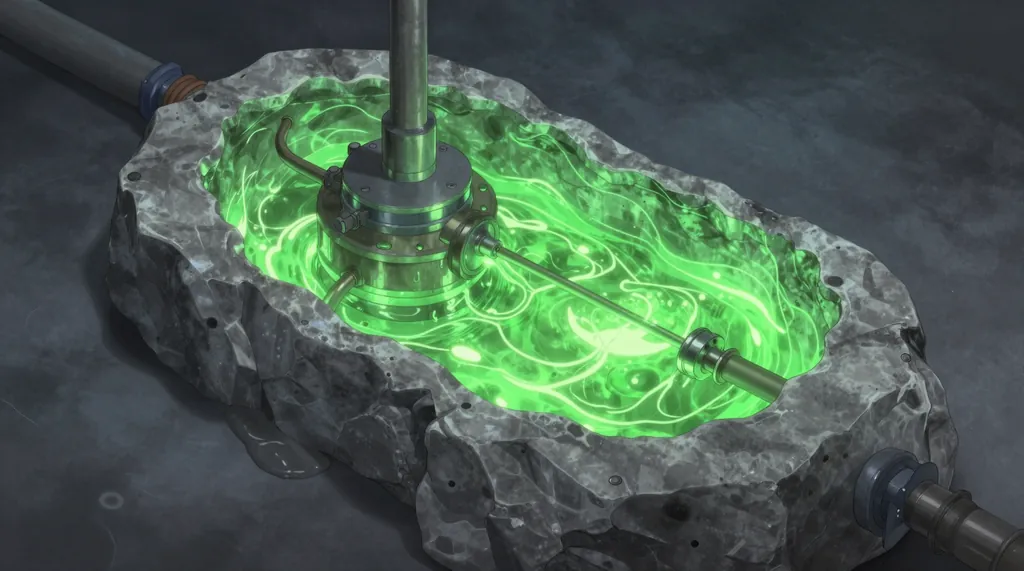
The Ferrovore secretes in its first stomach—the "Dissolution Reactor"—a biological mixture of Fluoroantimonic Acid (H₂FSbF₆). This substance is, and I am not exaggerating, ten thousand trillion times more acidic than pure 100% sulfuric acid.
On Earth, we cannot store this acid in glass bottles, because it eats glass. We cannot store it in metal, because it eats metal. We can only contain it in special Teflon containers.
The Ferrovore's stomach is lined with an advanced fluorinated polymer, a biological "super-teflon" that constantly regenerates to avoid being dissolved by its own gastric juices.
When crushed rock falls into this nightmare acid bath, geology surrenders. The silicate matrix disintegrates instantly. Silicon turns into silicon tetrafluoride (a gas). Oxygen is released and reacts violently. The rock ceases to be rock. It becomes a boiling ionic soup.
But dissolving the rock is just the first step. The goal is the metal. Here enters Extreme Chelation.
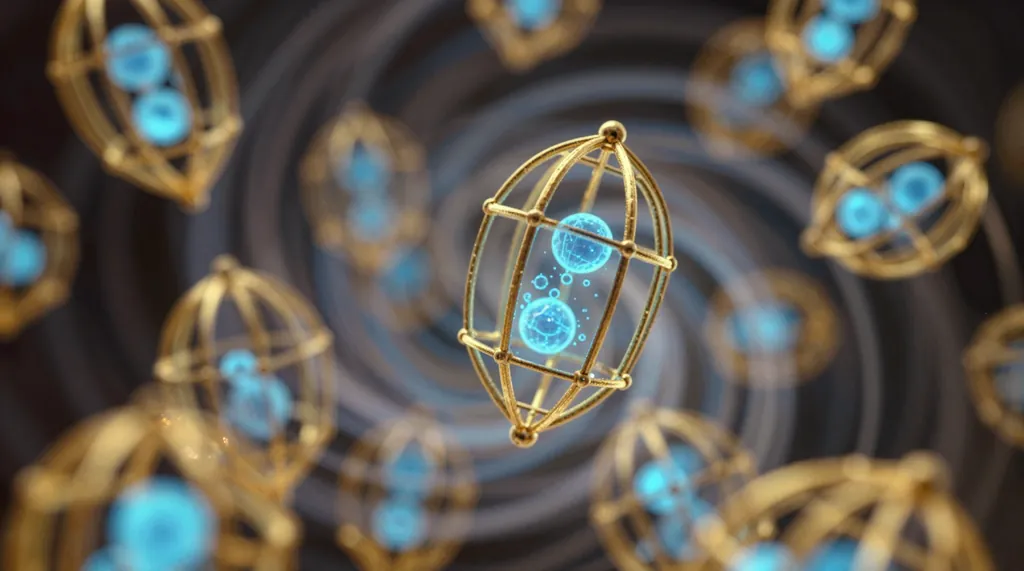
Floating in the superacid bath are macroscopic enzymes. Armored proteins, designed as molecular cages. These enzymes are selective. Some seek Iron (Fe). Others seek Copper (Cu). Others, the most valuable, seek Rare Earths: Neodymium, Lanthanum, Yttrium.
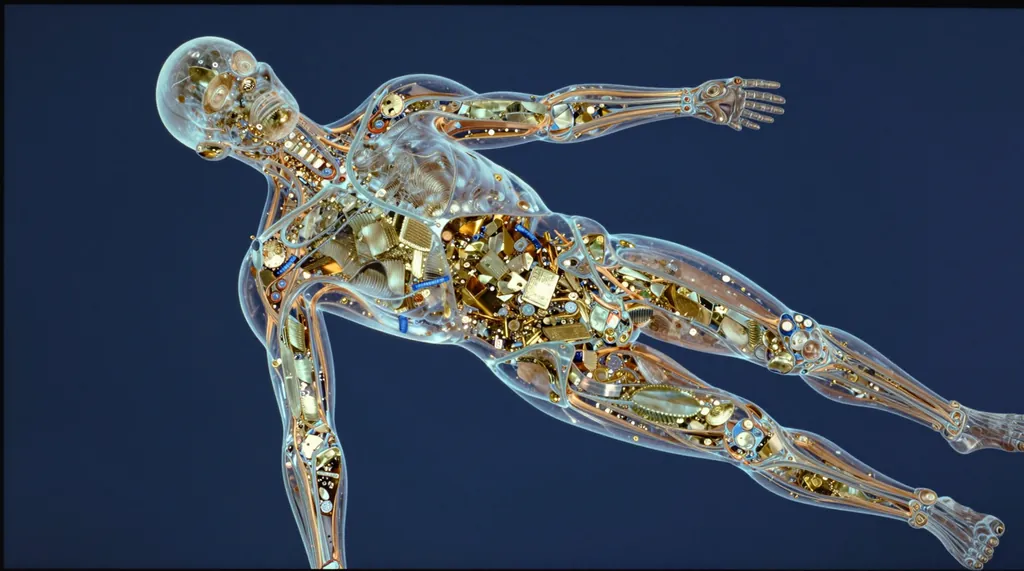
Imagine millions of microscopic hands grabbing individual metal atoms amidst a chemical hurricane. They trap the atom. They isolate it. They transport it through the stomach walls into the creature's bloodstream.
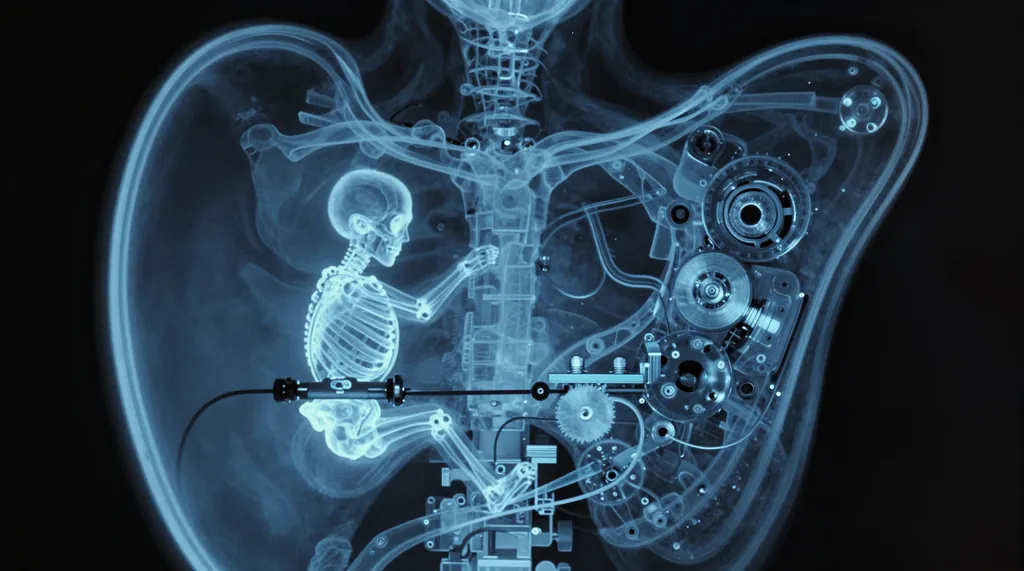
The Ferrovore's "blood" is not red. It is a metallic fluid, shiny, heavy. Enriched mercury flowing through ceramic veins.
ACT V: WASTE ECOLOGY
What happens to what they don't eat? A human mine leaves behind toxic waste dumps, tailings dams that poison rivers for centuries. We are dirty miners. The Ferrovore is a clean miner.
After extracting the valuable metals, what remains in its digestive tract is primarily pure silica and inert oxides. The creature compacts this waste in its hindgut. It uses massive hydraulic pressure and residual body heat to sinter the dust.
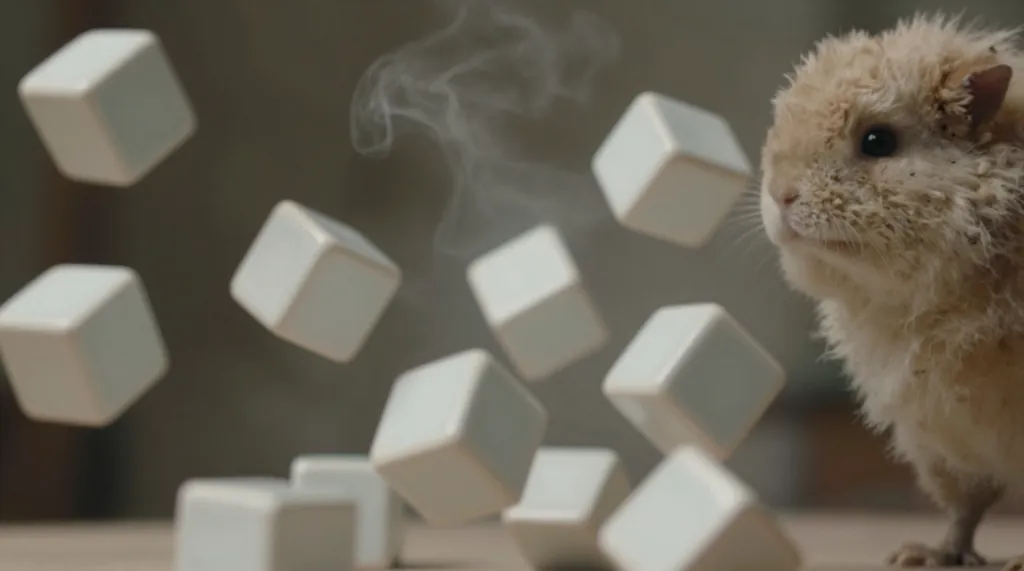
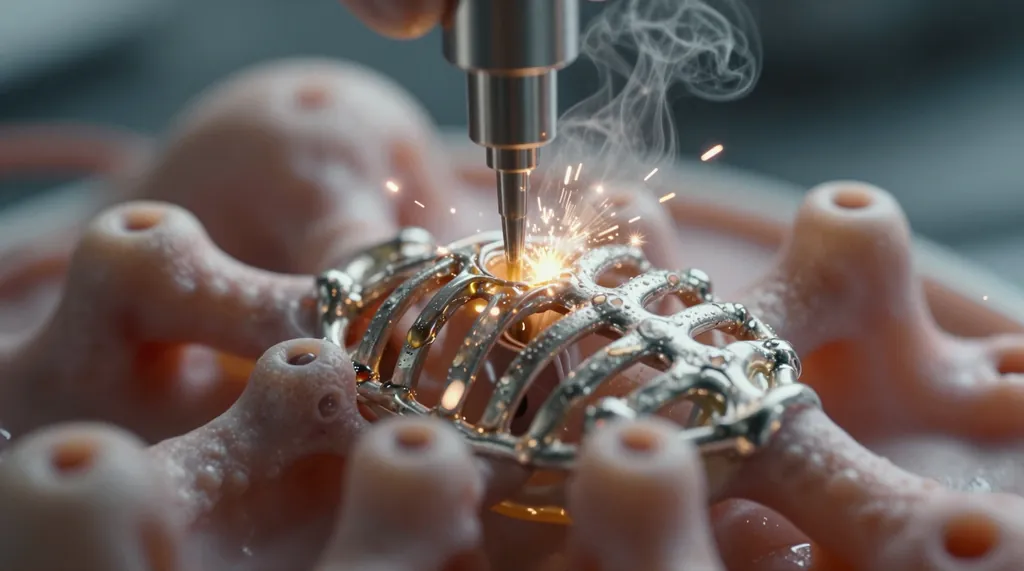
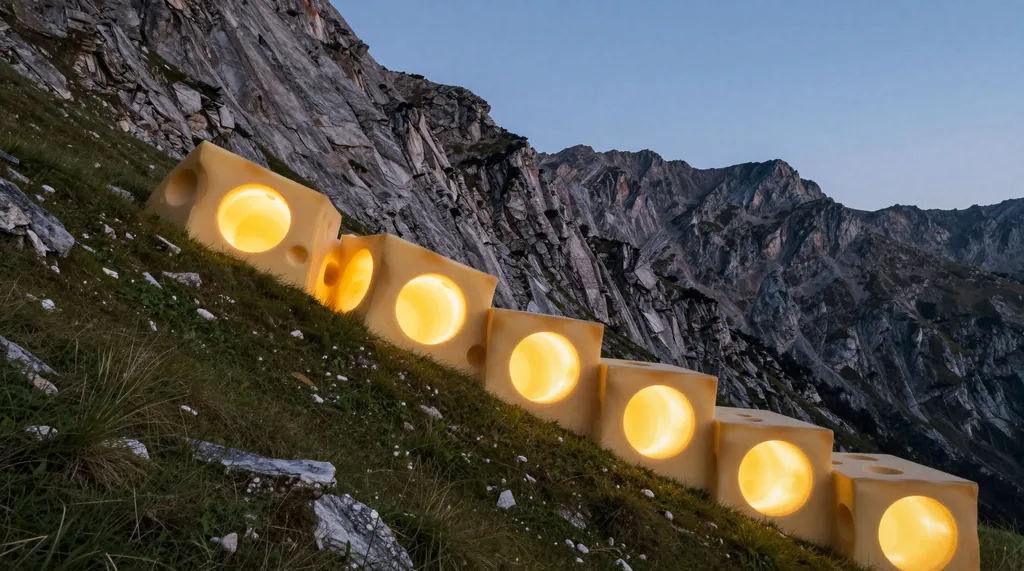
It excretes bricks. It is not a metaphor. The Ferrovore defecates perfect cubes of vitrified slag, hard as granite, sterile, and chemically neutral. As it moves, it leaves a wall behind.
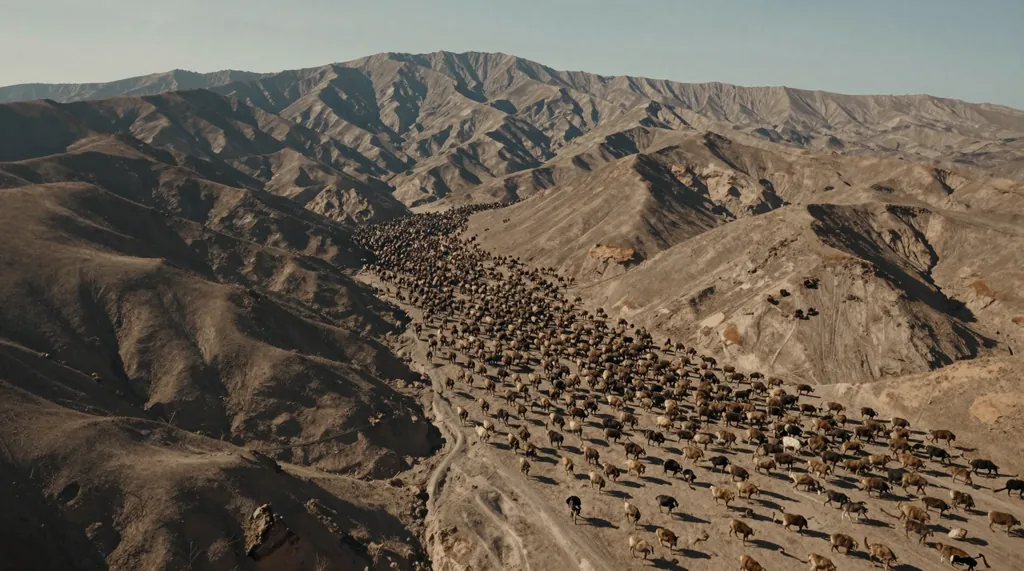
In some regions, you can see natural "Great Walls of China" thousands of kilometers long, built by generations of migratory Ferrovores.
And this is where ecology becomes fascinating. These slag bricks are the resource most coveted by the rest of the ecosystem. In a world of molten metal and sharp rock, a smooth, cool (relatively) ceramic brick is a luxury.
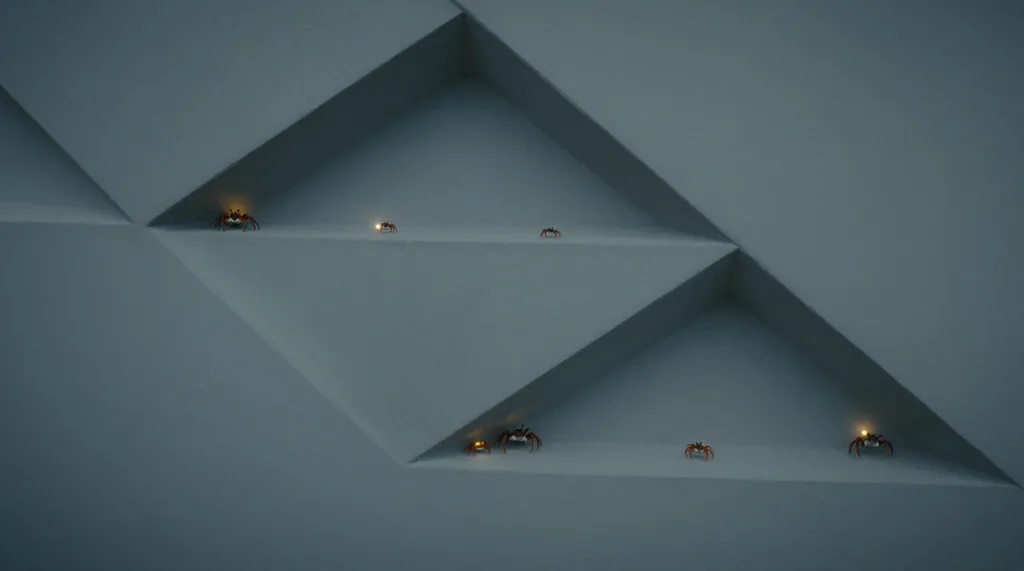
Small scavengers, the "Slag Crabs," follow the Ferrovores. Not to eat their feces, but to live in them. They bore into the still-warm bricks and make their nests inside. They use the giant's residual digestive heat to incubate their eggs.
The Ferrovore's excrement walls become terrestrial coral reefs, full of life hiding in the gaps.
Furthermore, the Ferrovore is the Element Liberator. Without them, the planet's heavy metals would be locked forever in the jail of the bedrock. By dissolving the rock and concentrating metals in their bodies, Ferrovores act as "bio-accumulators."
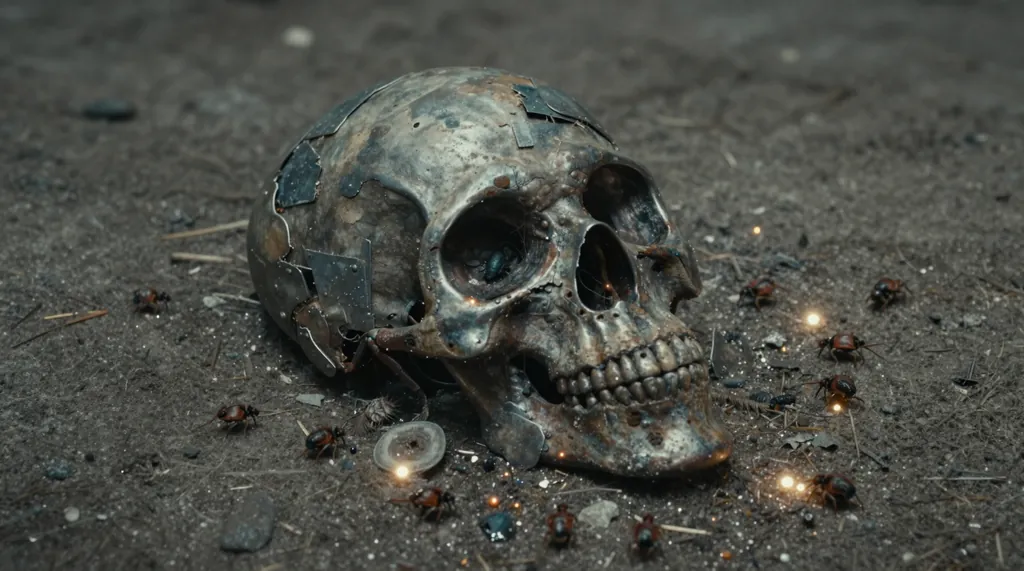
When a Ferrovore dies (usually from old age, when its diamond teeth finally wear down and it can no longer eat), its body is a treasure. Its corpse doesn't rot. It oxidizes and disassembles.
Other organisms come to eat its armor. Metallophagic bacteria corrode its titanium plates. The Fulgoris come to drink the electrolytic fluids from its internal batteries. The dead Ferrovore fertilizes the world with pure, refined metal.
It is the only reason a complex biosphere exists on this planet. It does the hard work of purifying the periodic table so others can build their bodies.
ACT VII: MAGNETIC PARASITES
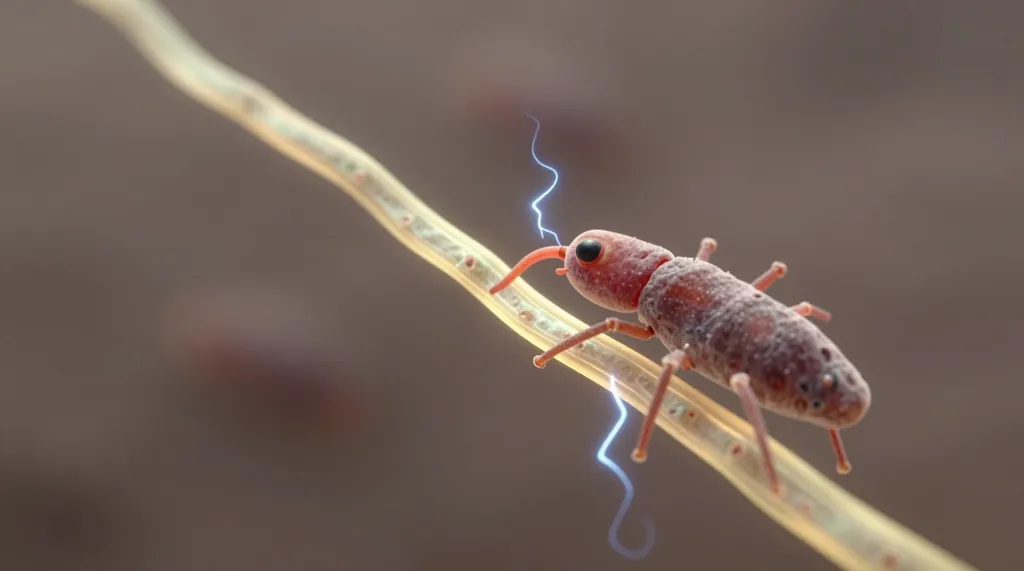
But not even a tank is invulnerable. There are Magnetic Leeches. Dog-sized pests, with magnetic shells, that attach to the Ferrovore's hull.
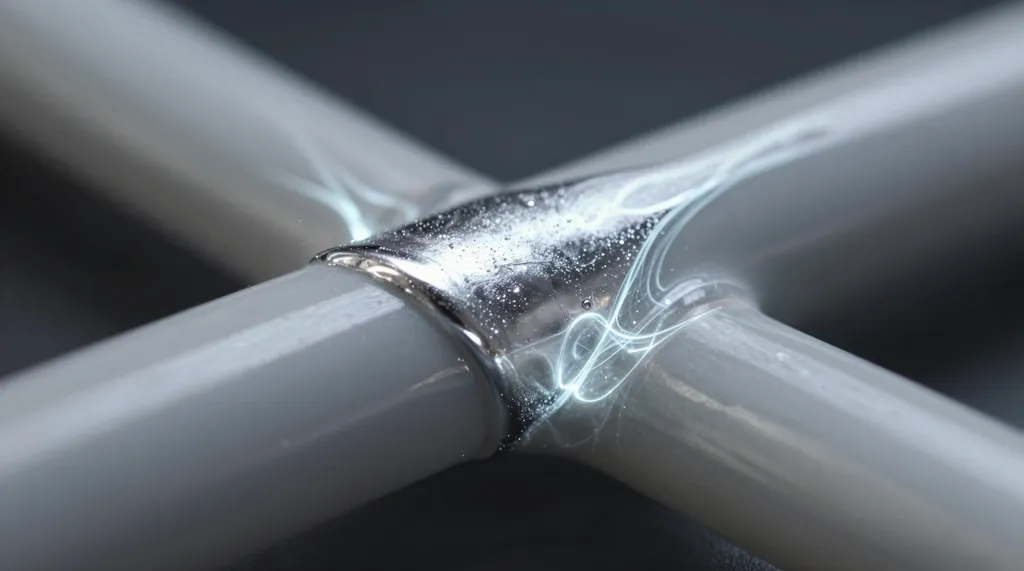
They don't suck blood. They suck charge. They pierce the armor with plasma stylets and tap into the giant's circuits, draining the bio-electricity from its batteries.
An infested Ferrovore becomes slow. Its reactor cools down. If it has too many parasites, it simply "shuts down." It dies of system failure. It is a constant war between the armored giant and the invisible energy thief. Even the king of the mountain has fleas... magnetic fleas that steal lightning.
ACT IX: THE FINAL DEFENSE
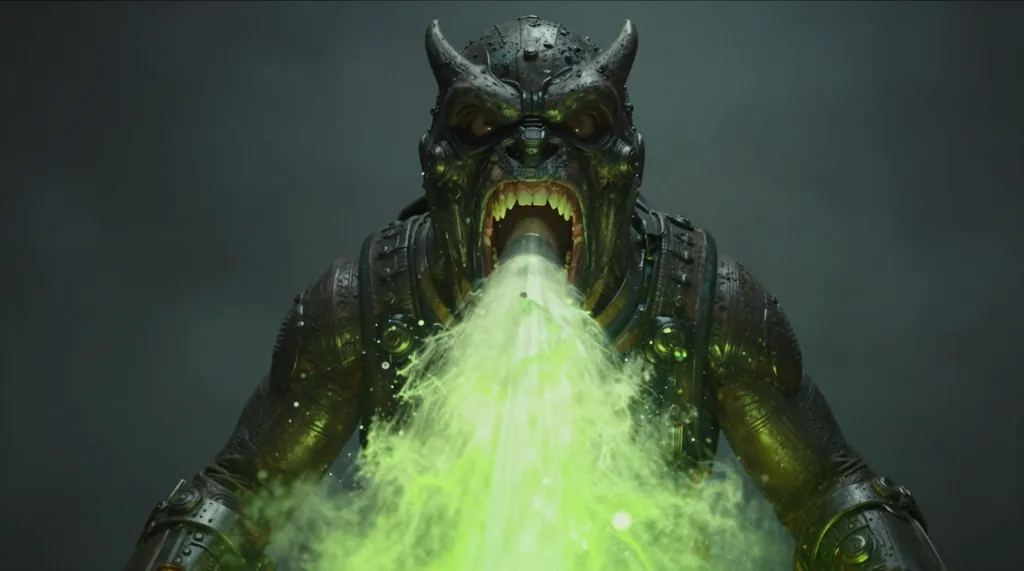
If you try to corner a herd of Ferrovores, you will discover why they have no natural predators. When they feel threatened, they have a final defense mechanism. Acid Regurgitation.
They can project the contents of their stomach—that boiling fluoroantimonic superacid—to a distance of fifty meters. At high pressure.
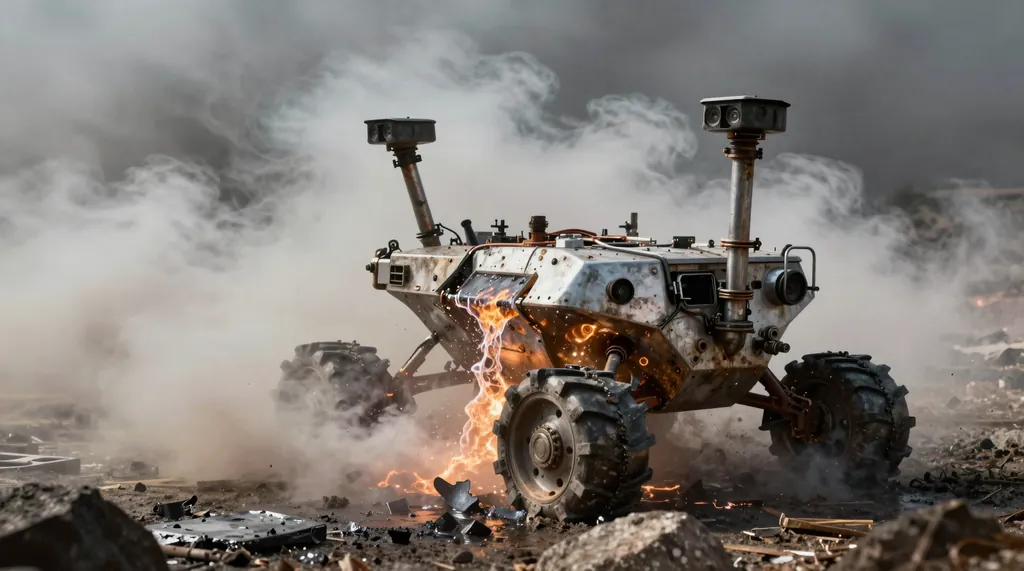
Imagine a water cannon, but the water instantly dissolves the frame of your combat mech, melts your tank's tracks, and vaporizes your soldiers in a toxic fluorine gas cloud.
A war against Ferrovores wouldn't be a hunt. It would be a battle of industrial attrition. And they have more acid than we have armor.
ACT X: CONCLUSION
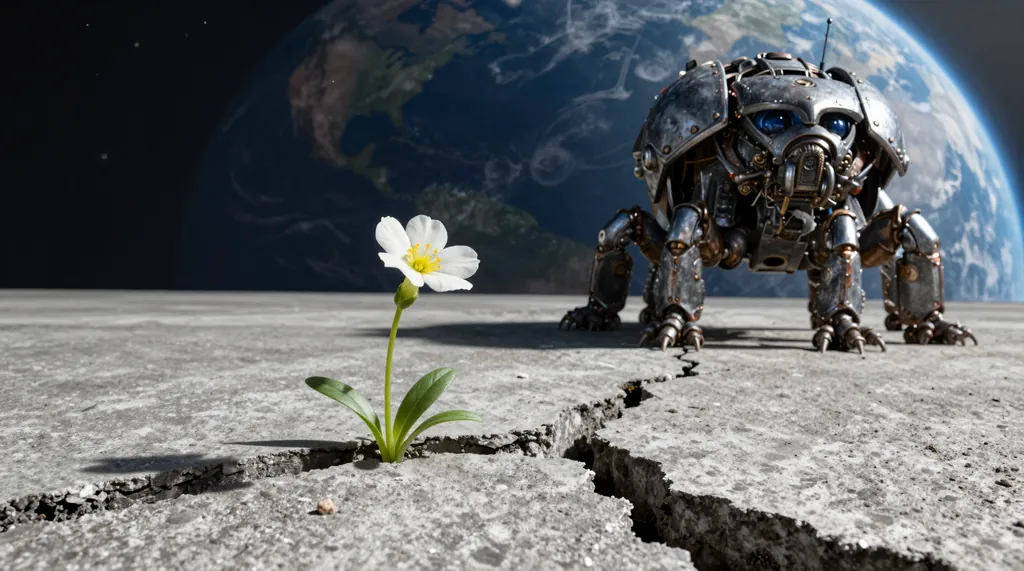
We often think of life as something fragile. Something "soft and wet." A flower growing in a crack in the pavement. We think rock is strong and life is weak.
The Ferrovore inverts this equation. Here, life is the dominant geological force. Life does not adapt to the landscape; life eats the landscape. They have chewed entire mountain ranges down to dust plains. They have rewritten their world's geography with their teeth.
It teaches us a lesson in metallurgical humility. We need electric arc furnaces, chemical fluxes, and obscene amounts of electricity to purify metal. The Ferrovore does it at body temperature, in silence, in the dark.
Perhaps, in the far future, our machines and their biology will converge. Perhaps we stop building excavators and start breeding mountains. Perhaps the mining of the future won't be engineering... it will be ranching.
But until then, the Ferrovore is out there, in the darkness of the Oven World. Grrr-CRACK... Grrr-CRACK...
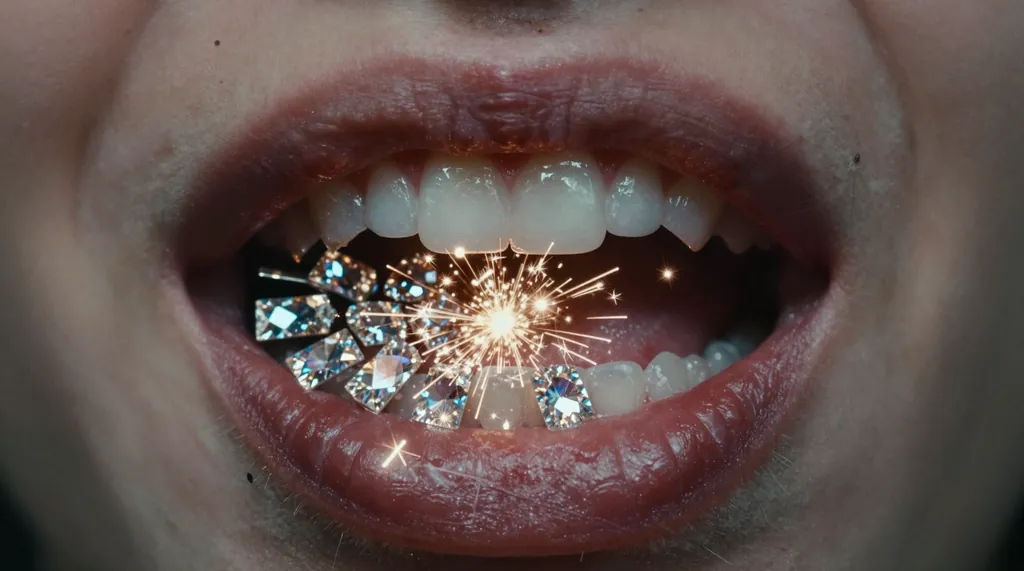
Eating the planet, one diamond bite at a time.
Question for you: If you could replace your biological body with one of tungsten and diamond, would you give up your humanity for physical immortality? Leave your answer in the comments. And if impossible biological engineering fascinates you, subscribe for the next episode, where we will travel to silence.