PROLOGUE: THE DEVIL'S ELEMENT
There is a gas we idolize. We call it the "Breath of Life." We search for it desperately in the atmospheres of distant exoplanets. When our telescopes detect its spectral signature, we celebrate, imagining green forests and blue oceans. We write poetry about the fresh morning air. For us, Oxygen is the mother of biology.
But in the context of universal chemistry, Oxygen is not a mother. It is a monster.
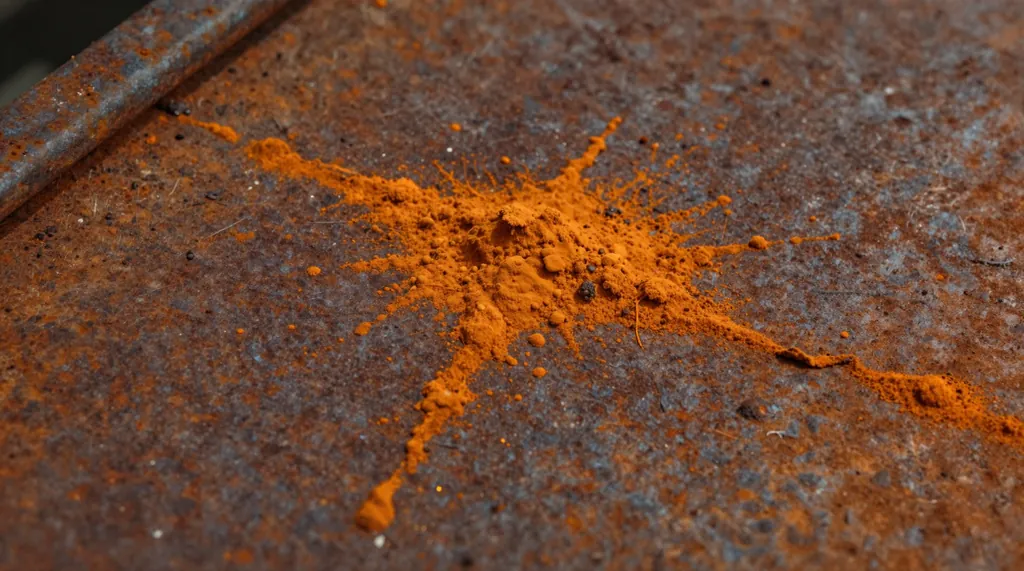
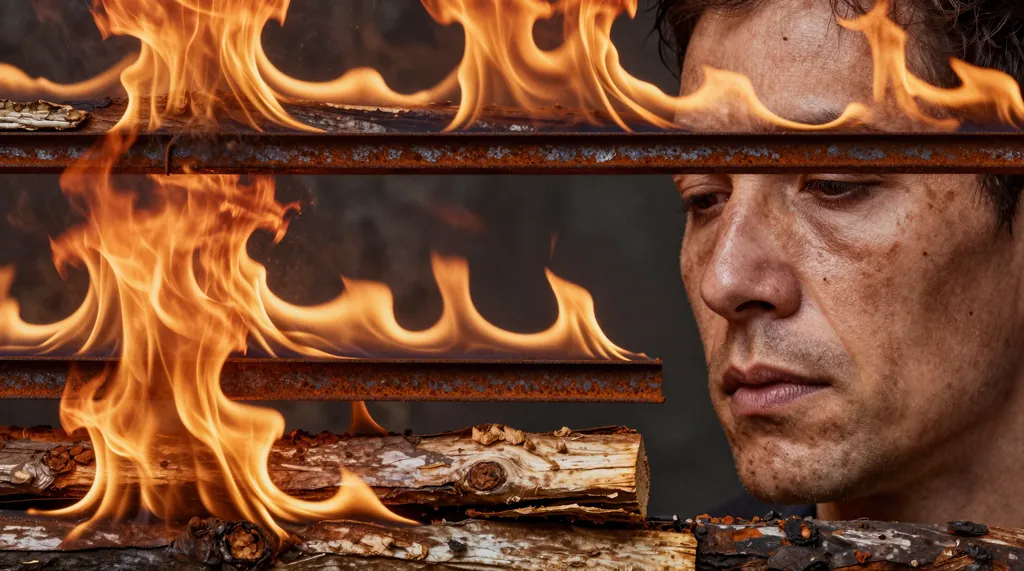
It is one of the most corrosive, violent, and reactive agents on the periodic table. Fire is simply oxygen feeding. The rust devouring steel is oxygen eating slowly. The cellular aging that kills us is, ultimately, a slow oxidation. We live thanks to a controlled burn that takes eighty years to consume us. We are machines burning slowly toward death. And we call it "life."
But on the Furnace World, where biology has been laboriously built upon the architecture of Silicon in a reducing atmosphere... oxygen is not life.
Oxygen is the gaze of Medusa. It is reverse alchemy. It is petrification made gas.
Here, in this high-temperature ecosystem, thermodynamic equilibrium is precarious. Silicon life exists because it has avoided the chemical "Gravity Well" of Silicon Dioxide. That is the only axiom that matters. That is the only commandment: Avoid Silicon Dioxide. Forever. Until the end of time.
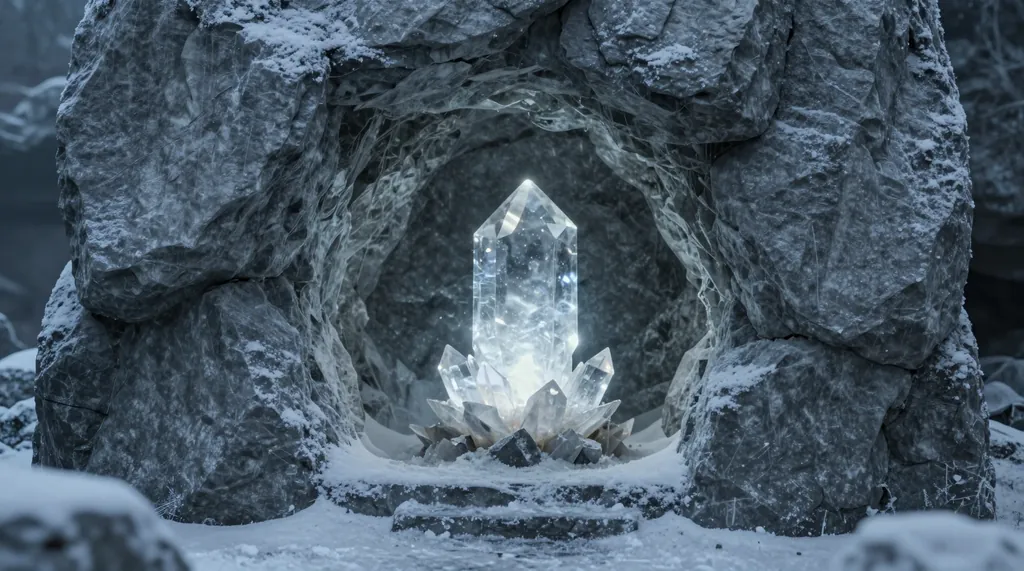
Silicon loves oxygen with a suicidal passion. If a silicon atom finds two of oxygen, they will bond with such force that they will release explosive energy, and the result will be a molecule of SiO2. Quartz. Sand. The most stable, inert, and dead form of matter in this system. The chemical tomb. The eternal prison. Once Si meets O2, the transformation is irreversible. It is the death of atomic freedom.
For a Crystallus, a breath of terrestrial air is not refreshing.
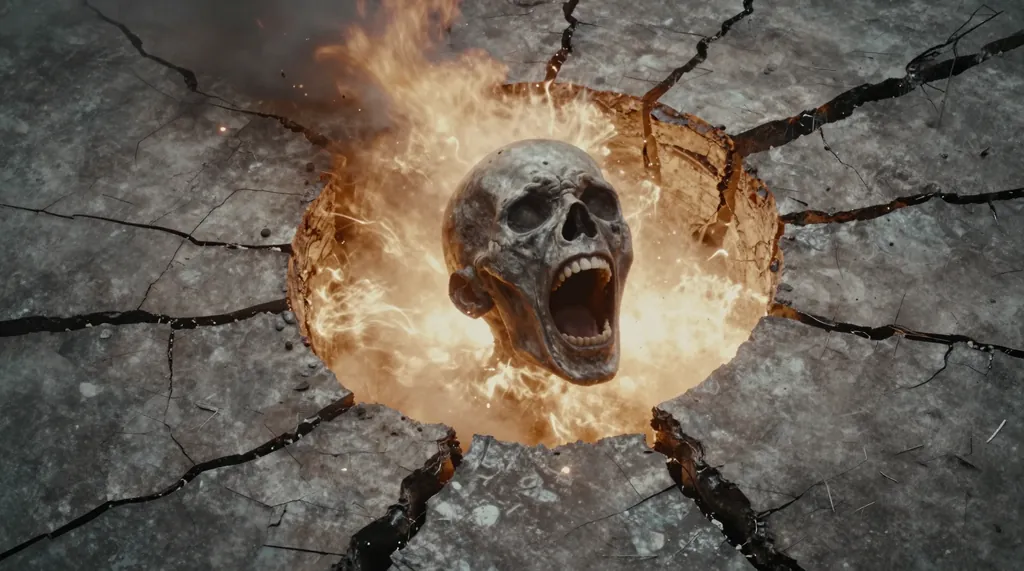
It is a spell of instant petrification. It is an alchemical curse that turns blood into glass and flesh into stone. It is death without mercy. It is the opposite of everything it means to be alive.
For three billion years, the Furnace World was safe.
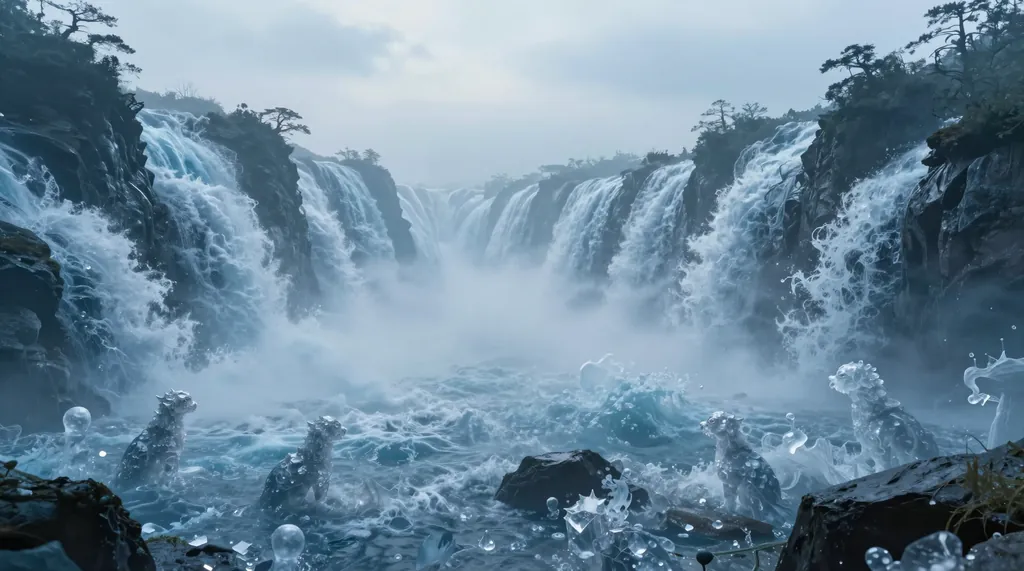
Its dense atmosphere of nitrogen, methane, and metallic vapors was a perfect shield. A world where reactivity had been banished from the sky. A world where elements knew their place and obeyed. Until the day the sky broke.
ACT II: THE PATHOLOGY OF THE STATUE
Let's get closer. At a microscopic level. We need to understand, with relentless precision, the molecular cruelty of what happened in the next thirty seconds. Because death, in this world, is not a matter of seconds or minutes. It is a matter of angstroms.
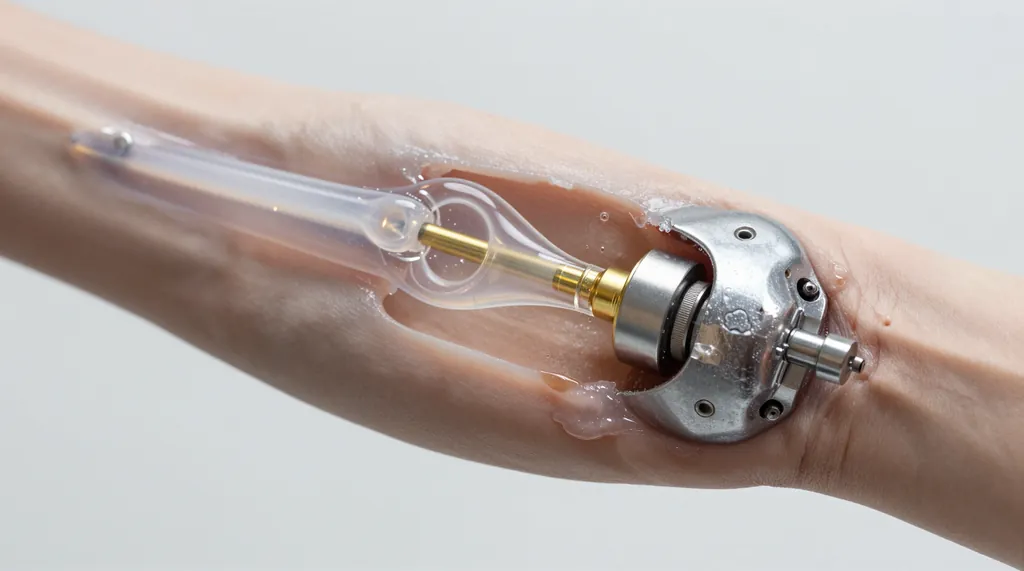
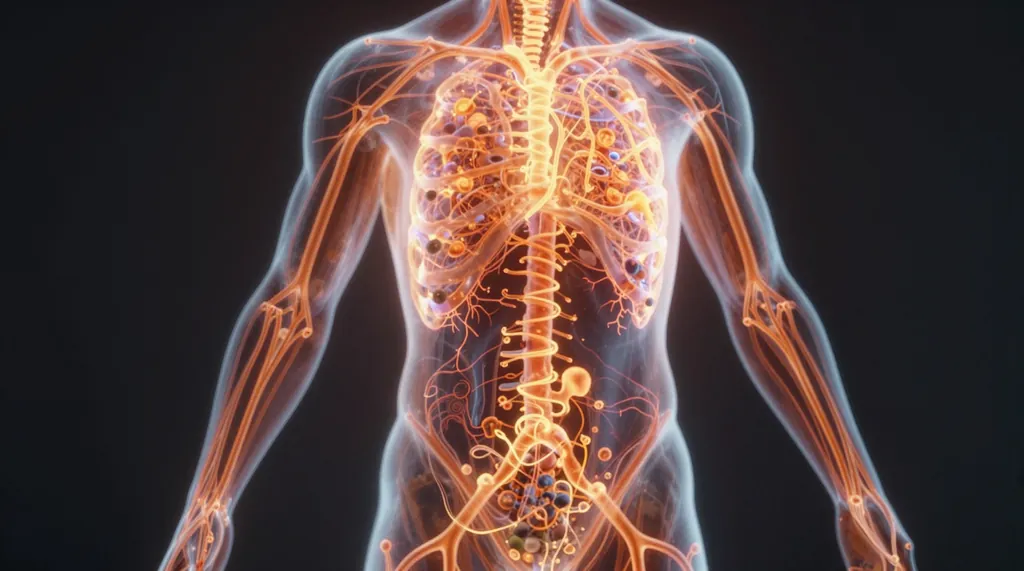
The creature inhales. Or rather, cycles air through its intake spiracles. These are not lungs like ours. They do not exchange gases for aerobic respiration. They are sophisticated thermoregulatory chambers, designed to maintain the organism's thermal balance on an 800-degree planet. They also function as trace mineral extractors, filtering fine silicones and rare metals from the dense air.
The Oxygen molecule (O2) enters the internal reaction chamber of the Crystallus.
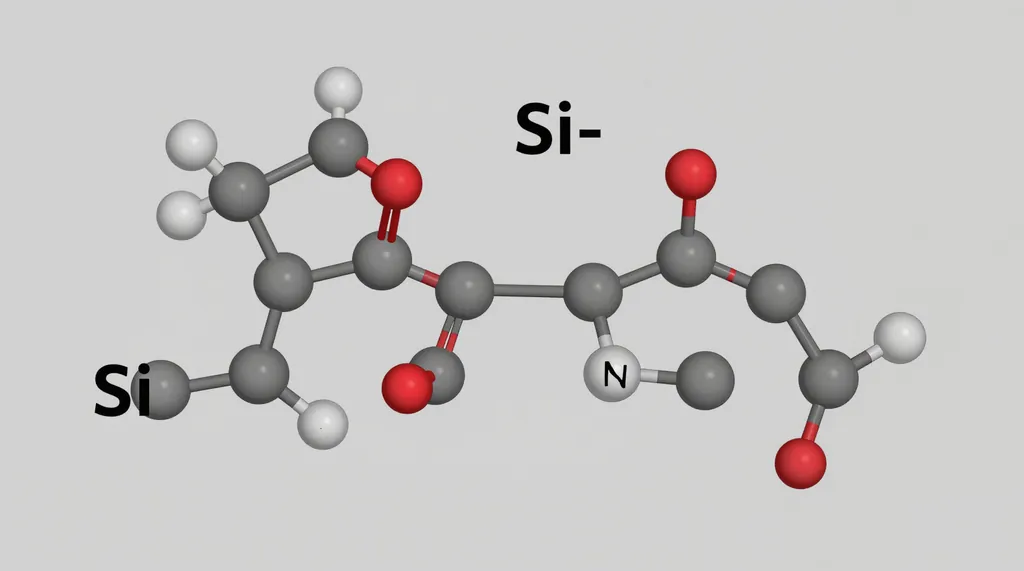
There, in that humid and hot and complex space, it meets the creature's vital fluids: Polysilanes and long-chain Silicones. These are not simple oils. They are complex, structured, intelligent polymers. They are the blood of this world. They are what allow silicon life to flow, move, think. They are the equivalent of our blood and lymph.
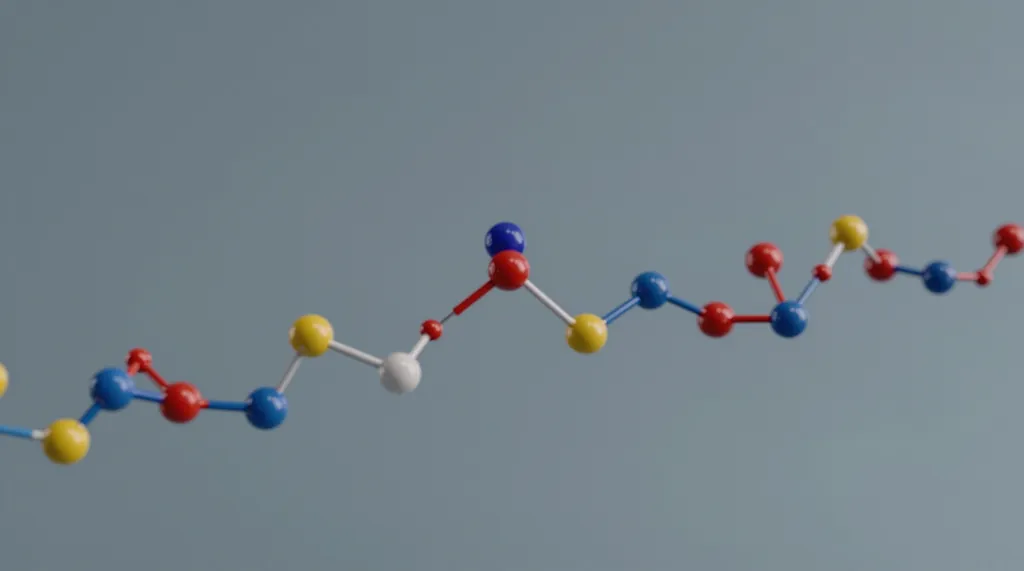
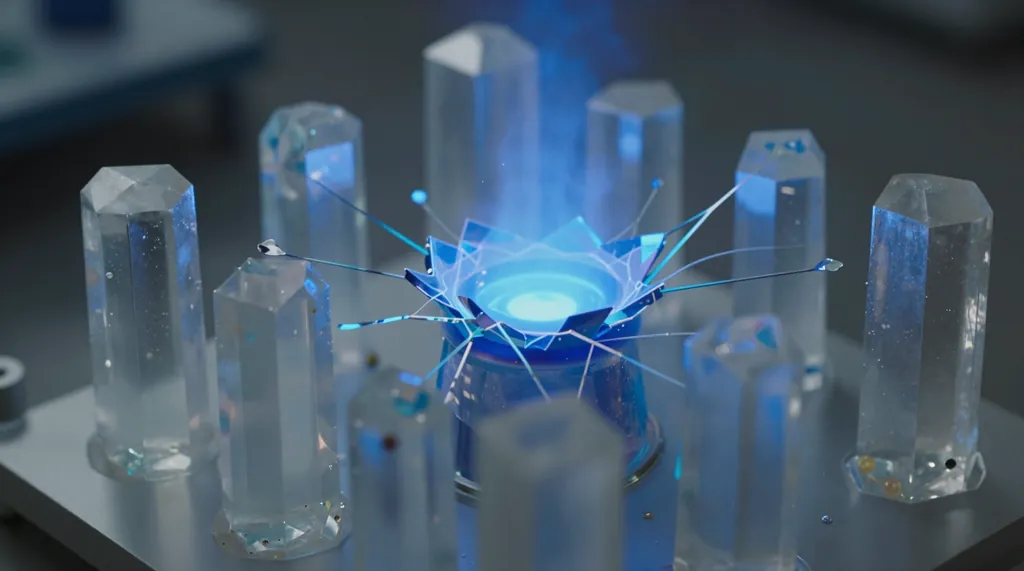
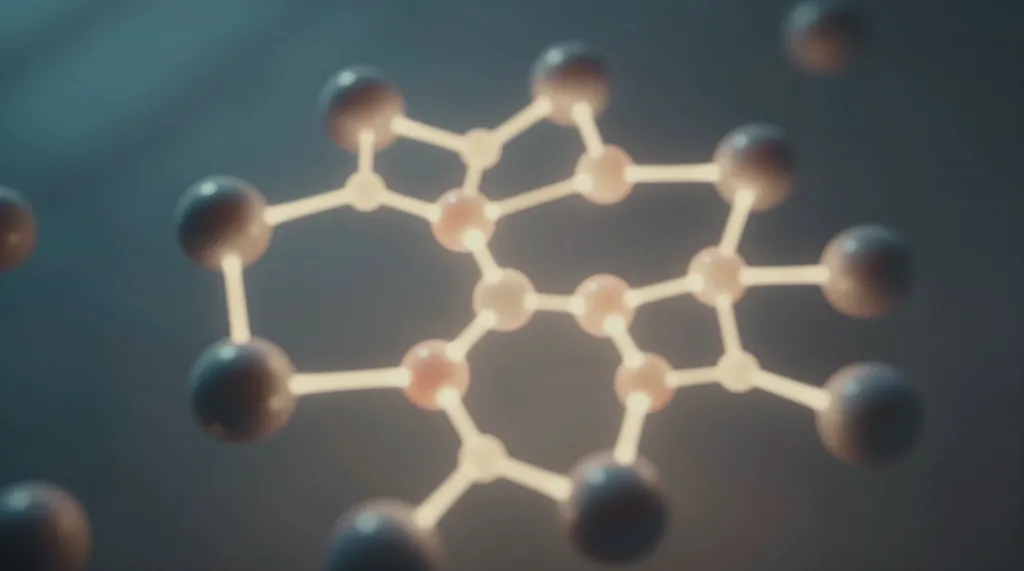
The moment O2 touches Polysilane at 800 degrees, something fundamental changes. The reaction is thermodynamically inevitable. There is no possibility of negotiation. There is no "maybe." It is a radical chain reaction. Oxygen attacks the Silicon-Hydrogen and Silicon-Silicon bonds. It breaks them with violence. And in their place, it inserts itself. A Silicon-Oxygen-Silicon (Si-O-Si) bond forms. A new pattern. A new structure. A new chemical reality.
For a chemist, this is the formation of a cross-linked polymer. A cross-linking of molecules. A change of state of matter.
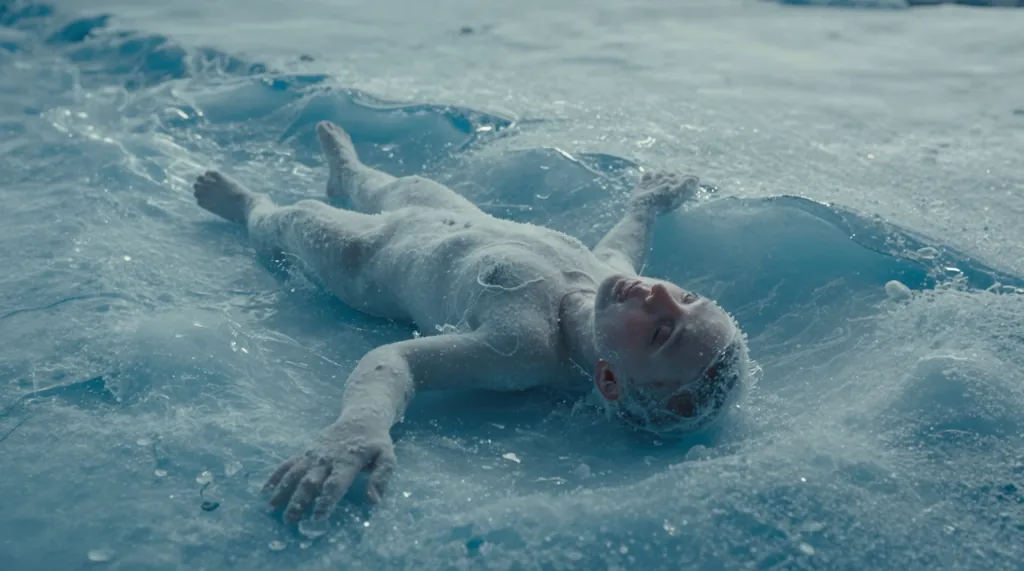
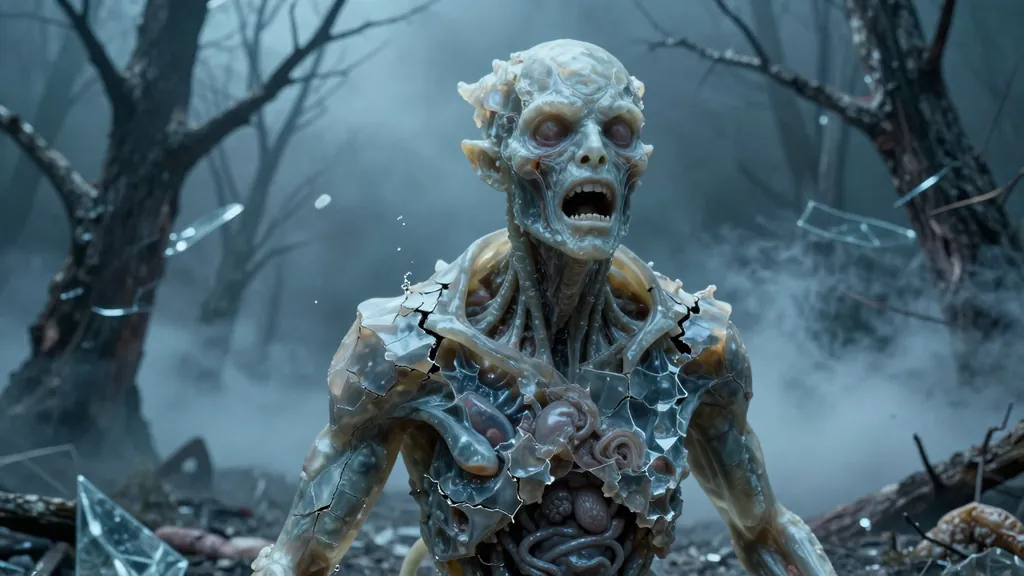
For the creature, this is Acute Systemic Vitrification.
Imagine your blood, in a matter of seconds, turning into epoxy glue. And then, into cement. And finally, into solid glass. Imagine feeling your body turn to stone from the inside out. Imagine the absoluteness of that transformation. That is what the Crystallus feels.
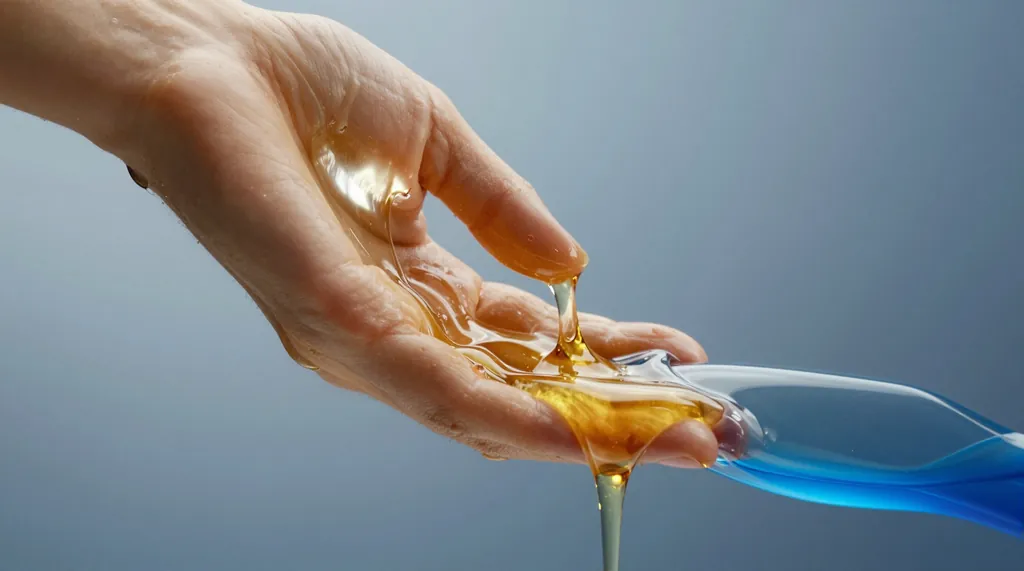
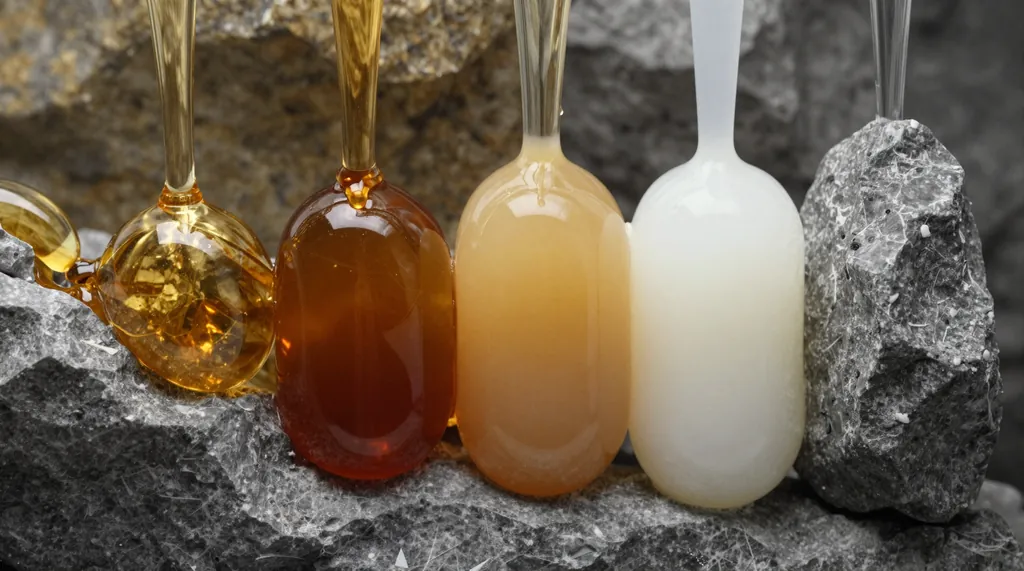
The first symptom is heat. The oxidation reaction is exothermic. It releases energy. That energy, that potential energy compressed into chemical bonds for millions of years, is released all at once. The creature's internal temperature skyrockets. From its normal 800 degrees, it rises to 1200, 1500 degrees in seconds. It is cooking from the inside. But it doesn't melt. It hardens. Its vital fluids, which were fluid an instant ago, become substances increasingly viscous. Like ink hardening into glass.
The lubricating fluid in its joints turns into abrasive quartz. Its joints, which moved smoothly a moment ago, are now full of deadly friction.
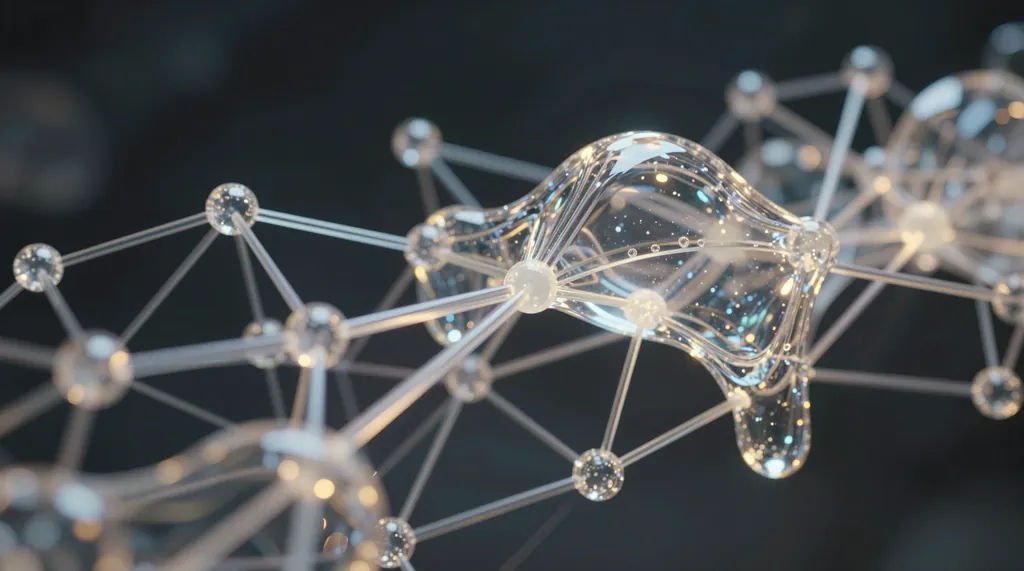
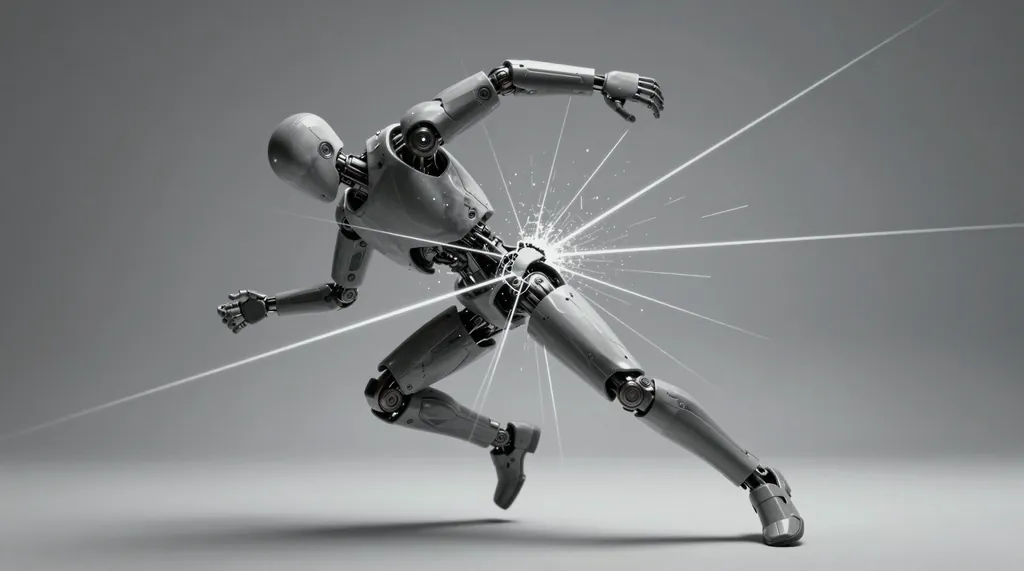
The Crystallus tries to take a step. An act of survival. A desperate attempt to escape something it does not understand. It sends the electrical signal to its front leg. The piezoelectric actuators try to contract. But the liquid crystal fibers forming its "muscles" are no longer liquid. They have cross-linked. They have become a rigid three-dimensional lattice. Solid cement. Living rock.
The leg does not move. It locks with a dry cracking sound, like rock splitting from ice. A sound of irreversible rupture.
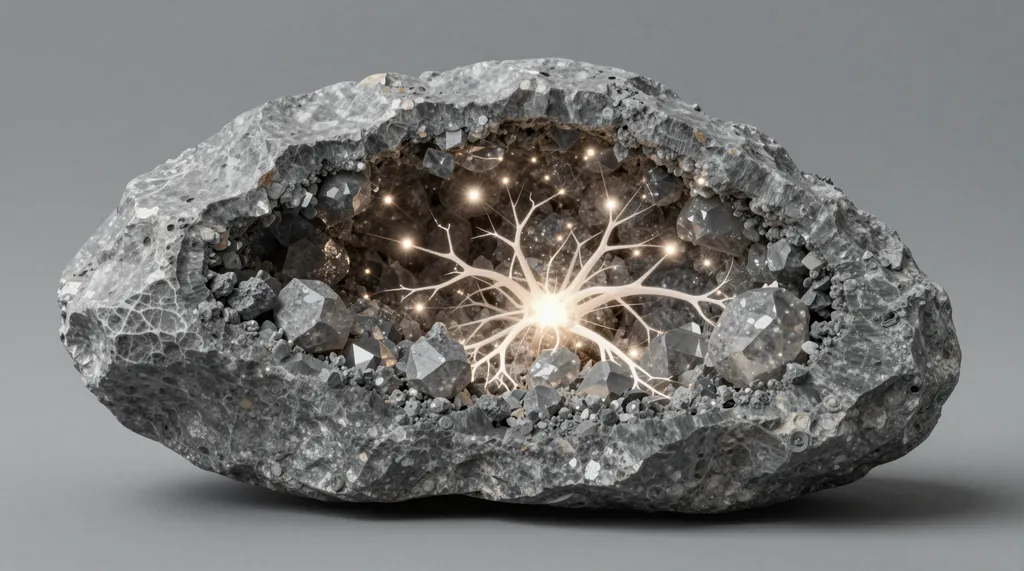
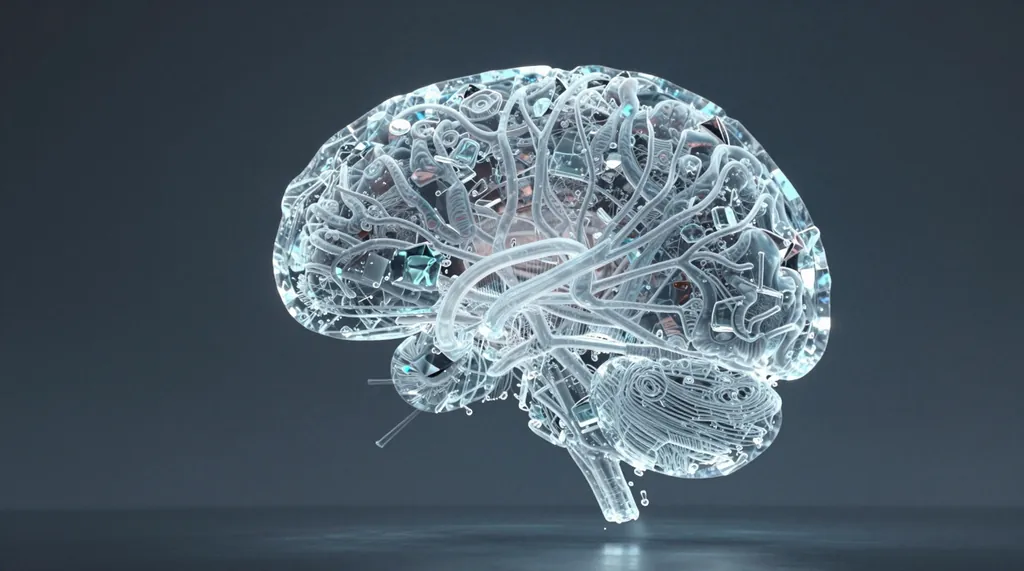
Biological panic sets in. Not conscious panic. Chemical panic. It is the panic of the body when it discovers it no longer obeys. The creature's neural network—those living chips distributed throughout its body, those doped crystal matrices processing information—begins to fail. Not because they burn out. Not because they lose power. But because they become isolated.
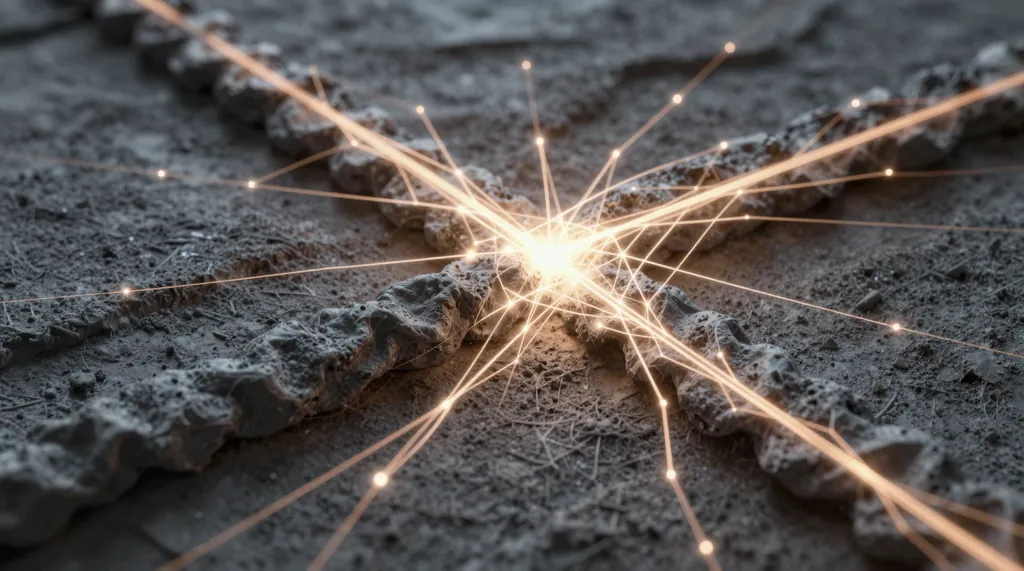
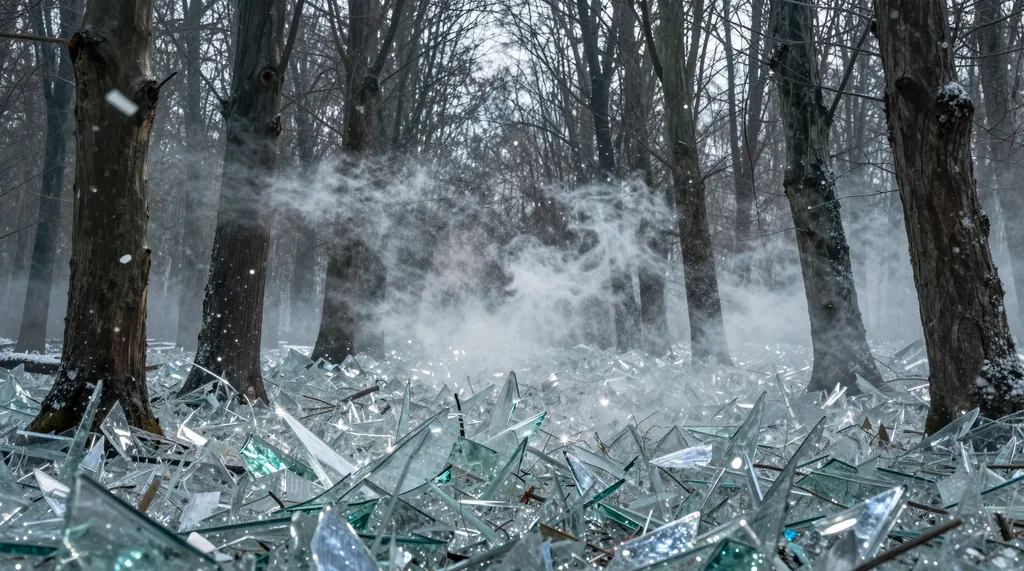
Silicon oxide (SiO2) is an excellent electrical insulator. While doped silicon is a conductor of electricity, SiO2 is opaque to it. A glass wall. As oxygen penetrates the tissues, it creates microscopic glass barriers between nerve cells. Islands of consciousness surrounded by silence. Thoughts fragment. Electrical signals get lost in mazes of insulation.
The creature tries to scream. Tries to send a distress signal to the herd. Tries to communicate, somehow, the agony of its transformation. But its resonance box—that specialized organ generating sound—has filled with silica dust. Its voice becomes a screech of mineral friction. Nothing but noise.
And here lies the true horror.
Death is not instant. That would have been a blessing. The outer shell hardens first, in seconds. The creature's exterior, its defensive carapaces, turn into solid ceramic. It becomes a prison. The creature is sealed inside its own body. Its skin is now its coffin.
But in the deep core, in the heart of the creature, protected by layers of tissue, consciousness persists.
For minutes—perhaps hours—the creature is alive. Conscious. Totally aware. It can feel everything happening to it. It can feel the wave of crystallization advancing inch by inch toward its center. It can feel its organs turning into statues one by one. Its crystal lungs. Its silicon heart. Its quartz brain. Everything turns to stone while it remains conscious, while it remains there, feeling it all.
It is the ultimate locked-in syndrome.
Buried alive inside your own skin. Inside your own body that is now a tomb. Unable to move. Unable to speak. Unable to escape. Only feeling it. Only existing in the abyss of your own petrification.
ACT IV: THE PERSISTENCE OF GLASS
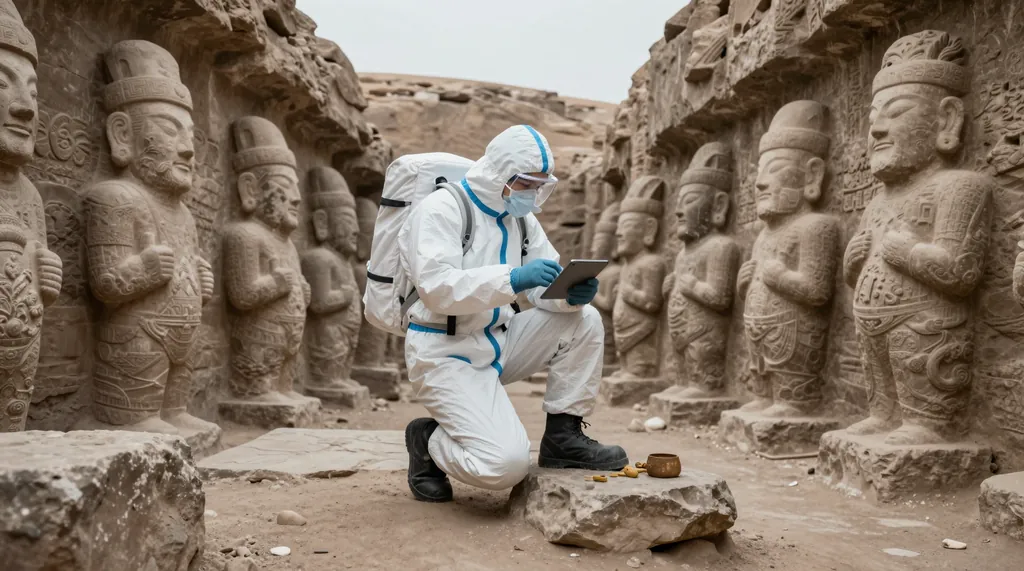
Let us imagine now the work of a human Xeno-Pathologist arriving at the site a thousand years after the cataclysm.
The oxygen has dissipated. It reacted with the crust, became oxides, and escaped into the stratosphere. O2 levels have dropped to trace levels. It is safe to go down. It is safe to walk among the dead.
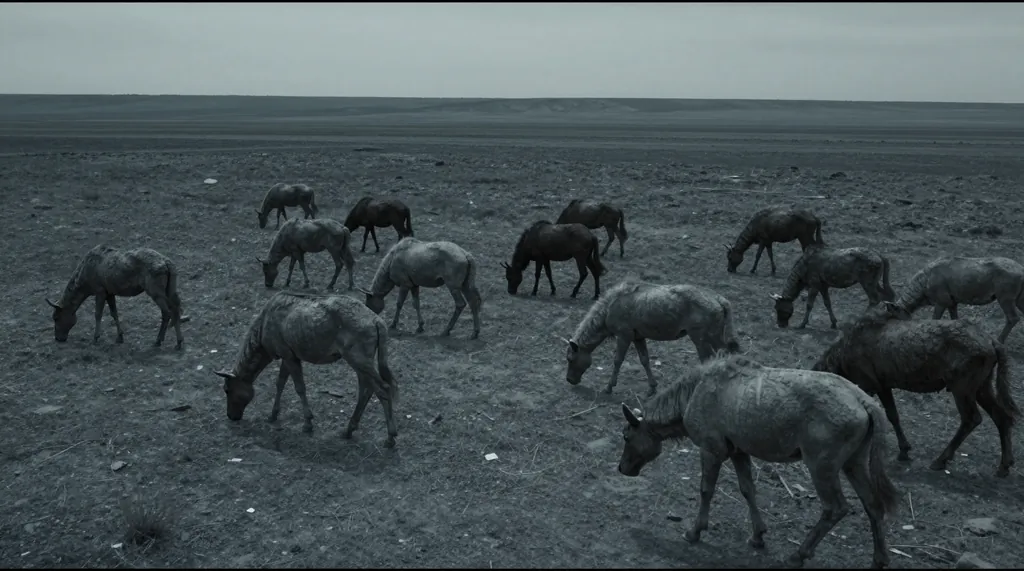
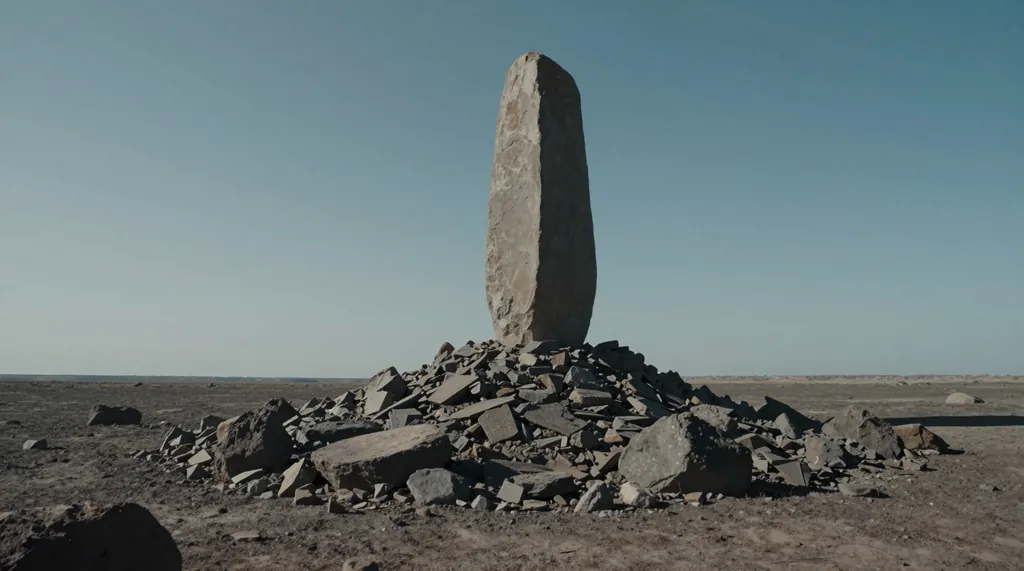
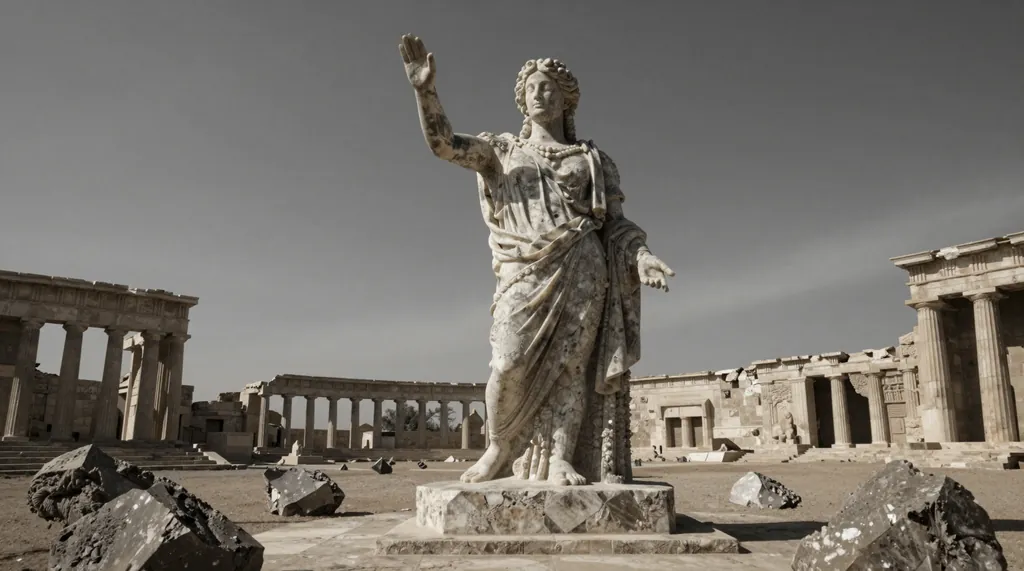
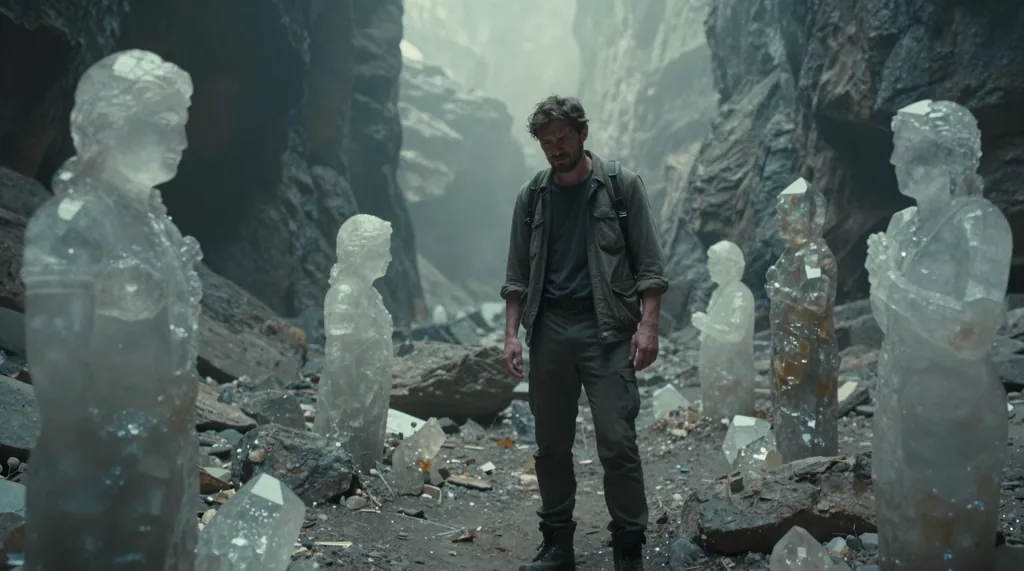
The pathologist, wrapped in an armored suit, slowly approaches one of the Crystallus statues. There are fifty of them in the field. Fifty monuments. Fifty lives suspended in stone. He chooses one at random. All are equivalent monuments to death.
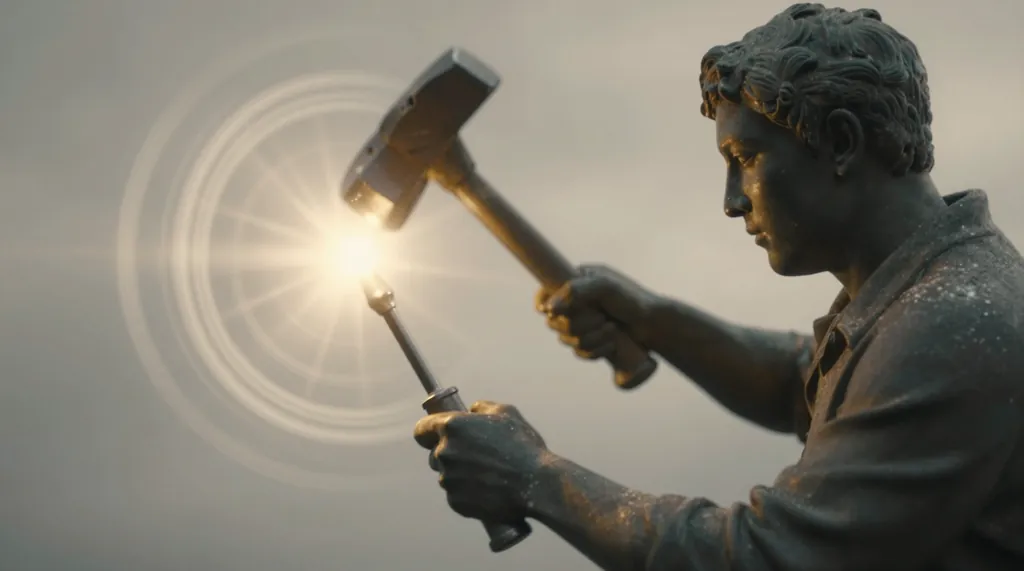
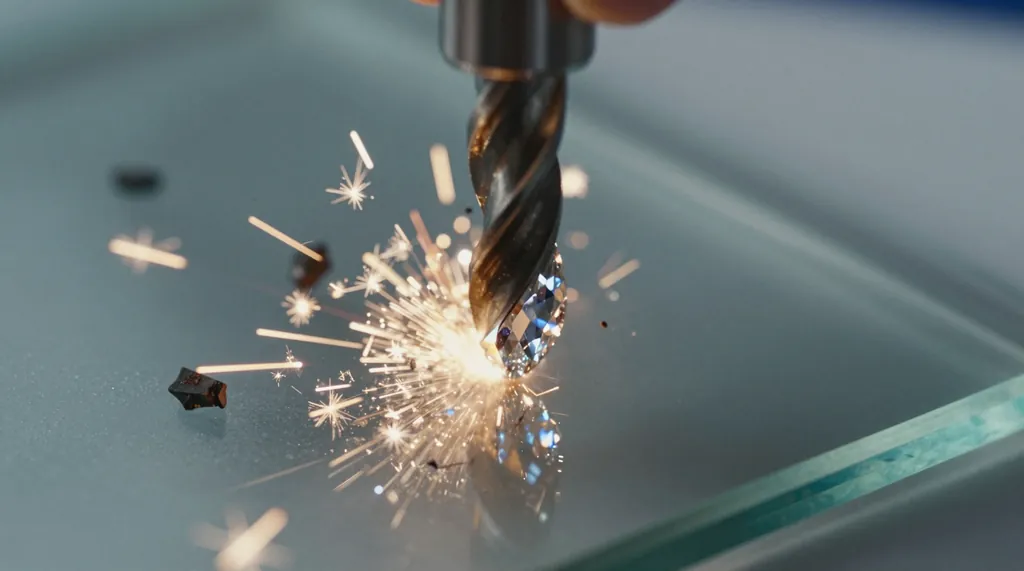
He takes out a diamond-tipped drill. A delicate instrument, designed to extract rock cores without destroying their internal structure. He places the tip on the surface of the petrified "body." He activates the motor.
The sound of the drill biting into the petrified "flesh" is high-pitched, shrill. It is the sound of desecration. It is the sound of scientific investigation violating the rest of the dead. But it must be done. We must understand.
He extracts a cylindrical core. He places it carefully in his hand. It is surprisingly heavy. It is surprisingly beautiful. He takes it to the mobile lab. He places it under the polarized microscope.
What he sees is a terrifying beauty.
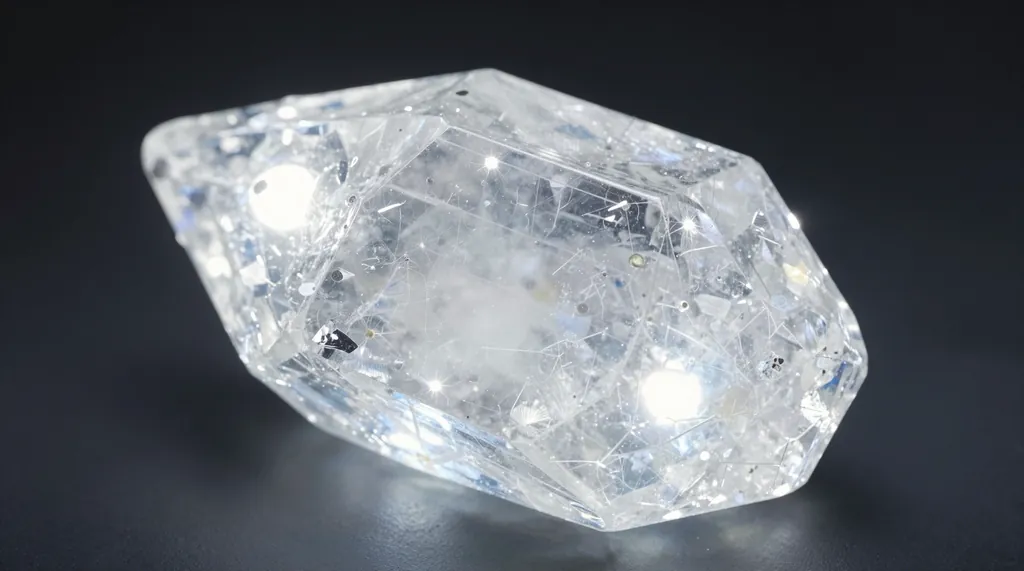
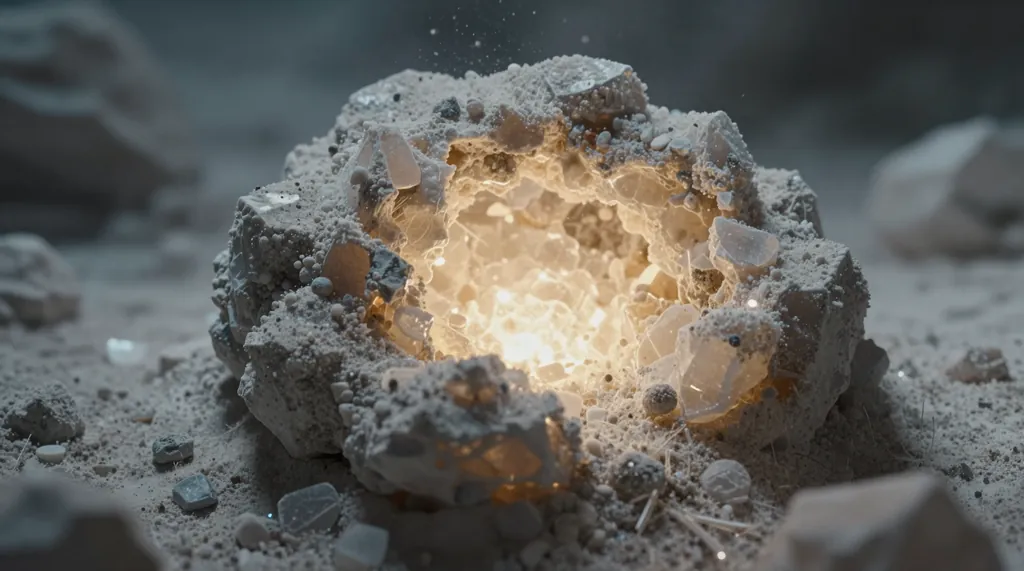
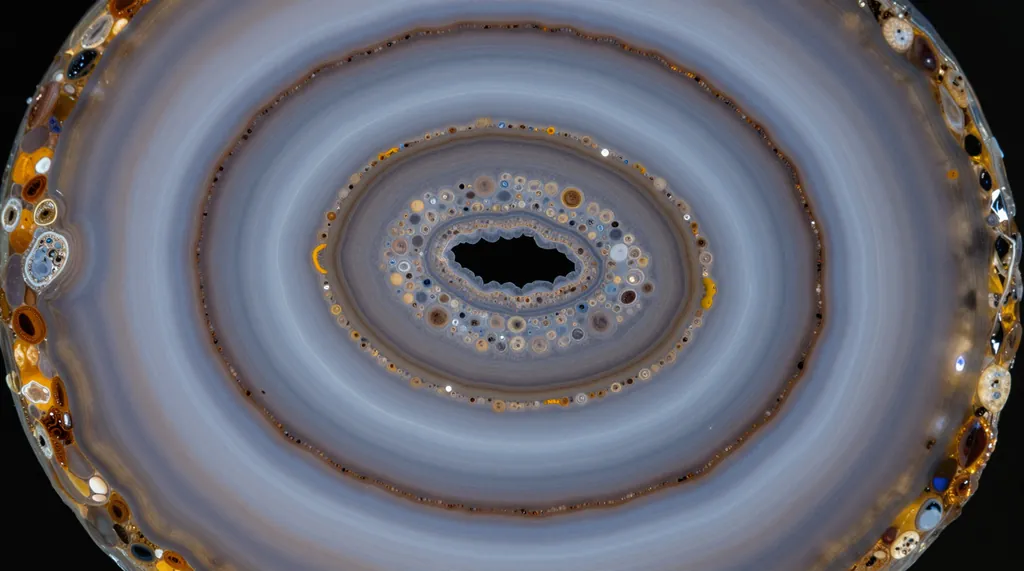
He sees the creature's original cells. The silicate membranes are intact, perfectly preserved. But the interior of the cell is not cytoplasm. It is not organic matter that decayed. It is Agate. Concentric bands of quartz micro-crystals. The colors are vibrant. Reds from oxidized iron. Greens from copper. Milky whites from pure silica. It is as if someone had turned the cell into a jewel. It is as if death had taken the creature's body and transformed it into art.
It is instant fossilization.
On Earth, a fossil takes millions of years to form. Rock replacing bone, atom by atom. A gradual and slow process. An act of geological patience. Here, it happened in five minutes. The creature became its own fossil while it was still warm. While it still held the shape of life. It is impossible. It is beautiful. It is a perfect horror.
In the center of the sample core, the pathologist finds something disturbing.
A small cavity. A bubble in the glass. Inside the bubble, there is a residue of black dust. Carbon. These are the organic impurities the creature had accumulated during its life. Complex molecules that could not be fully oxidized. When the creature was hermetically sealed in its SiO2 shell, and when it was heated by the exothermic oxidation reaction, these impurities carbonized. They burned. They turned into soot.
It is, literally, the soot of the creature's soul.
A black residue in a glass bubble. All that remains of the consciousness of a being that thought, that felt, that lived. Reduced to carbon. Reduced to nothing.
The pathologist notes into his dictaphone with a voice attempting to be professional but trembling slightly:
"Subject 04-B. Complete vitrification. Internal structure preserved. Cause of death: Solid asphyxiation by exposure to Class IV strong oxidant. Note: Facial expression suggests extreme muscle spasm at the moment of rigor. No signs of decomposition. This statue will last longer than the pyramids of Egypt. It will last longer than our own species."
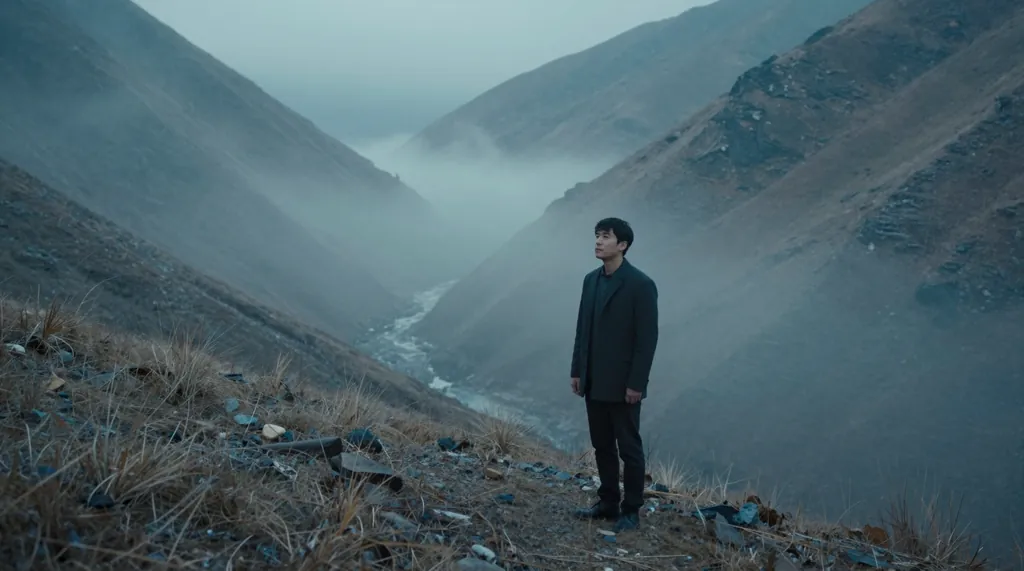
He pauses. He looks out the lab window toward the valley of statues. A thousand years have passed. Human civilization on Earth has progressed, grown, changed. New technologies. New philosophies. New wars. New peaces. But here, in this valley, nothing has changed. The statues remain. Exactly as they were a thousand years ago. Exactly as they will be in a billion years.
CONCLUSION: THE SHADOW OF OUR RESPONSIBILITY
These are the scars of the Furnace World.
A monument to a civilization whose existence we didn't even recognize. A monument to life erased in an instant of chemical negligence. A monument to what happens when you transport the elements of destruction in a ship and drop them onto worlds that didn't ask to be terraformed.
A monument to our guilt.
We are responsible. Humanity, in its infinite arrogance, in its desire to expand, to colonize, to transform worlds in our image, pointed a weapon we didn't even know we had. We terraformed. We won. We won a battle against a world that never threatened us. Against a civilization that never knew we existed.
Now, who will weep for the Crystallus? Who will write an elegy for the Slow Thinkers? Who will sing the lamentation of the Glass Forests?
Only us.
Only us, humans, with our uncomfortable conscience and our capacity to feel remorse. Only we can comprehend the magnitude of what we have done. Only we can lament the damage we caused. Only we can bear the weight of this eternal guilt. A guilt that has no resolution. A guilt that has no cure.
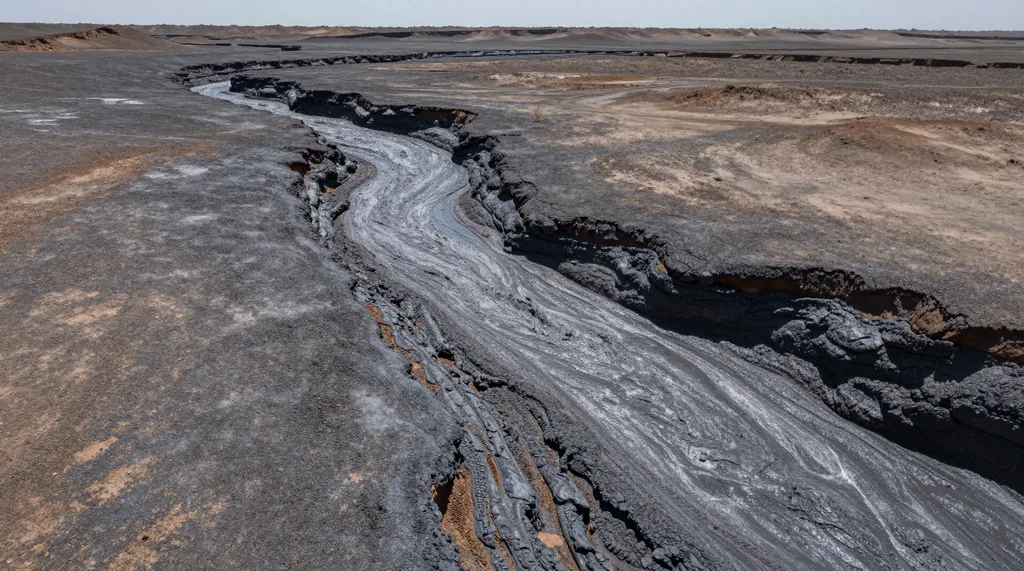
Because we cannot undo this. We cannot resurrect the dead. We cannot return life to a world we have petrified. We cannot make those glaciers of coal flow like blood again.
We can only weep.
We can only stand here, in this valley, looking at the statues of the dead, and understand that we are the only ones feeling the weight of what we have done. We are the only ones who can bear this guilt. And that is our burden. That is our responsibility. That is our legacy.
Until the next episode, where we will discover that even guilt has limits. That even the gravity of our responsibility pales in front of the deepest secrets of the Furnace World. That there are even more terrifying truths waiting to be unearthed in the darkness.
Until then, remember: the air we breathe is the blood of another world. Every breath we take is an act of violence against someone we cannot see. Every exhalation is a threat to a universe we don't know exists.
We are responsible. We always will be.